This song has many layers.
The phrase ‘peel me a grape’ was Mae West’s invention, an ad-libbed wisecrack rattled off by her character Tira, the brassy protagonist of I’m No Angel (1933).
First recorded by Anita O’Day and Cal Tjader nearly thirty years later, Dave Frishberg’s ‘Peel Me A Grape’ consists of a list of splendid demands made by a woman to a lover. She wants Scotch on delivery, polar bear rugs, peach fuzz for a pillow. “Here’s how to be an agreeable chap”, she explains. “Love me and leave me in luxury’s lap.” In case of any doubt as to who is calling the shots: “When I say do it / Jump to it.” Peel me a grape: gratify my fancies. Immediately.
Frishberg wrote the song in response to a request for “a cute, sexy piece” for singer Fran Jeffries (magnificent in The Pink Panther (1963)). The New Yorker‘s Whitney Balliett celebrated how Frishberg’s post-war composition “laughs at social ennui”. Listening to it with my female ears, a comic jab at baby boomer boredom doesn’t immediately strike me as its main thing. I hear power play and not only the obvious one.
To that extent, the story of Mae West’s I’m No Angel is fully written into the song’s DNA.
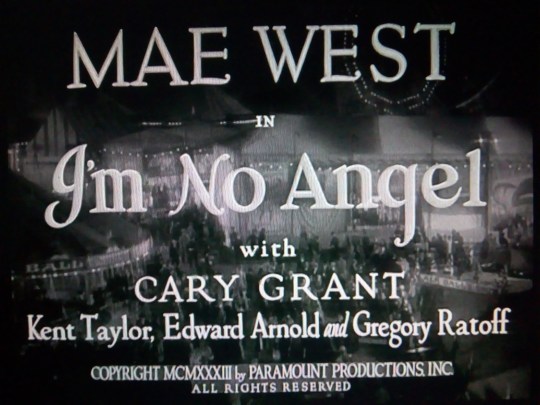
Tira is a hustling circus dancer. Her ascent to the big time through a daring lion-taming act delivers her personal wealth, access to the well-to-do, and ultimately Jack Clayton (Cary Grant), with whom she falls passionately in love.
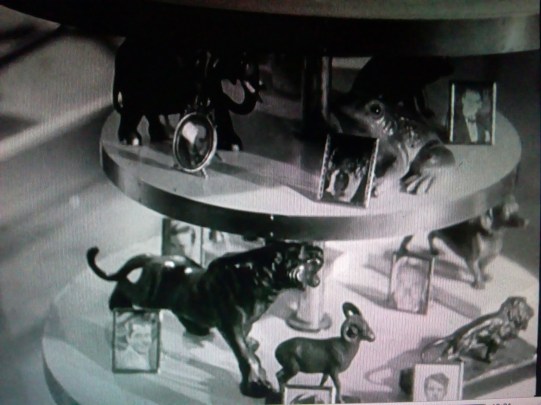
Encountering baying hordes of men who crowd in tents to watch her dance, and later, in her dealings with high society, Tira is feisty and funny. She navigates the many bear traps of a society hostile to sexually and economically independent women, and works her advantages. In respect of men, she is both huntress and hunted. Her astrological sign is Leo the Lion. Her meetings with lovers and her interactions with the circus lions share the frisson of physical danger. Meanwhile, she labels the gifts of clothing, jewellery and trinkets she receives from her conquests with their images, a kind of sexual taxonomy. This shot of animal ornaments couldn’t really be clearer on the issue.
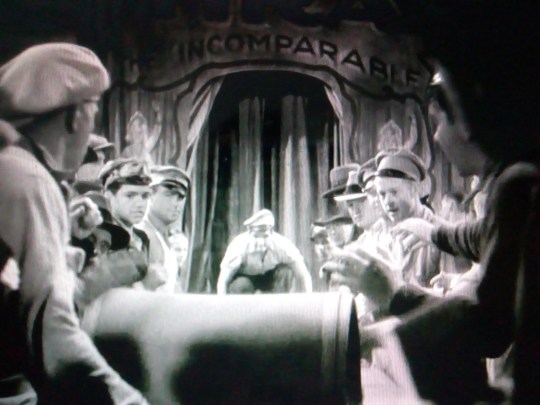
The hunt, and the evasion of capture, each involve theatre. Tira is spectacular. She’s introduced with stagehands rolling out a catwalk carpet –
– and in performance, her costume gestures towards nudity.
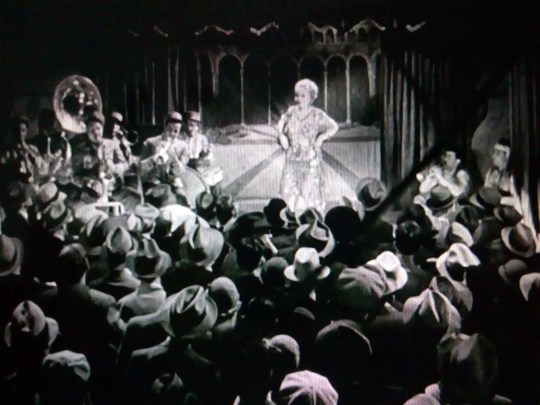
Exiting the stage following her dance, she purrs “Am I makin’ myself clear, boys?” – and approaching the wings, mutters smilingly to herself: “Suckers.” As she advises an unhappy fellow showgirl, to whom she donates one of her many necklaces: “Take all you can get, and give as little as possible.” Asked by rich showgoer The Chump whether she believes in marriage – this from a five-times, still married man who grasps at her body greedily – she quips: “Only as a last resort.”
The song’s catchy title appears mid-way through the film, in a scene in which society girl Alicia attempts to bribe Tira to leave her fiance alone with cold, hard cash. In disbelief at her idiotic complicity and snobbish rudeness, Tira shoves Alicia out of the door. Turning back to her apartment, Tira marks her victory by issuing this instruction to one of her African American maids:
“Oh Beulah.”
“Yes ma’am?”
“Peel me a grape.”
Patricia Spears Jones unfolds the objectionable racial politics of this moment of class domination, against the desperate backdrop of the 1930s, and in complex tribute to ‘Miss Lil’, in an extraordinary poem dedicated to Gertrude Howard, the actress who played Beulah.
‘Peel Me A Grape’ isn’t talking about this episode of course, but it is about subordination. Though a demanding woman is its protagonist, I can’t help but hear as strongly the structural power of the man who is buying the mink furs and champagne.
Interpretations of the song slip and slide into a theatricality that spins the given role, plays with domination and submission, just as Mae West’s Tira negotiates her way through life. Anita O’Day sings with a sly smile in her voice. Patti LaBelle delivers a huge cabaret performance that entirely withholds access to an inner life (and, like O’Day’s, finishes up with some talk of grape varieties). Blossom Dearie performs shallow entitlement. Nancy Wilson offers the seasoned, non-serious voice of experience. In Ariana Savalas‘ hot interpretation, she whispers burlesque-ly. But the one that really gets me is Diana Krall‘s. Her delivery is tough, her piano solos alive with wit. Yet when she sings the line “Just hang around” quite quietly, the situation suddenly seems very lonely.
 People Think This Is Romantic