4: Gee, Baby, Ain’t I Good To You (1929)

This song assumes many guises.

‘Gee, Baby, Ain’t I Good To You’ was written in 1929 as a collaboration between bandleader Don Redman and songwriter Andy Razaf. Its lyrics present a person contemplating love and fidelity, and the furs, cars and jewels they give to their significant other as token and guarantee. Recorded first in New York under the name of Redman’s band, McKinney’s Cotton Pickers, in a session featuring a host of Harlem jazz luminaries, Redman performed the lyrics himself.

It’s since been recorded hundreds of times, most recently in a live set by Jeff Goldblum and the Mildred Snitzer Orchestra, with a virtuosic vocal performance by Haley Reinhart which builds from quiet seduction to full-throated euphoria.

In his beautiful biography of Andy Razaf, Barry Singer discusses the ‘pristine craftsmanship’ of the song and its multidimensionality.

‘Ain’t I Good To You?”s lyric question – “Gee baby, ain’t I good to you?” – was in many ways a perfect blues phrase: bittersweet, wry, and plaintive all at once, a question that readily absorbed whatever emotional experience a singer might bring to it – insistence, recalcitrance, determination, despair – the range of possible inflection was endless.

Jose James’ powerful version of the song uneasily suggests control masquerading as love. Redman’s original spoken word performance seems a milder, more hesitant variation on that theme. Meanwhile, Nat King Cole’s 1944 interpretation is kindly and vulnerable: his character sounds like a soft touch being taken for a ride in a situation that will not end well, as the song’s discordant finish hints. In Peggy Lee’s version, her wistful vocal performance is in dialogue with spiky piano improvisation, as if it’s her guy arguing with her, wriggling to get free. Ella Fitzgerald and Louis Armstrong’s duet, which tweaks the lyrics, presents a fiery conjugality in which a couple showers one another with gifts. Two additional lines conclude the song: ‘Get me paying taxes of what I gave to you / Gee baby, ain’t I good to you’.

This handful of versions toys with constraints of gender, money and power, exposing the torturous difficulty of human connection. A universe of possibility lives in the song.

At YouTube links to these recordings, references to the problematic Jim Carrey movie The Mask (1994) pop up repeatedly in the comments – ‘SSSSSSSSSSOMEBODY STOP ME! SSSSSSMOKIN”, ‘Just watched The Mask and it brought me here :-)’. Having never seen the film in full before, I didn’t know that mid-way through The Mask is a performance of ‘Gee, Baby, Ain’t I Good To You’ by Cameron Diaz, dubbed by vocalist Susan Boyd.

Mask 9

Carrey stars as Jekyll and Hyde character Stanley Ipkiss, a downtrodden bank clerk living in the Chicago-like Edge City. His accidental acquisition of the magical mask of Loki transforms him into the libidinal Mask by night, unleashing his subdued inner self, which to this point has been given expression only through his fandom of Tex Avery cartoons. (This recent Den of Geek post interprets the film as a parable of alcohol consumption.)

Ipkiss has developed a crush on singer Tina Carlyle (Diaz) thanks to her rain-drenched visit to his bank on a reconnaisance mission for her gangster boyfriend Dorian, who intends to rob the bank as part of a larger city takeover. Hearing that she will give a performance, Ipkiss transforms into the Mask to gain entry to the exclusive Coco Bongo, the club where Carlyle works and Dorian is based, having robbed the bank himself first to pay for his night out.

https://www.youtube.com/watch?v=GlarHBBQ5tA

From the stretch limo that carries the Mask to the club, to Diaz’s appearance onstage and his racy response, the scene draws heavily on the Tex Avery animation ‘Red Hot Riding Hood’ (1943) which appeared earlier in the film, a short which jazzes up Little Red Riding Hood.

https://vimeo.com/218354742

Where ‘Red Hot Riding Hood’ satirises the male gaze, The Mask fully signs up to it, and nowhere more explicitly than in this scene. Red Riding Hood’s performance of Bobby Troup’s ‘Daddy’ (1941), a song about getting and being given fancy stuff, begins sweetly and becomes increasingly physically exaggerated, even grotesque. In The Mask, the opposite is the case: here, ‘Gee, Baby, Ain’t I Good To You’ manifests as a story of male satisfaction, and the vehicle for the consistent presentation of Cameron Diaz’s body as alluring temptation. With a lyrical adjustment – ‘I know how to make a good man happy, I treat you right / With lots of love just about every night’ – the overwhelming visuality of the scene veils the delicate ambivalence of Redman and Razaf’s composition about love and gifts.
3: Peel Me A Grape (1962)

This song has many layers.

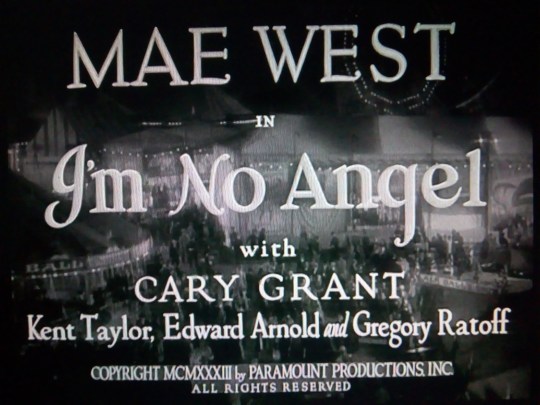
The phrase ‘peel me a grape’ was Mae West’s invention, an ad-libbed wisecrack rattled off by her character Tira, the brassy protagonist of I’m No Angel (1933).

First recorded by Anita O’Day and Cal Tjader nearly thirty years later, Dave Frishberg’s ‘Peel Me A Grape’ consists of a list of splendid demands made by a woman to a lover. She wants Scotch on delivery, polar bear rugs, peach fuzz for a pillow. “Here’s how to be an agreeable chap”, she explains. “Love me and leave me in luxury’s lap.” In case of any doubt as to who is calling the shots: “When I say do it / Jump to it.” Peel me a grape: gratify my fancies. Immediately.

Frishberg wrote the song in response to a request for “a cute, sexy piece” for singer Fran Jeffries (magnificent in The Pink Panther (1963)). The New Yorker‘s Whitney Balliett celebrated how Frishberg’s post-war composition “laughs at social ennui”. Listening to it with my female ears, a comic jab at baby boomer boredom doesn’t immediately strike me as its main thing. I hear power play and not only the obvious one.

To that extent, the story of Mae West’s I’m No Angel is fully written into the song’s DNA.

IMG_20190202_144934

Tira is a hustling circus dancer. Her ascent to the big time through a daring lion-taming act delivers her personal wealth, access to the well-to-do, and ultimately Jack Clayton (Cary Grant), with whom she falls passionately in love.

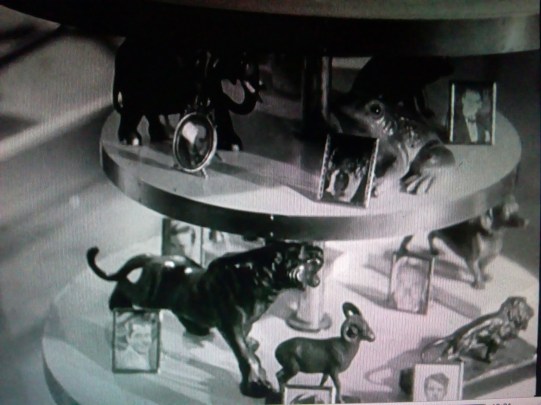
Encountering baying hordes of men who crowd in tents to watch her dance, and later, in her dealings with high society, Tira is feisty and funny. She navigates the many bear traps of a society hostile to sexually and economically independent women, and works her advantages. In respect of men, she is both huntress and hunted. Her astrological sign is Leo the Lion. Her meetings with lovers and her interactions with the circus lions share the frisson of physical danger. Meanwhile, she labels the gifts of clothing, jewellery and trinkets she receives from her conquests with their images, a kind of sexual taxonomy. This shot of animal ornaments couldn’t really be clearer on the issue.

IMG_20190202_161624

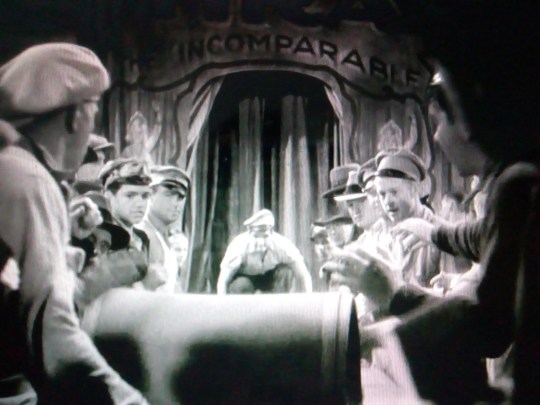
The hunt, and the evasion of capture, each involve theatre. Tira is spectacular. She’s introduced with stagehands rolling out a catwalk carpet –

IMG_20190202_145358

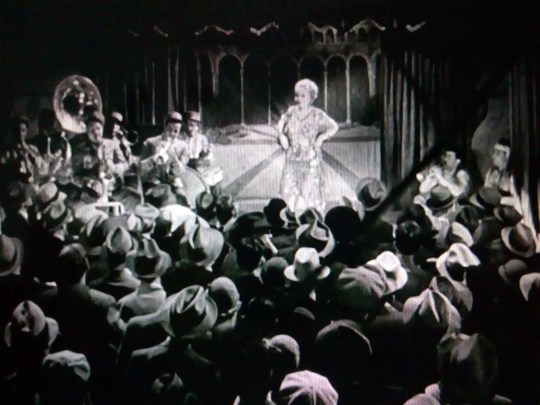
– and in performance, her costume gestures towards nudity.

IMG_20190202_145645

Exiting the stage following her dance, she purrs “Am I makin’ myself clear, boys?” – and approaching the wings, mutters smilingly to herself: “Suckers.” As she advises an unhappy fellow showgirl, to whom she donates one of her many necklaces: “Take all you can get, and give as little as possible.” Asked by rich showgoer The Chump whether she believes in marriage – this from a five-times, still married man who grasps at her body greedily – she quips: “Only as a last resort.”

The song’s catchy title appears mid-way through the film, in a scene in which society girl Alicia attempts to bribe Tira to leave her fiance alone with cold, hard cash. In disbelief at her idiotic complicity and snobbish rudeness, Tira shoves Alicia out of the door. Turning back to her apartment, Tira marks her victory by issuing this instruction to one of her African American maids:

“Oh Beulah.”

“Yes ma’am?”

“Peel me a grape.”

https://www.youtube.com/watch?v=FeRm1T9V5wc

Patricia Spears Jones unfolds the objectionable racial politics of this moment of class domination, against the desperate backdrop of the 1930s, and in complex tribute to ‘Miss Lil’, in an extraordinary poem dedicated to Gertrude Howard, the actress who played Beulah.

‘Peel Me A Grape’ isn’t talking about this episode of course, but it is about subordination. Though a demanding woman is its protagonist, I can’t help but hear as strongly the structural power of the man who is buying the mink furs and champagne.

Interpretations of the song slip and slide into a theatricality that spins the given role, plays with domination and submission, just as Mae West’s Tira negotiates her way through life. Anita O’Day sings with a sly smile in her voice. Patti LaBelle delivers a huge cabaret performance that entirely withholds access to an inner life (and, like O’Day’s, finishes up with some talk of grape varieties). Blossom Dearie performs shallow entitlement. Nancy Wilson offers the seasoned, non-serious voice of experience. In Ariana Savalas‘ hot interpretation, she whispers burlesque-ly. But the one that really gets me is Diana Krall‘s. Her delivery is tough, her piano solos alive with wit. Yet when she sings the line “Just hang around” quite quietly, the situation suddenly seems very lonely.


2: Call Me Irresponsible (1962)

This song is not what it seems.

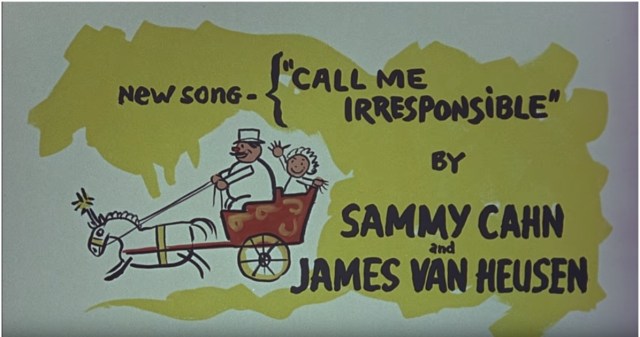
Scores of versions of ‘Call Me Irresponsible’ have been released since Jimmy Van Heusen and Sammy Cahn wrote it in 1962. It was prepared for film comedy Papa’s Delicate Condition (1963), in which it appears first as a wordless lullaby played by a child’s wind-up toy. In 1963 alone, at least seven artists recorded it, among them Frank Sinatra, Julie London and Dinah Washington – the exuberant cadenzas that Washington performs at the end of her version since featuring on numerous adverts and television trailers. (The YouTube link below lists its source as Totally Commercials: the Essential Commercials Albumreleased in 1998.) I’m so familiar with her performance’s passionate take that reflecting on the song recently, I realised I’d never really understood its lyrics.

https://www.youtube.com/watch?v=EO8jm9QmEf4

My superficial impression: reckless, spontaneous love!

It turns out the song is not about that.

Two short, magnificently crafted choruses give us an inconsistent character shamelessly cajoling their loved one. The character justifies their sketchy behaviour by virtue of their romantic sensibilities (“Rainbows, I’m inclined to pursue”) and their strength of feeling for the other person. In the extraordinary lines “Do my foolish alibis bore you? / Well, I’m not too clever, I just adore you”, a mere fifteen words deftly establish a relationship history and execute a smooth rhetorical confidence trick.

Set apart from the film, this Academy Award-winning song’s interpretative possibilities arguably range from ‘adorable if unrepentant’ to ‘sociopathic’. Compare and contrast Tony Bennett’s puppyish plaintiveness and Julie London’s Shere Khan.

On this basis, ‘Call Me Irresponsible’ is tough to accept in terms of love – unless being backed into an emotional corner is your thing. In its cinematic context, the song’s story takes on another aspect.

call me irresponsible

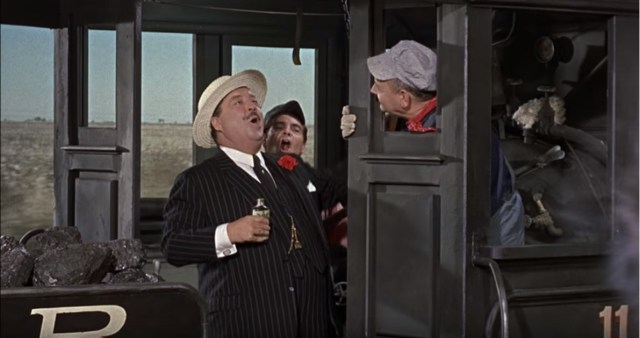
Papa’s Delicate Condition centres around the Griffith family and their salubrious small-town life in Texas. Jack Griffith (Jackie Gleason) is a railway superintendent whose excessive generosity and alcohol dependency together engender recurring marital crises. His church-going, recital-hosting wife Amberlyn (Glynis Johns) is status-conscious and controlling, though not without spark. Their teenage daughter Augusta (Laurel Goodwin) is likewise. Meanwhile, Jack is flamboyant and gregarious, qualities which delight their six year old daughter Corinne (Linda Bruhl) – in real life, a silent film actress and author of the memoir on which the film is based.

call me irresponsible

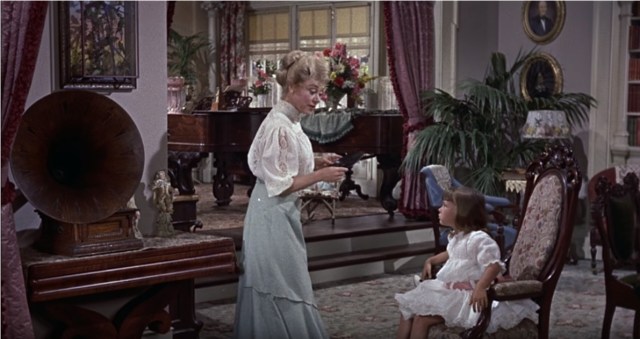
In the opening scene, Amberlyn distastefully removes from the gramophone a recording of ‘Bill Bailey, Won’t You Please Come Home‘ (1902) as Corinne protests. The film is critical of Amberlyn – jawdroppingly, in these introductory moments she calls the child “my little consolation prize” directly to her face – but though Jack is its hero, it is not uncritical of him: we first meet him on a steam train, enthusiastically belting out ‘Bill Bailey’ and enjoying the lion’s share of a bottle of bourbon in the company of a driver and stoker.

call me irresponsible

With modified lyrics, a harmonious family rendition of ‘Bill Bailey’ also wraps the whole drama up, raising a great many questions on the film’s uses of that song and their racial and historical politics.

Jack’s ‘delicate condition’ is his regular drunkenness, which leads him to engage in various rash schemes: tricking a man into repainting his ugly house to please Amberlyn, buying a drugstore to rescue a downtrodden assistant from its owner, and finally being hoodwinked himself into purchasing a failing circus so he can give its show-pony to Corinne. This is the last straw for Amberlyn, who gathers up her daughters and flees to her father’s house.

‘Call Me Irresponsible’ marks this moment of abandonment.

This scene – the first and only in this family-friendly comedy in which we see Jack unmistakably drunk – is incredibly sad.

The instrumentation is gentle, but Gleason’s performance of the song is unshrinking. The scene’s visual comparison of the automated and lifeless dolls in Corinne’s room with the bereft husband, his reproachful gaze at himself in the mirror, and his one-sided conversation with his surrogate wife-dummy all speak of patterns of (self) destruction. (The pat to the dummy’s hip is objectionable enough, but in a stunningly aggressive moment directly after this clip, he drops his empty glass into the dummy through its neck.)

By the end of the film, husband and wife will have reconciled. He will be sober; she will have ceded control. But this poignant scene shows the song’s narrative to be based not in the plenitude of love, but a man’s struggle with himself.

1: My Future Just Passed (1930)

This beautiful song has a dark heart.

Shirley Horn’s dreamy version, recorded in 1963, leads the listener gently into the woods: an idle fantasy about a man encountered by chance escalates to stalkerish obsession. Her phenomenal interpretation of this song made me want to start this blog.

Yikes, I thought, when I first listened to it in 2014. The character is decisive, even powerful, which makes it all the more unsettling. At the time I was reading Muriel Spark’s The Driver’s Seat (1970), which may or may not have had something to do with how I received it.

It wasn’t initially written to be sung by a woman.

‘My Future Just Passed’ was written by Richard A. Whiting and George Marion Jr. for musical comedy film Safety in Numbers (1930). The musical linchpin of the film, the song features as an instrumental overture accompanying the opening credits, and as a duet between its romantic protagonists.

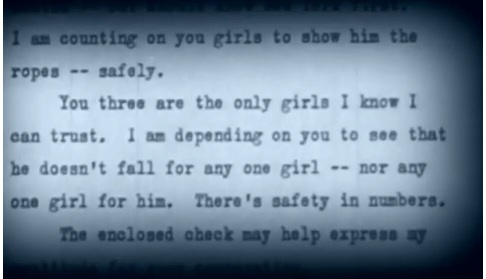
Naive young heir William Butler Reynolds (Charles ‘Buddy’ Rogers) arrives to New York City from the west, packed off by his uncle (Richard Tucker) to gain some practical knowledge of life. As he explains to his nephew in not so many words, the aim is to ensure that he doesn’t ultimately piss all of his gigantic fortune up the wall in nightclubs when he comes of age. In a letter, the uncle tasks Jacqueline (Kathryn Crawford), Maxine (Josephine Dunn) and Pauline (Carole Lombard), three Follies chorus girls, with introducing him to the city.

safety in numbers

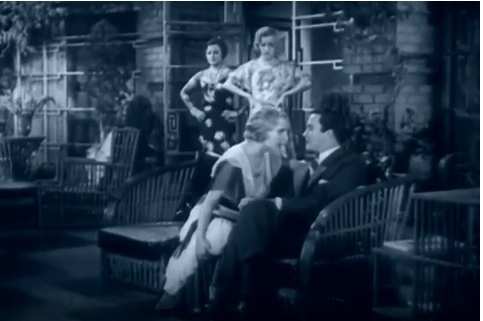
The girls cohabit stylishly in a palatial Art Deco apartment with two servants. (The IMDb bio of Louise Beavers, who plays housekeeper Messalina, is amazing reading.) Their guest immediately demonstrates his maximal unworldliness. He drops his entire allowance on gifts of jewellery for them all, is unable to recognise a bra when confronted with one resting on a chair, and so on. But suddenly he discovers untapped Casanova potential, charming each girl in turn through song. They duly fight over him, abandoning their urbane shrewdness, yet also band together to protect him from the advances of other predatory chorus girls.

safety in numbers 2

In a move that is only surprising if you forget that the film is basically about heteronormative training, these independent performers also allow the inexperienced youth to negotiate salary on their behalf with their show’s producer.

Safety in Numbers inevitably resolves with a match: though barely any conversation seems to have been exchanged, Reynolds and Jacqueline have fallen in love.

safety in numbers 3

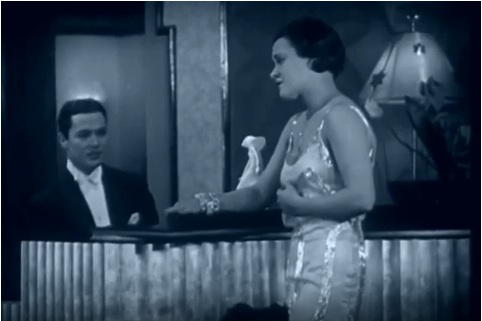
‘My Future Just Passed’ is Reynolds’ declaration of love for Jacqueline, followed by her mournful solo reply (here, at 1:04:55). The first chorus’ stride piano is laden with sentimentality. The song overall is anodyne. The film has made Reynolds the centre of its universe, and the girls orbit around him, so this is standard love story stuff: boy pledges undying affection to vacillating girl, and he will sever her existing “ties”, win out for sure.

In the year in which the film came out, Annette Hanshaw released a single version of ‘My Future Just Passed’ that combines Reynolds’ lyrics with additional choruses. Shirley Horn’s much later version uses these additional lyrics, but removes the cheeky verse about playing the field as a young person, and the chorus with references to school.

In Hanshaw’s version, the inclusion of the verse sets the song up as a tongue-in-cheek story of teenage flirtation and preoccupation. Her wry performance refuses to take the song’s romantic narrative seriously. She concludes the whole thing archly with a catlike ‘that’s all!’ Compared to the film’s presentation of the song, this rendition is positively subversive.

Meanwhile, Shirley Horn’s interpretation puts blissful instrumentation next to fatalistic obsession. We get to listen in on her character’s dicey inner life in the midst of sweeping strings. This juxtaposition makes the song’s theatrical metaphors pop. “Ring down the curtain, I’m certain at present / My future just passed” and “Here are my arms, may he find illusion there / Kiss my two lips, remove all the rouge on there”, sung by Horn with languid smoothness, troublingly emphasise the constructed relation between femininity and artifice. Magical thinking, manipulation, and a hopeful wish for the physical contact that would wipe lipstick traces clean away: pretty bleak. A dark heart, but so beautiful.