21: Willow Weep for Me (1932)

This song isn’t having it.

Ann Ronell – a female trailblazer in the sphere of Hollywood musical direction and Broadway composition – originated this wonderful chronicle of heartbreak in 1932. A publishing colleague of Irving Berlin rejected it for being too technically complicated, but support from Berlin himself brought the song to radio broadcast and wider critical and commercial success.

Willow weep for me
Willow weep for me
Bend your branches green along the stream that runs to sea
Listen to my plea
Hear me willow and weep for me
Gone my lovers’ dream
Lovely summer dream
Gone and left me here to weep my tears into the stream
Sad as I can be
Hear me willow and weep for me
Whisper to the wind and say that love has sinned
Left my heart a-breaking, and making a moan
Murmur to the night to hide its starry light
So none will see me sighing and crying all alone
Weeping willow tree
Weep in sympathy
Bend your branches down along the ground and cover me
When the shadows fall, hear me willow and weep for me

While hearing out their lonely protagonist’s pain, these lyrics wink theatrically: love in its entirety has “sinned” because the “lovely summer dream” of a seasonal romance hasn’t worked out for you? All the stars in the night sky should be obliterated to conceal your unique misery? Come on. There’s no shame in sadness.

Ronell’s celebrated, much recorded composition warmly presses that argument forward – in particular the major key in the A sections, its sing-song octave leap (Ted Gioia: “a vertiginous plunge followed by a reassuring triplet bounce unlike anything else in the jazz repertoire of the era”), and the way in which, as Alec Wilder notes, “the accompaniment moves into double time and out again the next measure”. Edward Jablonski interprets this choice as signifying “agitated stress”, but I’m not sure that’s it. Consider, for example, Ella Fitzgerald’s 1959 recording. “Listen to my plea”, entreats the song’s protagonist. Amid the dreaminess of Frank DeVol’s orchestral arrangement, this rhythmic shift counterargues: no, you need to shake things up.

The song’s appearance in the Marx Brothers’ Love Happy (1949) – a crime caper which brings together a diamond heist and a Broadway revue – sets off its refusal of the role of romantic victim in an utterly surprising way.

Ann Ronell scored Love Happy, and oversaw Frank Perkins’ instrumental arrangement of ‘Willow Weep for Me’ for one of the Broadway revue’s numbers. Choregraphed by Billy Daniel, it presents an extraordinary burlesque staging of the figure of Miss Sadie Thompson.
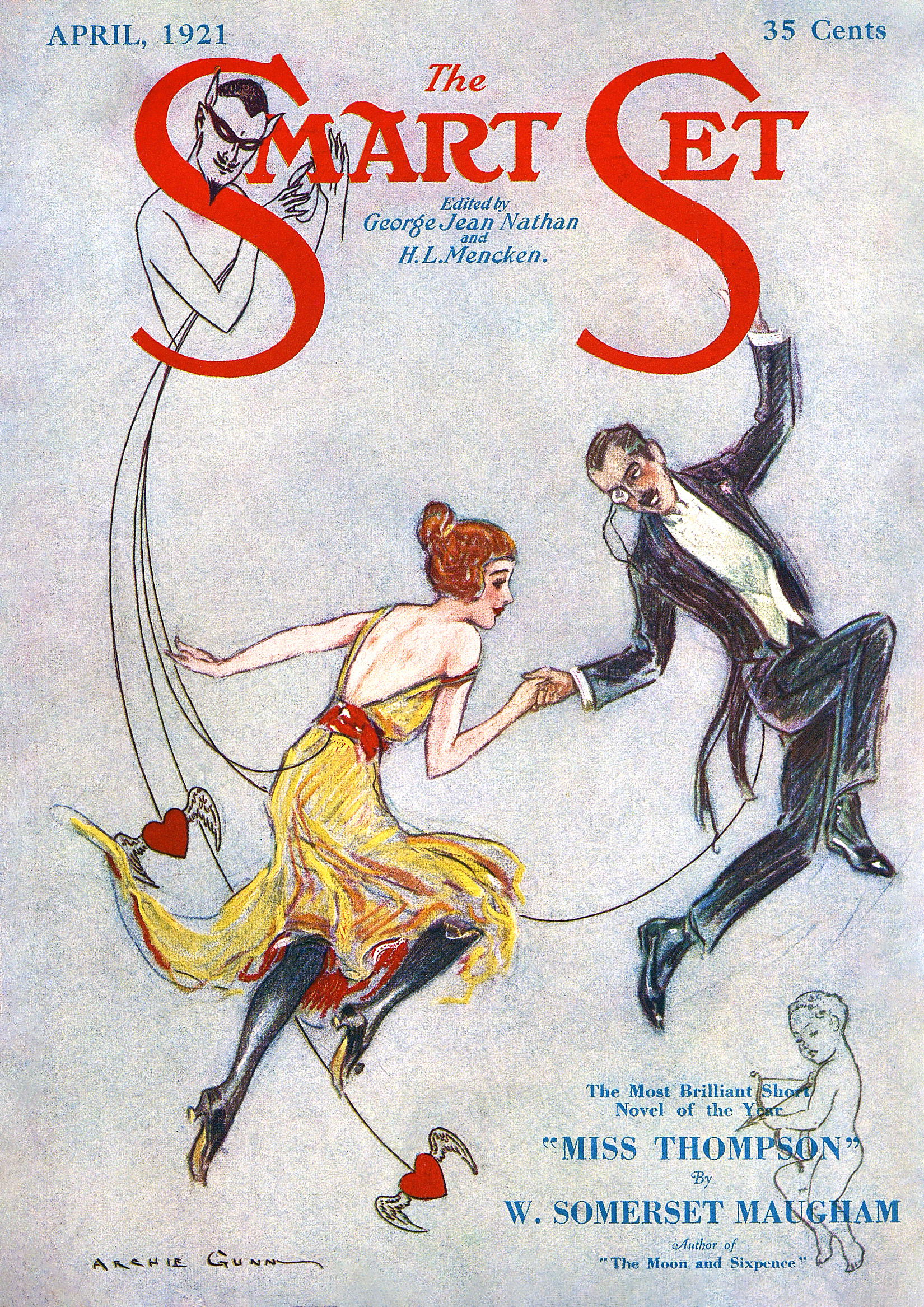
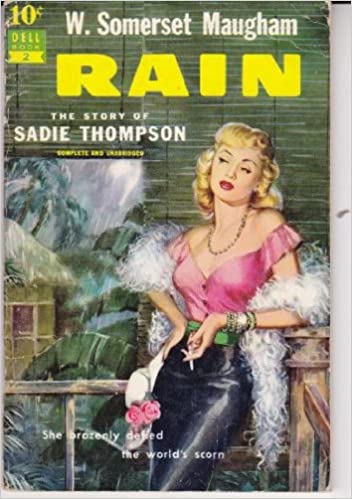
Sadie Thompson is a character in ‘Rain’ (1921), a short story by W. Somerset Maugham set in American Samoa. A ship’s crew member contracts measles, and its passengers are required to remain in port at Pago Pago for a period of quarantine: Dr and Mrs Macphail, missionary couple the Davidsons (ordinarily stationed elsewhere), and Sadie Thompson herself. All are offered accommodation in rooms above a shop. Sadie Thompson entertains sailors in her quarters, playing her gramophone loudly, to the the Davidsons’ infinite disapproval. They quickly infer that, having boarded at Iwelei (“plague spot of Honolulu. The Red Light district”), she is a prostitute, and Davidson himself undertakes to convert her. The missionary programme is vicious: the Davidsons expunge local practices of dancing and dress, impose fines on those who refuse to comply, and delight in destroying associates whose morality they deem insufficient. Davidson’s patriarchal fanaticism – of Sadie, he declares: “‘I want to put in her heart the passionate desire to be punished so that at the end, even if I offered to let her go, she would refuse'” – culminates in what the story very strongly implies is his rape of Sadie and his grisly death by cutting his own throat.

For Victoria Kuttainen, ‘Rain’ dramatises how missionary, medical and cultural regimes collide in the the “colonial, modernising Pacific”. She proposes that Somerset Maugham – both a literary figure and prolific writer for stage and screen – was acutely aware of the imagistic power of “fantasies of seductive starlets and beguiling tropical scenes”, and that his narrative choices comment on the performative power of speculation: other characters are given to report on Sadie’s conduct. In the diverse theatrical and cinematic adaptations of ‘Rain’,* meanwhile, “spectacle replaces speculation”. Stagings of Sadie melodramatically exoticise and evacuate the story of critical force.

The number in Love Happy quotes and exaggerates elements of these adaptations. It sweeps almost every hint of violence away, and reimagines the scenario as a comedy.

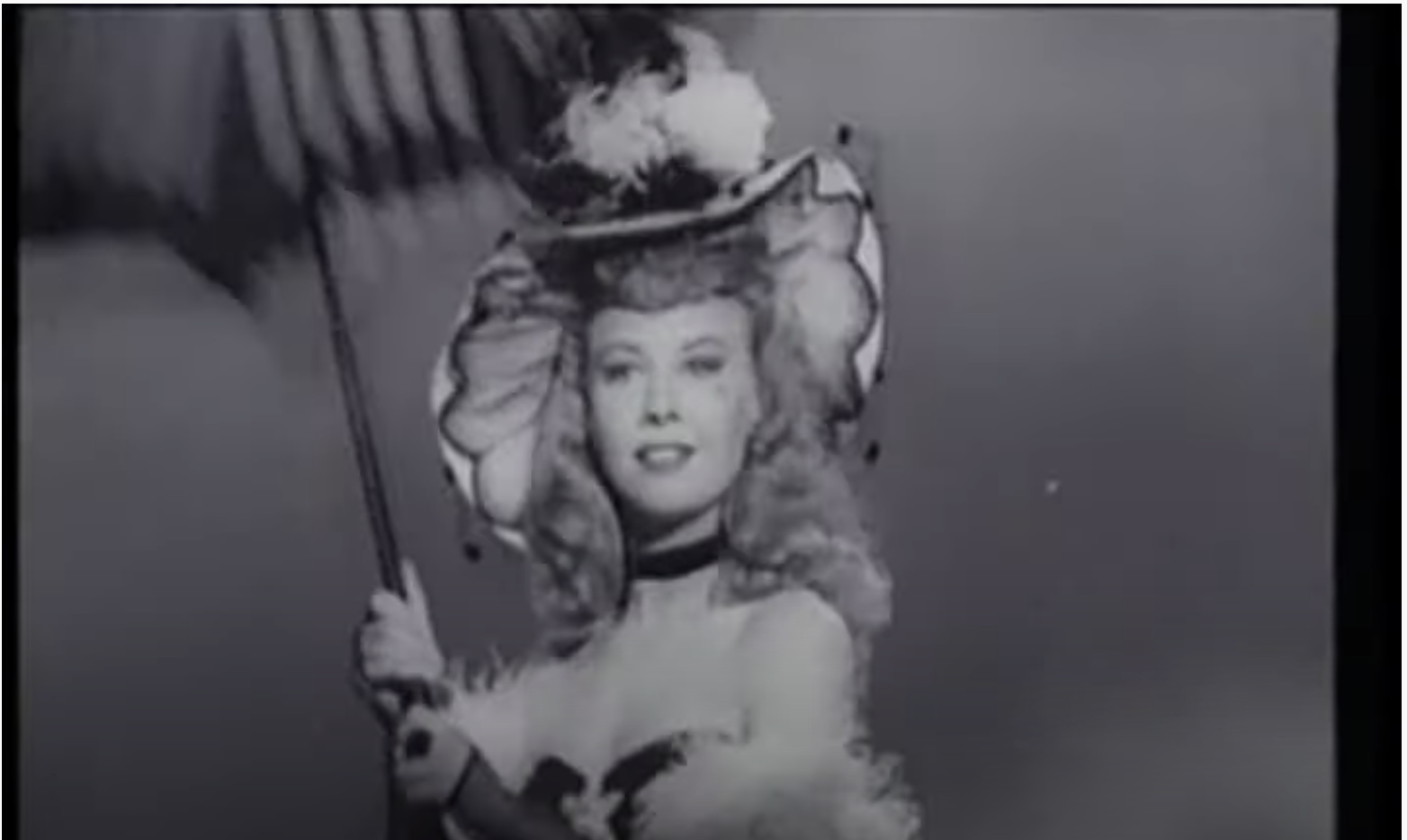
In this cartoon tropics, Sadie’s beau, Sergeant O’Hara (played by ‘Paul Valentine’, played by Mike Johnson) – a character introduced in these adaptations – places the needle on the gramophone, and the siren rasp of ‘Willow Weep For Me’ summons Sadie (played by ‘Maggie Phillips’, played by Vera-Ellen) to the stage. Marines gawp as she struts in, her hand magically conjuring her own spotlight. She roams about the stage with comic suggestiveness, occasionally knocking these uniformed men down like dominoes, while O’Hara gazes at her with deep desire. When, as in the story, Davidson (House Peters Jr.) stops the gramophone’s music, a drumbeat commences and a group representing Samoan dancers wearing what resemble lavalava enter the stage, supporting Sadie to continue – a section which trades in racialised stereotyping, places Sadie at its centre, but suggests collective solidarity between she and the islanders against the forces of missionary control. Davidson has failed, and exuberant music and dancing prevail. The gramophone resumes, and a whistle sends the Marines back, who have rushed Sadie like a pack of dogs. The number concludes softly: Sadie and O’Hara stand intimately together before the auditorium of the Broadway theatre to scattered applause.**

This larger-than-life musical rendition both sends up and luxuriates in the cultural habit of looking at Sadie. The lyrics and their sadness ghost the scene, a reminder of the tragedy of ‘Rain’, but here underscoring how Sadie just gets to go about her business.

Before watching the film, I had heard ‘Willow Weep for Me’ only in versions accentuating its bluesiness, as in the powerful recordings by Billie Holiday, Dinah Washington and Etta James, and Sarah Vaughan’s magical and hilarious live performance. With the exception of Stan Kenton’s 1946 arrangement featuring June Christy, the handful of recordings that precede Love Happy are a lively mix of foxtrot and cabaret, and a far cry from the sorrowful sentimentality of other later versions: Frank Sinatra, Julie London, Tony Bennett.

It begs so many questions: about the mood Ann Ronell originally intended for the song, how this scene in Love Happy was conceived and by whom,*** the direction of subsequent recordings. Regardless, it strikes me that its author’s well-documented determination, ambition, kindness and vivacity are of a piece with ‘Willow Weep for Me’. It is a song that “does exactly what it pleases”, recognising social and emotional limits, but isn’t about to accept them.

*John Colton & Clemence Randolph’s play Rain: a Play in Three Acts (1923); Sadie Thompson (1928), starring Gloria Swanson; Rain (1932), starring Joan Crawford; and Miss Sadie Thompson (1953), starring Rita Hayworth.

**Paul’s subsequent instruction to Maggie – “now go change into your ballet costume” – is arguably a misogynistic gag playing on the historical intersection of ballet and sex work.

***An edition of Film Music Notes speaks favourably of “the producer who allowed the composer select co-workers of her own choice wherever possible, thus assuring maximum of compatible tastes and efforts to musical production with minimum personnel”.
18: I’m Thru With Love (1931)

This song is all about show.

Until it isn’t, that is. But I’m getting ahead of myself.

‘I’m Thru With Love’ is a work of necessary contradiction. A deep ocean of a song, twinkling with glorious sunlight, it brings grief and optimism into sweet contact. Its lyrics, by the prolific Gus Kahn, see a depressed, abandoned character talking to their ex-lover, uncompromisingly declaring time not only on all future relationships, but on love itself. But amid Matty Malneck and Fud Livingston’s bright composition, this story shifts its shape. It’s so much more than a “melancholy torch song that also has a touch of hope in it“, though it is also exactly that.

With the exception of the 1931 recordings by Lee Morse and Bing Crosby, and some later versions like Tony Bennett’s and Joe Williams’s, few vocalists address themselves to the verse:

I have given you my true love,

But you love

A new love.

What am I supposed to do now,

With you now,

You’re through now?

You’ll be on your merry way,

And there’s only this to say:

In this subtle passage, “love” is something bestowed, an action, and an object of desire, and “now” both a moment in time and a state of being. “You” becomes a psychological problem to be solved somehow. The nuance of these simple repetitions shows their author, as Gottlieb and Kimball write of Gus Kahn, to be “a superb and meticulous craftsman who made a lyric seem easy, even inevitable, rather than calling attention to its ingenuity or wit“. And although the choruses can stand alone magnificently, the verse frames “I’m through with love” as an embittered retort.

At least as it reads on paper, this retort comes from someone whose limited horizons, through this relationship, were briefly extended beyond their own front door. Now it’s over, they have “Said ‘Adieu’ to love / ‘Don’t ever call again'”. The staginess of these quotation marks, as printed in Gottlieb and Kimball’s book, suggests a certain kind of uptight formality – as does the terrible tragedy of the second chorus:

I’ve locked my heart,

I’ll keep my feelings there,

I have stocked my heart

With icy frigidaire.

And I mean to care for no-one,

Because I’m through with love.

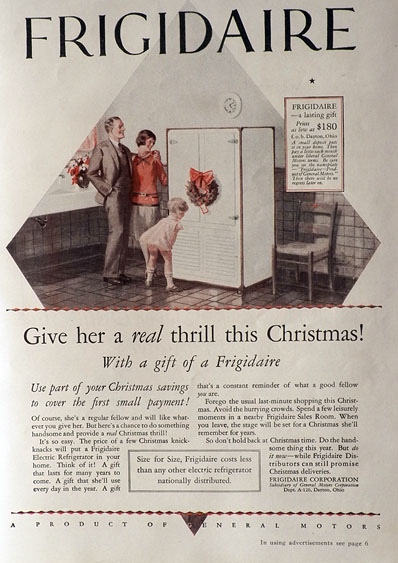
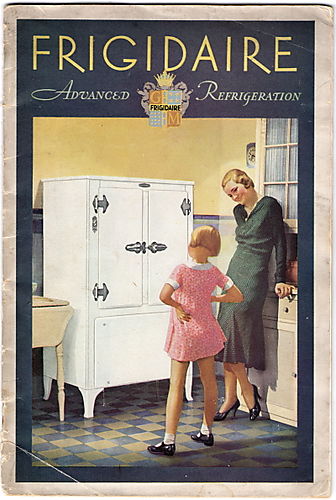
Frigidaire! Not only is the warm human body correlated with an (empty) household appliance, but the refrigerator as such is the reference of choice for this person! Fridge facts: Frigidaire launched the first electric “self-contained refrigerator” onto the market in 1923, the brand quickly becoming synonymous with the thing itself.

On the left is an ad for a 1927 model costing $180 – a value of $2,613.29 in 2020. And on the right, the front cover of a Frigidaire catalogue from 1931, the year of ‘I’m Thru With Love”s release. This image introduces a fascinating blogpost on Frigidaire by Liza Cowan, who gives this shrewd take on its idealisation of domesticity: “nothing says loving like a full fridge“.

All this is to say that the song’s images propose the protagonist as someone who naively thought that they were bopping their way to marriage, or a lonely wife whose affair with someone popular and sociable (“You didn’t need me for you had your share / Of slaves around you to hound you and swear, / With deep emotion, devotion to you”) lifted her beyond marital disappointments.

It’s all very melodramatic, and the song knows it. The major melody in the A sections soothes the narrative’s histrionics, while gut-wrenching chord choices and a sorrowful blue note gently affirm suffering. The B section makes a dramatic leap up to a minor key to emphasise its opening rhetorical question (“Why did you lead me to think you could care”), but doesn’t linger there long. Music puts the words at a distance from themselves, opening out all kinds of alternatives to unadulterated misery.

There are some devastating interpretations – see Etta Jones, Diana Krall, Mark Murphy, Arthur Prysock – but even these performances can’t help but slide into a kind of reflexive self-staging. Some versions are absolutely gigantic (Sallie Blair, Joan Merrill). Others exude an affecting warmth, even contentment (Carmen McRae, Ella Fitzgerald). Still others are in ‘wash that man right out of my hair’ high spirits (Sarah Vaughan, Jane Monheit). It’s a range of moods well sketched out in Swedish pianist Matti Ollikainenin’s ironic solo performance. Listening through multiple recordings on the trot makes for an experience not of utter desolation, as might be expected, but fun born of sadness that doesn’t take itself too seriously.

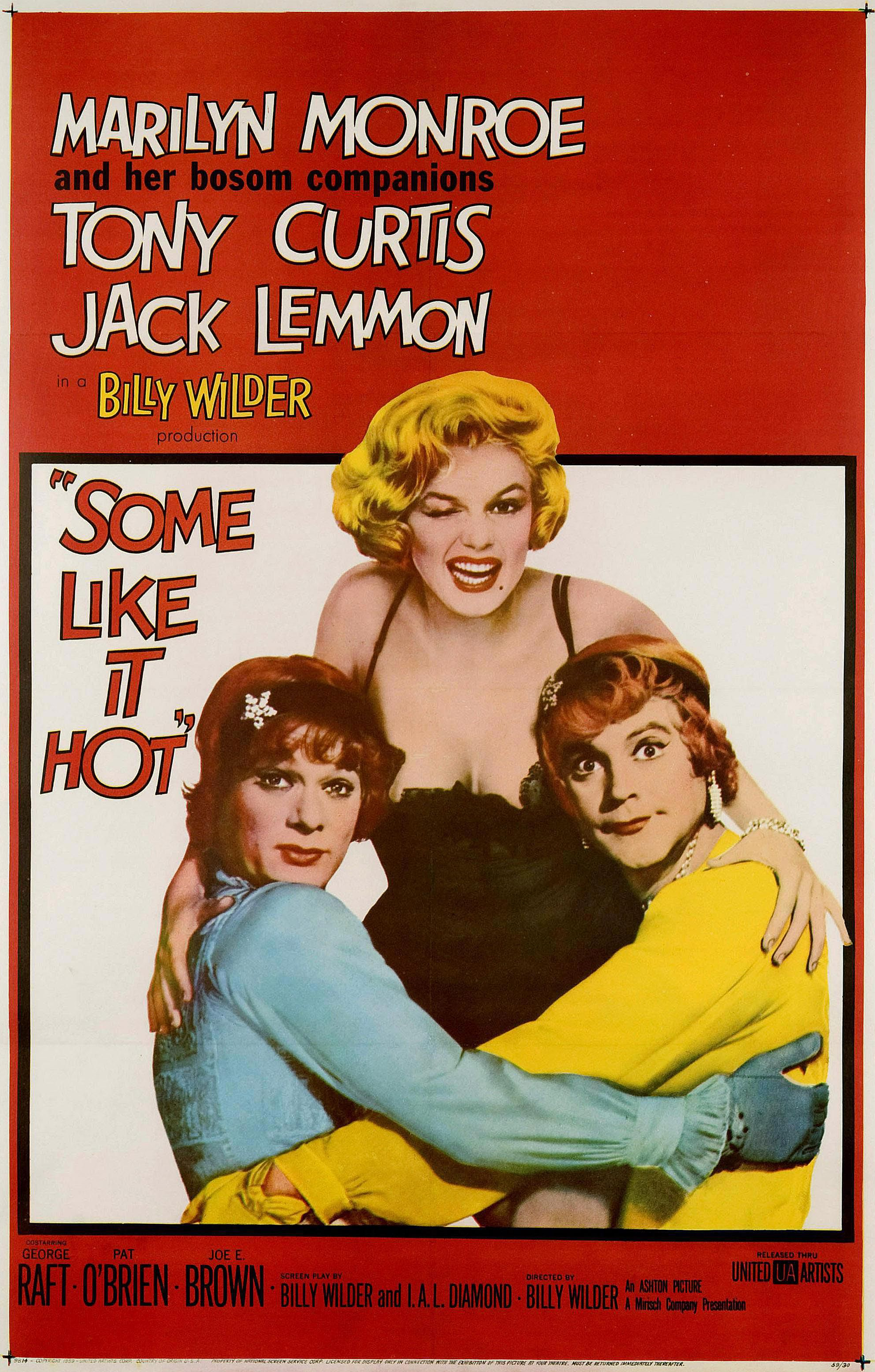
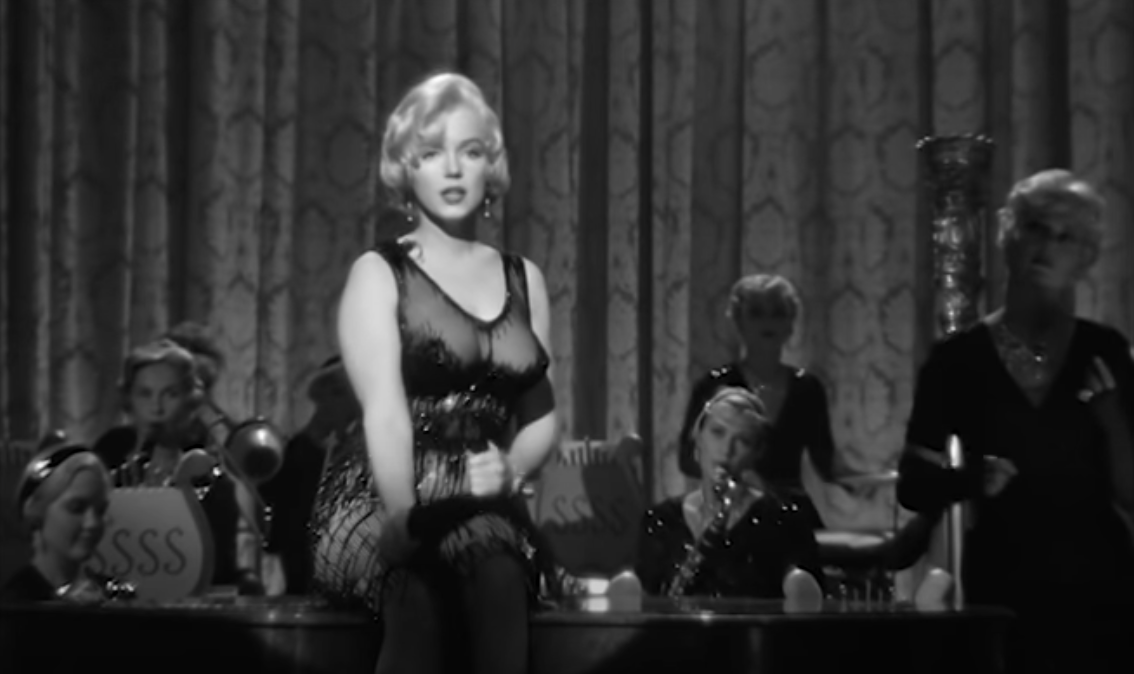
It seems apt then that the song’s most famous outing on screen should be in Billy Wilder’s Some Like It Hot (1959), a film comedy hingeing on disguise and an homage to multiple cinematic genres. As New York Times critic Manohla Dargis puts it, the film “feels like it was directed inside gigantic quotation marks“.

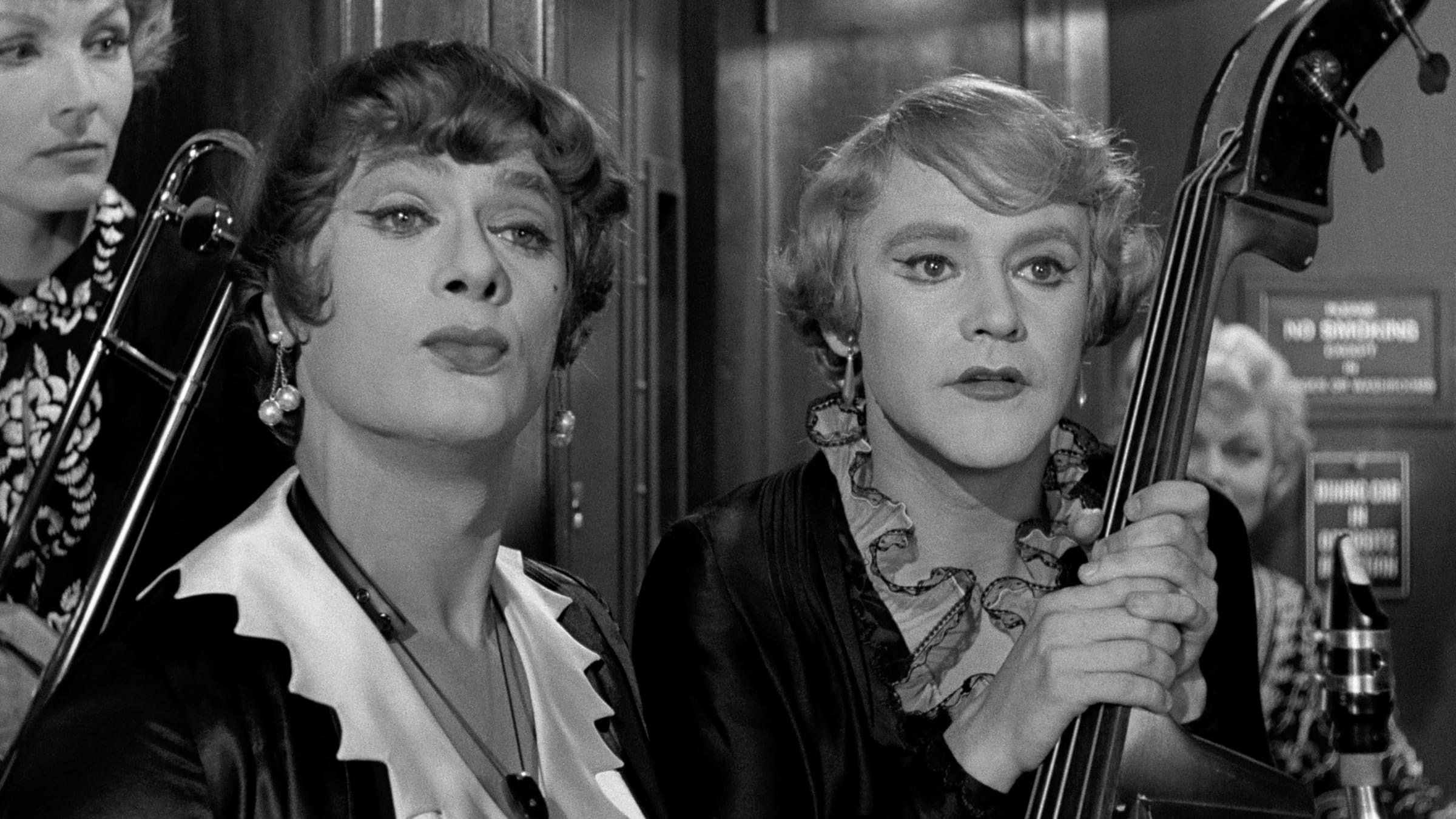
On-the-run jazz musicians Joe (Tony Curtis) and Jerry (Jack Lemmon) pass themselves off as ‘Josephine’ and ‘Daphne’ to join an all-female touring band. (Sidenote: the film’s musical supervisor was Matty Malneck, and its unreal lineup of musicians included Barney Kessel, Art Pepper and John Williams (yes).) To entice its chanteuse Sugar Kane (Marilyn Monroe), who intends to overcome her “thing for saxophonists” by snagging a Miami millionaire, saxophonist Joe masquerades as magnate Shell Oil Junior, and contrives to have her seduce him aboard a yacht appropriated from actual millionaire Osgood Fielding III (Joe E. Brown), himself in hot pursuit of Daphne.

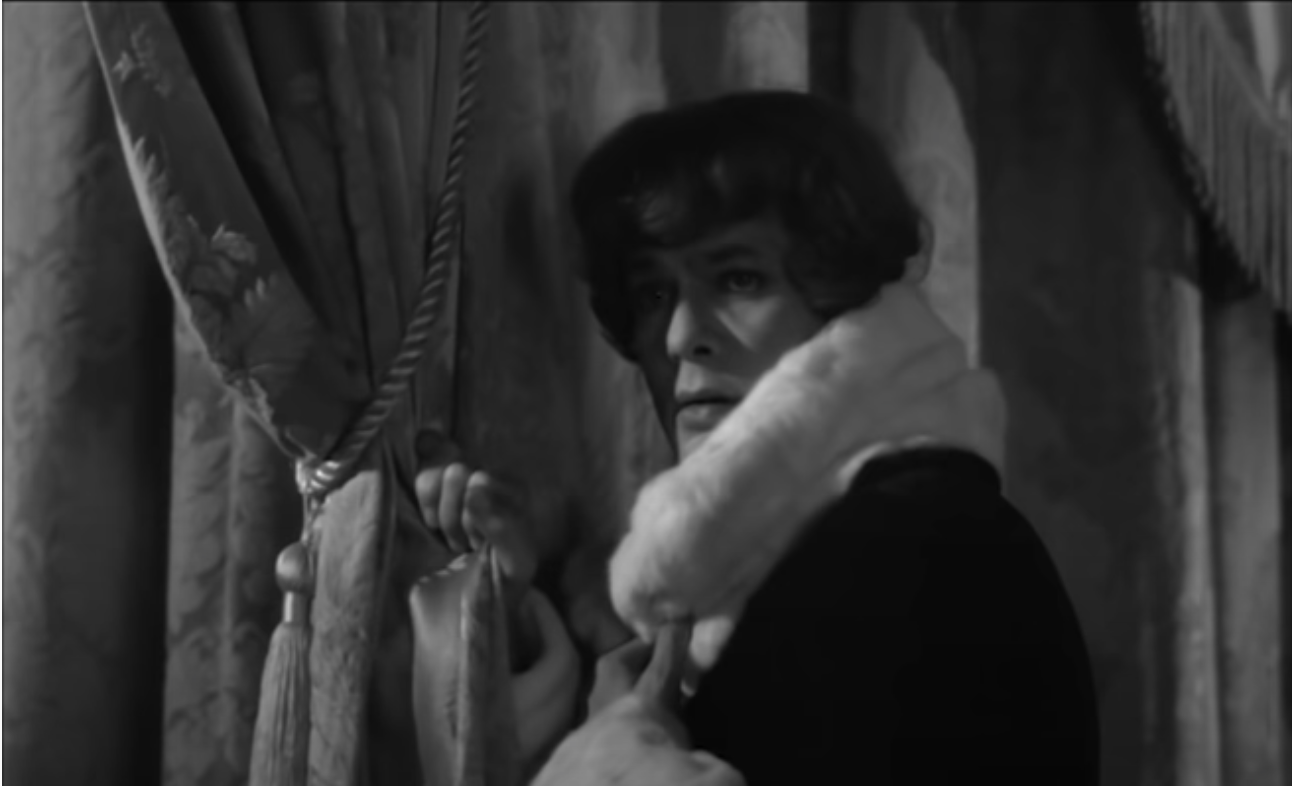
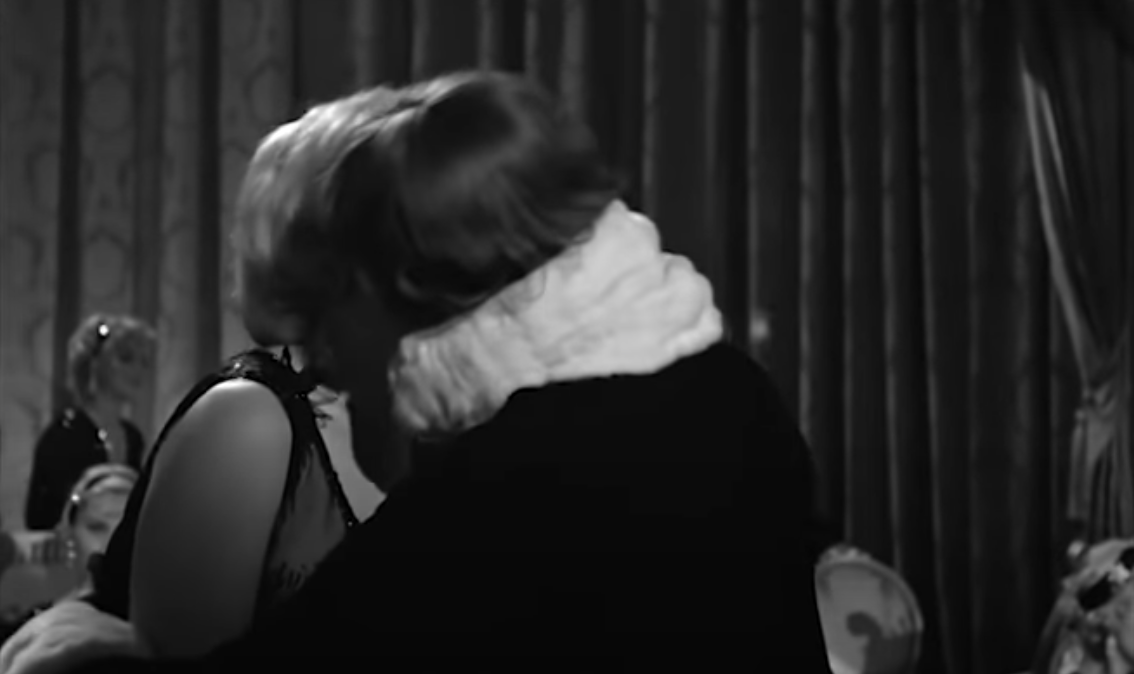
In the wake of Junior’s sudden departure, heartbroken Sugar sings ‘I’m Thru With Love’, her unhappiness unnoticed by everyone but Josephine, hidden behind a drape, realisation gradually dawning.

Marilyn Monroe’s tremulous performance musters stock gestures of feminine anguish, melting them into other, more authentic-seeming moments of emotion. The depth of her sadness and the euphoria and poignancy of the kiss she and Jo(e)sephine then share are totally conditional upon the layers of comedic artifice the film painstakingly constructs.

“None of that, Sugar. No guy is worth it!” ‘I’m Thru With Nonsense That Is An Obstacle To My Own Flourishing’,* we might then say, as love is discovered to be its own reward.

*Adaptation after Lauren Berlant.

10: Everything Happens To Me (1941)

This song is a primer in magical thinking.

Matt Dennis and Tom Adair wrote ‘Everything Happens To Me’ in 1941. Frank Sinatra’s winsome recording with Tommy Dorsey that same year made it a hit.

Surprisingly, despite the vividness of its story of chronic misfortune, there are far more instrumental than vocal versions. And no movie seems to have incorporated the song into its action.** Three films share its title – a 1938 comedy caper about a by-election in a seaside town starring vaudevillean Max Miller, a 2001 Spanish romantic comedy entitled Todo me pasa a mí adapted from a play, and a 2018 single-shot short about an actor’s terrible audition. Then there is Chissà perché… capitano tutte a me (1980), a supremely How Did This Get Madeable buddy cop drama which teams a preternaturally strong sheriff (Bud Spencer) with a gizmo-toting alien boy (Cary Guffey, of Close Encounters of the Third Kind fame). Its Anglicised title, Why Did You Pick On Me?, is the repeated refrain of the sheriff as the two of them get into scrapes. For exposure to its full range of battiness, including Mary Poppins-esque magical home improvements, Kraftwerk alien villains, and at least one hundred slapstick brawls, it can be seen in full here.

Lucky for my purposes then that the album cover of Chet Baker Sings: It Could Happen To You (1958), on which ‘Everything Happens To Me’ appears, is acutely cinematic. In his review piece about this album and Chet Baker as a cultural icon, John Bergstrom doesn’t love it:

Baker was cool, all right. But he exhibited none of the aggressive, chest-puffing, downright intimidating cool that went with most of the other big names of the day. His coolness was passive rather than active, accidental rather than inevitable, devoid of sexuality. Just look at the flat-out hokey cover art for It Could Happen To You. This guy isn’t dangerous. At least not yet.

Rollneck notwithstanding, Baker’s lupine gaze in that image feels pretty intense to me. It Could Happen To You as 1950s werewolf romcom: seemingly anodyne heartthrob lures unsuspecting dates and turns them; under the light of the waxing crescent moon, he meets his match in this laughing girl, who also happens to be a werewolf. I’d watch it.

Johnny Burke’s lyrics for ‘It Could Happen To You’ (1944) and Tom Adair’s for ‘Everything Happens To Me’ are two sides of the same narrative coin: the one, a story of the exhilarating terror of Cupid’s arrow, and the other, a melancholic account of perpetual adversity in life and love.

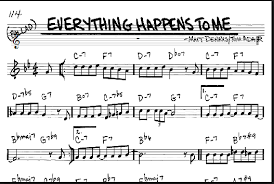
Everything Happens To Me

The verse – which Chet Baker’s performance excludes, and which is absent from the chart above – begins with superstitious high drama: “Black cats creep across my path until I’m almost mad / I must have roused the devil’s wrath, ’cause all my luck is bad”. (Ella Fitzgerald retains it; following a misleadingly jaunty introduction, so does Billie Holiday.) Dennis’s composition then modulates from minor to major, and Adair’s resigned tale of woe unfolds. Magic is replaced by a thoroughly modern kind of predestination: golf dates made will guarantee rain, card games played will engender inevitable defeat. The wordplay of the phrases “I guess I’ll go through life just catching colds and missing trains” and “I never miss a thing, I’ve had the measles and the mumps” suggest interminable negativity. And it’s always the protagonist’s own fault: “I guess I’m just a fool who never looks before he jumps / Everything happens to me”.

A love affair with the person to whom the song is addressed seemed briefly to present a solution to the “jinx”, but alas: “I’ve mortgaged all my castles in the air”. (I find this artful line really hard to get my head around. Dreams have crashed down to earth as crippling debts? To whom?) For the lost object of desire has cut ties with the hapless character altogether. Dealing with this unhappy turn, the penultimate couplet is legitimately funny: “I’ve telegraphed and phoned, sent an Air Mail Special, too / Your answer was ‘Goodbye’, and there was even postage due”.

The song concludes on a note of fatalism. “I fell in love just once and then it had to be with you / Everything happens to me”.

To be described as someone’s one and only true love, never to be replaced, is classic ‘romance’. But as the narrative plays itself out in Chet Baker’s delicate performance, the protagonist’s misery and self-reproach are all-encompassing and of long duration. The brilliance of the song is in its presentation of the failed love affair as the icing on the cake of this person’s beleaguered life: the mantra ‘everything happens to me’ hints at another, untold story of loss and disappointment.

**Update: actually there are four, a similar miscellany: romantic comedy Playing By Heart (1998) (“if romance is a mystery, there’s only one way to figure it out”), The Guard (2011) (“the FBI are about to discover that things work a little differently around here”), Dolphin Tale (2011) (“inspired by the amazing true story of Winter”), and Woody Allen’s A Rainy Day in New York (2019) (no tagline, but much controversy).

7: What’ll I Do (1923)

This song is saudade itself.

What'll I Do 2

Its story of love on the rocks was penned by Irving Berlin, with the champagne-fuelled assistance of Dorothy Parker on its last two lines. Addressing their (soon-to-be) estranged lover, its protagonist contemplates a lonely future absent of their company. In this future, the other person is a long way away, in the arms of another. All that is left is a photograph and castles in the air. It is the definition of ‘”a vague and constant desire for something that does not and probably cannot exist, for something other than the present”‘.

In a fascinating piece for The Atlantic, David Schiff talks of how Irving Berlin’s tunes ‘have a verbal tag and tell a story’, instilling in ‘common American phrases the nervous musical impulse of the modern city’.

Like many other Irving Berlin compositions, this song is deceptive in its simplicity. ‘What’ll I do?’ is its lyrical foundation. The boxy end rhymes of its two verses give a sense of stability – ‘divine’/’mine’, ‘mended’/’ended’, ‘bliss’/’kiss’, ‘descending’/’ending’ – which the choruses proceed to entirely undo. Internal rhymes surge through the choruses like gentle waves, softly eroding what formerly seemed secure. ‘What’ll I do when you are far away / And I am blue, what’ll I do?’ The only lines that lack these repeated internal rhymes are those reflecting on the protagonist’s memento – ‘What’ll I do with just a photograph / To tell my troubles to?’ The ebb and flow of the song’s emotion comes to a temporary moment of stillness with this melancholy image.

It’s been recorded numerous times in vocal and instrumental versions, very often with sentimental strings, as in Frank Sinatra’s 1947 performance. The major key and waltz time sit in a sad tension with the song’s sorrowful lyrics. But desolation and abandonment are not all there is to it. For example, Sarah Vaughan’s 1964 recording, arranged by Benny Carter, is razor-sharp.

What’ll I do? Immediately go on holiday, pound a bunch of drinks, and plot exuberant revenge. Vaughan’s sleek arpeggios are not really about pining. In this devastating live performance on her television show, Judy Garland makes an inspired lyrical adjustment following what seems like a pronunciation misstep: ‘What’ll I do when I am wondering how / You feel just now, what’ll I do?’ Chet Baker’s psychedelic interpretation, recorded in 1974, conjures a parallel universe. It’s beautiful, but I find it deeply antagonising: to me, this protagonist seems to be gaming his interlocutor.

I can’t remember how I first came to know ‘What’ll I Do’, but it’s highly likely that it was via the opening credits of the BBC sitcom Birds of a Feather, in which it is performed by co-stars Pauline Quirke and Linda Robson.

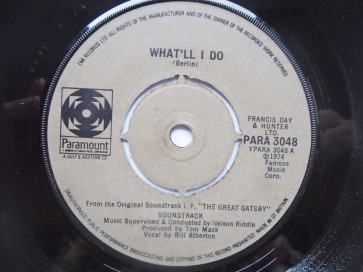
The series had originally used for its own credit sequences Bill Atherton’s recording for the opening credits of The Great Gatsby (1974), directed by Jack Clayton. The choice of ‘What’ll I Do’ for The Great Gatsby is itself a reference to the song’s own genesis: as a member of the Algonquin Round Table, Irving Berlin ran with a set that ‘often partied at the Long Island Gold Coast estate of Herbert Bayard Swope (a figure whom many believed to be the model for Fitzgerald’s Gatsby)’.

Atherton’s tender vocals accompany a gradual close-up on a newspaper clipping – Mia Farrow as Daisy – and a tracking shot of the dissolute, photograph-bedecked luxury of Gatsby’s mansion. The revised Birds of a Feather credits are likewise accompanied by the sweetness of strings, and a selection of photographs. But these are of the series’ two sisters, now cohabiting following the imprisonment of their husbands for armed robbery. And they are photographs of the two actors, taken at various stages of life, that appear to be genuine: Quirke and Robson had grown up together.

For both opening and closing credits of Birds of a Feather, only the first and last choruses are used, stripping the song of romantic association. It is possible to hear reference to the incarcerated husbands. But in juxtaposition to the photographs, it becomes much more prominently about the sisters’ relationship, and the sadness of their former separation through the process of adult life. The cinefilm that graces the closing credits is excruciatingly poignant – from one child’s impossible attempt to feed ice-cream to her bear, to their final wave to the camera, running up the grass into the future. It’s an extraordinary visual gesture to the final lines of F. Scott Fitzgerald’s novel: ‘So we beat on, boats against the current, borne back ceaselessly into the past’.