23: A Certain Smile (1958)

This song puts up a front.

Composer Sammy Fain and lyricist Paul Francis Webster wrote this winsome, Academy Award-nominated song for Jean Negulesco’s A Certain Smile (1958) – a sweeping cinematic adaptation of Françoise Sagan’s uncompromising novella about love, sex and infidelity. Critics at the time found the film’s treatment of Sagan’s story to be average at best: a “glossy, emotional yarn” (Variety), a “tepid romantic interlude” (New York Times). The song has been infrequently recorded since the 1970s.

No-one:

Me: ‘A Certain Smile’ is integral – INTEGRAL – to A Certain Smile‘s re-articulation of Sagan’s book as a melodramatic touristic visual feast – yes, and in case you imagine this is a situation of FILM = BAD, BOOK = GOOD, the last of those is an aspect that weirdly resonates with Sagan’s own literary style, which makes much of staging things to look at!* Plus, existentialist cynic Sagan wrote romantic song lyrics for Juliette Greco?!**

NB. “no-one” meme format for me still fresh as daisy because not on Twitter and this too probably. Anyway, let’s get into it.

‘A Certain Smile’ has been a rabbit hole to fall down. Back in the spring, Spotify gave me Ted Greene’s 1977 night sky of a solo recording. Confusion descended: did I know the song already, or was this sparkling arrangement enchanting me into thinking I did? (Martin Taylor’s intensely beautiful 1993 solo guitar rendition did similar magic.) I listened to the inaugural 1958 recording by Johnny Mathiswho performs the song with verse in a nightclub set piece in the film – and was still none the wiser. I couldn’t decide if it was the sing-song pattern of the melody that felt familiar, or the song itself. When I asked my mum about ‘A Certain Smile’, she knew it immediately, lyrics and all. From the generational point of view, this makes sense: more than half of the vocal recordings to be released professionally were out by the late 1960s, with ten of those released in 1958. This smash hit – Mathis’ recording reached #4 in the UK – has been in the atmosphere for decades, with diminishing density over time.

The song’s apparent sweetness contrasts with Sagan’s A Certain Smile (1956) – a text that begins archly with an epigraph from Roger Vailland: Love is what happens between two people who love each other.

Dominique, in a relationship with fellow Sorbonne student Bertrand, tells the winding story of her short but unexpectedly emotionally shattering affair with Bertrand’s married uncle, Luc. For one critic reviewing the book in 1957, Sagan communicates the experience of “serene despair” with immaculate precision, featuring “none of the obsession with the details of external reality so common in her contemporaries: ‘and now I shall show you what Life is really like in Paris, Moscow or New York’, in attempts which finally show what? nothing”.

Paul Francis Webster’s lyrics, prepared for the film, are of a different order of business.

What do you meet down a crooked little street in Paris
Vendors who sell pretty flowers that tell of spring
Once in a while you may meet a certain smile in Paris
So excitingly gay that it seems to say ‘cherie, fall in love with me’

A certain smile, a certain face
Can lead an unsuspecting heart on a merry chase
A fleeting glance can say so many lovely things
Suddenly you know why my heart sings

You’ll love awhile and when love goes
You try to hide the tears inside with a cheerful pose
But in the hush of night exactly like a bittersweet refrain
Comes that certain smile to haunt your heart again

Set against a dramatic minor key, the verse’s clever internal rhymes and their fantasy of Paris resolve into the optimistic choruses, their rhyming couplets, and their protagonist, sharing the wisdom of their experience while presenting a brave exterior. It’s strangely labyrinthine in its temporal journey, and much more complicated than it first appears to be.

This isn’t unlike the movie – although I will say I found A Certain Smile to be a rough watch, at least first time around. It rearranges the essential components of Sagan’s book to produce a morality tale that visually “abounds with mouth-watering vistas of the French Riviera”. Characters bear only marginal resemblance to their sources: the ingénue (Christine Carère), her parents (Eduard Franz, Katherine Locke) in extended grief for the loss of their son, said ingénue’s feckless boyfriend (Bradford Dillman), his rich and selfish mother (Kathryn Givney), the playboy uncle (Rossano Brazzi), his long-suffering wife Françoise (Joan Fontaine), and a rogues’ gallery of assorted friends and associates. Dominique’s red beret amid the grey stone of the Sorbonne marks her out as a scarlet woman in the making. Her fate is confirmed when, soon after Luc hits on Dominique in a café-bar she has attended with Bertrand, Françoise airily offers Dominique a red coat during her visit to their home, declaring it “far too young for me” – misogynising, if you will, a more or less throwaway moment in the book, in which the couple extravagantly buy a coat “in a reddish woollen material” for their nephew’s new girlfriend in a shop.

‘A Certain Smile’ instrumentally underscores the beats of Dominique’s entire emotional arc, from her misguided entanglement with Luc to her rapprochement with Bertrand. So closely is the song woven into the fabric of the film that it’s almost imperceptible, smoothing the way for the romance’s compliance with the sanitising “shibboleths of the Production Code”.

As recounted in Michaelangelo Capua’s Jean Negulesco: The Life and Films (2017), here is how Sagan – whose text features extra-marital sex, pregnancy scares and so on – reacted to A Certain Smile‘s screenplay in a meeting with Negulesco in Paris:

I gave her an appointment in a café not too far from where we were shooting. She was sitting on the terrace eating a ham and cheese sandwich in the company of young man. I approached her a bit confused.

‘Miss Sagan?’
‘Yes.’
‘Excuse me, I’m Jean Negulesco. Have you read the script?’
‘Yes.’
‘Did you like it?’
‘No.’
‘Could you tell me why?’
‘No.’
‘Do you want to join me on the set?’
‘No.’
‘Would you allow me to pay for your sandwich?’
‘Yes.’

She then said to the young man: ‘It’s not him that pays, it’s 20th Century Fox.’

Despite Sagan’s understandable aversion to the film’s adaptation of her book, they end up at similar destinations. Rachel Cusk praises her “fearless and astute portrayal of love as a psychical event that has its roots in family life and the early formation of personality”. As I watched the film a second time, I realised that Dominique’s bizarre actions were imagined to hinge on the death of her brother and the consequences for her family, and that every character in their own way was struggling with loss. All three of these interconnected works – novella, film and song – are grappling with the depths of pain and its origins, though Sagan’s writing looks at them most directly and dispassionately.

*In both visual and psychological modes. A particularly economical example of narrative reflexivity from A Certain Smile‘s fourth chapter: “I couldn’t help feeling quite warm towards myself.” (p. 186)

**From a fascinating short biographical post entitled ‘That Charming Monster, Francoise Sagan’: “It is not widely known that Françoise Sagan dabbled in song writing, composing lyrics for romantic songs and even librettos for ballets. This aspect of her career came about when, at the age of twenty, haunting the bars and nightclubs of Saint Germain des Prés, she met the musician Michel Magne. Having already tried out over fifty lyricists for his songs, Magne thought Sagan’s style would be perfect. Her lyrics reflect a maturity beyond her years and lack the cynicism of her books. They are often about people wrestling with private pain and angst, deep into alcohol-fuelled nights. Vous mon Coeur (You my Heart) is a plea to a lover not leave: ‘You, my heart/You my life/You who smile/You who embrace me/You, one day…..will leave me, my heart.’”
20: My Ship (1941)

This song is about how we got here.

NB. Major spoilers ahead for Lady in the Dark (1944) and Phantom Thread (2017).

I first heard ‘My Ship’ several years ago – probably Nancy Wilson’s very beautiful big band recording from 1963, whose choppy instrumental introduction soon settles into golden plain sailing. Ira Gershwin’s lyrics fantasise luxuries arriving from far away, which are as nothing without the delivery of a soul-mate:

My ship has sails that are made of silk
The decks are trimmed with gold
And of jam and spice
There’s a paradise
In the hold
My ship’s aglow with a million pearls
And rubies fill each bin,
The sun sits high
In a sapphire sky
When my ship comes in
I can wait the years
Till it appears
One fine day one spring
But the pearls and such
They won’t mean much
If there’s missing just one thing
I do not care if that day arrives
That dream need never be
If the ship I sing doesn’t also bring
My own true love to me

Despite its sun, the song’s story reminded me of Christmas, most likely because of the carol ‘I Saw Three Ships (Come Sailing In)’. The nursery rhyme ‘I saw a ship a-sailing’, about a merchant vessel packed with treats and crewed by mice-sailors with “chains about their necks” was probably somewhere in my mind too: it appeared in ‘Ship in a Bottle’ (1974), the very first episode of Bagpuss.

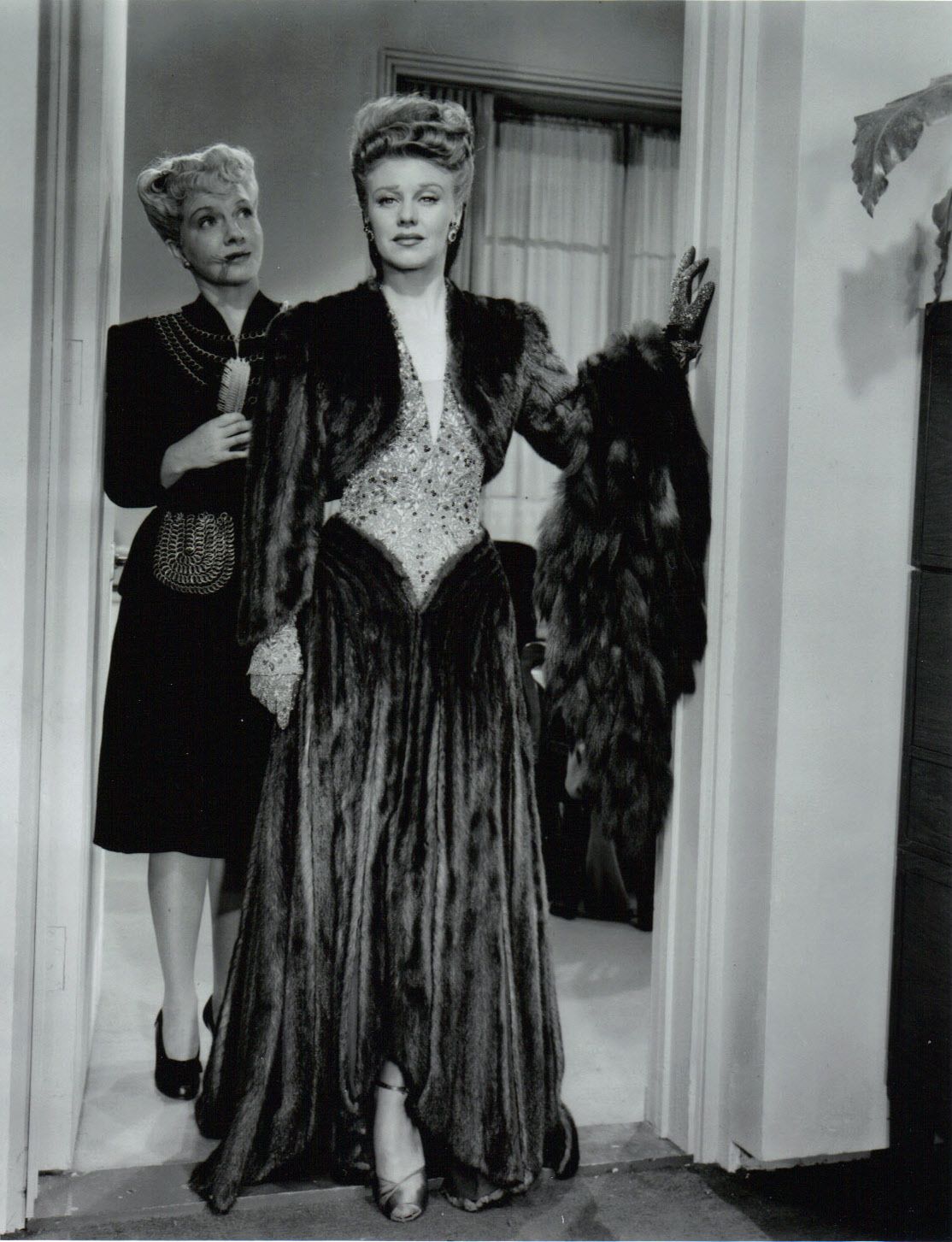
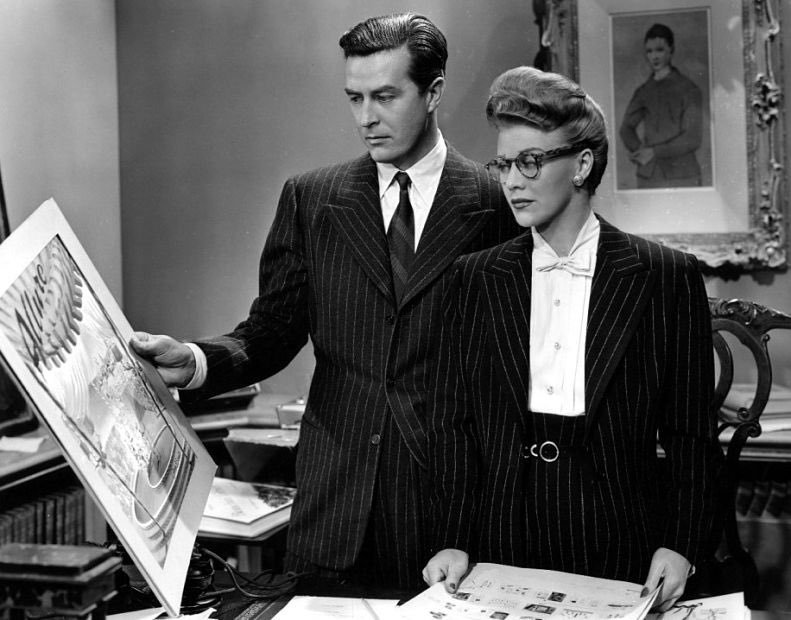
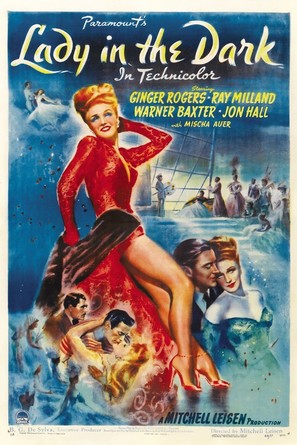
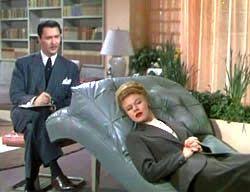
With Ira Gershwin, Kurt Weill composed the song for Moss Hart’s stage musical Lady in the Dark (1941). Liza Elliott, ambitious and successful editor of fashion magazine Allure, is in crisis. Her doctor recommends psychoanalysis. In the 1944 film dramatization – one of the highest grossing movies of the year – Liza (Ginger Rogers) finds herself humming a phrase from ‘My Ship’ repeatedly: an elusive echo of a repressed trauma. Psychoanalysis allows her to recall that as a young child she tried to perform the song at a family party. Her self-absorbed mother, preoccupied by male attention, is indifferent; the guests are thoughtlessly unkind, saying she is plain. As a child, Liza begins to hate her appearance. When her mother dies soon after, she is unable to grieve. She tries on her mother’s special blue dress, and her father chastises her angrily: a terrible rejection.

As Bruce McClung writes, ‘I saw a ship a-sailing’ is “the song’s predecessor”; further, “the gradual decoding of what ‘My Ship’ signifies sustains the drama, a process like the ‘Rosebud’ cipher in Citizen Kane. In relation to the song’s image of a ship bearing bounties, Lady in the Dark is also, mindblowingly, ghosted by Shakespeare’s The Merchant of Venice (1596) – a play that dramatizes, amongst other things, “the new set of economic interactions that accompanied the birth of capitalism”. McClung notes that Moss Hart’s own experience of psychoanalysis was formative of the story, but that Freud’s ‘The Theme of the Three Caskets’ (1913) is what gives Lady in the Dark its structure. In the essay, Freud theorises the lottery for Portia’s hand in The Merchant of Venice: a choice between gold, silver and lead caskets, one of which contains her portrait. Like Bassanio, Hart has Liza select between three ‘caskets’ – publisher Kendall Nesbitt (Warner Baxter), actor Randy Curtis (Jon Hall), and her magazine’s advertising executive Charley Johnson (Ray Milland), who represent simplistically “the roles of father, lover, and husband”.

This film is a gorgeous waking nightmare, and watching it I was furious from beginning to end.

Amid the opulence of Allure‘s offices – the film’s lavish design and dream sequences subvert its maniacal heteronormativity – Charley attacks Liza continually, questioning her gender, sex life, and style, and brazenly declaring his desire for her job. When unusually she wears an evening gown on a date with Randy – a garment of sequin and mink that cost Paramount an eyewatering $35,000 dollars to produce – he jibes “you look wonderful – you actually look like a woman!” Her psychoanalyst Dr Brooks (Barry Sullivan) meanwhile proposes that, stemming from her childhood experiences, her distress lies with her reluctance to embrace femininity and “compete with other women”. Ignoring the injustices it so clearly lays out, the film egregiously weaponises psychoanalysis to confirm the “sex/gender system” and everything it supports. It ends with Liza agreeing to co-run the magazine with Charley, her literal tumble to the ground as he grabs her editorial chair for himself, and a kiss of unlikely passion between the two. This great review including on point picture captions (“Ray Milland is a shithead with a whip and Ginger Rogers is the lady in a cage in the circus dream”) fully has the measure of the film, as do these others on Letterboxd.

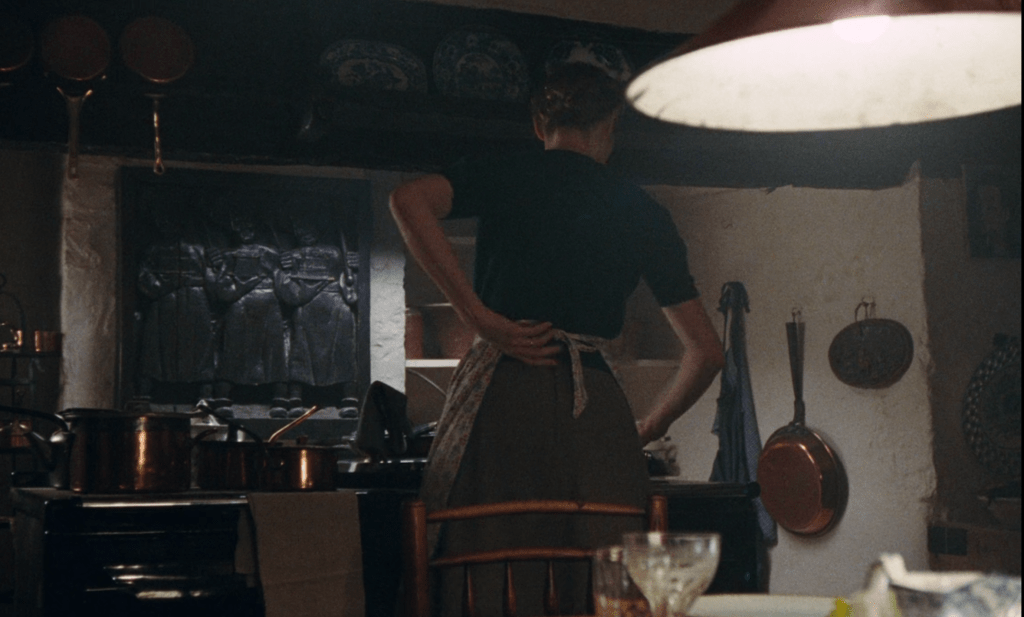
Paul Thomas Anderson’s extraordinary Phantom Thread (2017) includes ‘My Ship’. And Lady in the Dark seems to me to haunt the film in other ways, not least Freud’s essay.

At its conclusion Freud correlates the caskets to the mythological Fates (Moirai), the “three weaving goddesses who assign individual destinies to mortals at birth”, and thus to

the three inevitable relations that a man has with a woman – the woman who bears him, the woman who is his mate and the woman who destroys him; or that they are the three forms taken by the figure of the mother in the course of a man’s life – the mother herself, the beloved one who is chosen after her pattern, and lastly the Mother Earth who receives him once more. But it is in vain that an old man yearns for the love of a woman as he had it first from his mother; the third of the Fates alone, the silent Goddess of Death, will take him into her arms.

The relationship that Paul Thomas Anderson concocts between celebrated and exacting dressmaker Reynolds Woodcock (Daniel Day-Lewis) and his lover and model Alma (Vicky Krieps) attempts to have this cake and eat it. So consumed is Reynolds with his mother, and control over himself and his surroundings, that he cannot tolerate interruption or vulnerability, keeping his shrewd sister Cyril (Lesley Manville) close by as his safe companion. In these constrained, even hostile emotional circumstances, Alma (‘soul’) undertakes to derail his “games” by bringing him close to death: she feeds him poisonous mushrooms, then nurses him back to health, thereby impossibly occupying all three relations. This sadomasochistic gambit allows Reynolds to let go, to fall in love, to commit to her totally, and they have their own child. And so another cycle begins.

Oscar Peterson’s performance of ‘My Ship’ plays in the tearoom in which Woodcock first encounters Alma as a waitress, where he orders a ridiculous breakfast. Learning of Paul Thomas Anderson’s passion for big band jazz, I’m convinced that the narrative structure of Reynolds and Alma’s relationship is based on Nelson Riddle’s wonderful orchestral arrangement: brass and woodwind signal ‘watch out!’ before the song moves to surging strings, the solitary multiplicity of Peterson’s piano, and so on, periodically undercut by ambiguous, if not outrightly sinister harmonic choices. Key changes mark new phases, ascension to new heights. It’s almost unbearably poignant but also weirdly unserious somehow. It finishes with a steadying rallentando and fluttering flutes: a happy ending.

Aleksandar Hemon in the New Yorker concludes that Phantom Thread is “nothing if not propaganda for patriarchy”, and for sure I agree that it is in one sense a deep stitch-up, leaving little room for its women’s own desires beyond surviving these conditions, and doling out punishment for their perceived infractions. But like the stunning arrangement of ‘My Ship’ that it features, it is laced with compassionate unease, skewering power and fantasy with a delicate comic touch.

17: Almost Like Being In Love (1947)

This song is about time.

Right at the beginning of the lockdown, having missed the start of the National Theatre’s livestream launch of One Man, Two Guvnors, a friend and I decided to watch Groundhog Day (1993) in tandem in our respective flats instead. Nat King Cole’s sparkling version of Alan Jay Lerner and Frederick Loewe’s ‘Almost Like Being In Love’ brings the film to a close.

Lerner and Loewe wrote their by now much-recorded classic for the musical Brigadoon (1947), which received its pre-Broadway premiere on Groundhog Day that year. Over and above its lyrical aptness, was this choice a deliberate reference on the part of Groundhog Day‘s director Harold Ramis to the musical’s stage history? Encouraged by music editor Sally Boldt, Ramis resisted studio bosses’ demands for something poppier and more contemporary for the final moments of his film. Three months later, similarly distantly ensconced, we watched Vincente Minnelli’s film dramatisation of Brigadoon (1954). The song and this moment of calendrical serendipity only hint at the extent of what they share.

The golden thread that ties them together is their use of the single day as a narrative device. In Brigadoon, while lost with companion Jeff (Van Johnson) on a hunting trip in Scotland, jaded Tommy Albright (Gene Kelly) encounters the love of his life. Fiona Campbell (Cyd Charisse) is the denizen of an enchanted eighteenth century village that can reveal itself from the mist only once every one hundred years. Meanwhile, until he finds meaningful self-love, Groundhog Day‘s sardonic weatherman Phil Connors (Bill Murray) is condemned to repeatedly relive February 2 in the small town of Punxsutawney, whose annual groundhog ritual predicts the timeliness of spring.

‘Almost Like Being In Love’, Brigadoon‘s “only un-Scottish number”, places both punctuality and uncertainty at the heart of the experience of love. The full lyrics present a verse about the invigorating qualities of the Scottish Highlands and include the voice of the character Fiona, but the choruses, the basis of the majority of recordings, focus blissfully and more generally on the relationship between love and time’s markings.

What a day this has been! What a rare mood I’m in!
Why, it’s almost like being in love!
There’s a smile on my face for the whole human race!
Why, it’s almost like being in love!
All the music of life seems to be like a bell that is ringing for me!
And from the way that I feel when that bell starts to peal,
I could swear I was falling, I would swear I was falling,
It’s almost like being in love.

The present is of necessity constantly on the move. Likewise, the euphoria of love, which makes the person experiencing it a witness to their own self. These amazing lyrics achieve the perfect paradox of capturing the uncapturable – which may be why the final additional line of Frank Sinatra’s 1947 recording for Columbia (“In fact I have fallen in love”) feels so crashingly disappointing. (His infinitely livelier 1961 recording for Capitol, arranged by Billy May, doesn’t do this.)*

But what about the choice to characterise the music of life, which I understand to mean the divine energies that manifest as joy, as the sound of a bell ringing? With this phrase, modern timekeeping and the inevitability of wedlock threaten the song’s magical inbetweenness – reminiscent of the later lyric “get me to the church on time”, immortalised in My Fair Lady’s ‘I’m Getting Married in the Morning’ (1956), another famous Lerner and Loewe composition featuring bells.

Whatever. It’s hard to unthink these things, but to be honest I would rather focus on the song’s evocation of love as generous call and response, and music as sonorous vibration.

Still, both of these films are absolutely concerned with modernity – from the cultural and historical contrasts in Brigadoon between the villagers and their visitors Tommy and Jeff, and the screeching return of the two to a frenetic New York where Tommy’s fiancee (doppelganger of Fiona)** awaits, to Phil’s profession in Groundhog Day, which combines meterological prediction and small time celebrity and its discontents.

And the events that unfold in both rest on what modernity excludes. Magic isn’t supposed to happen in situations in which aeroplanes and cars are part of everyday life, and time marches forward relentlessly. Magic pauses that forward march, allowing different realities to emerge – the chance meeting of lovers from different historical times, a sequence of time that is endlessly replayed and reworked.

In this respect, these stories are both deeply theatrical too. Not unlike the weather forecast blue screen, Phil’s progress through the multiple reiterations of February 2 makes of Punxsutawney and its characters an ersatz stage setting for his cursed existential self-improvement – especially Rita (Andie MacDowell), the object of his desire, whose own kind self beneficently “makes him need himself”. Meanwhile, given the mystical threshold time of Brigadoon, Tommy struggles to take the reality of the feelings he and Fiona share seriously. As Serge Cardinal proposes in a wonderful discussion of the relation between temporality, music and image in Minnelli’s film, “music teaches him how to couple, to dance, in the deepest sense, with someone”.

When it appears at the end of Groundhog Day, ‘It’s Almost Like Being In Love’ sounds a bittersweet note. Phil knows Rita inside and out, but she, on a different temporal trajectory, hardly knows him at all. Not awesome in many respects.** But it’s also fitting that title lyric should become a hypothesis to be tested in a future that we won’t see. Set apart from the films’ narratives, the song expresses the radical uncertainty of all love as it begins. Worlds take on the character of contingency. These films literalise it. I said all this to my friend as we did post-match WhatsApp-ing about Brigadoon, and added that ‘almost like’ is just the maddest combination of words imaginable. “Which involves absolute risk”, he replied. “And all it is is… what you already hold, and is yours already.” So right. The beauty that lives in these films is how their protagonists move beyond fearful provisionality towards love for another, for themselves.


*Few recordings of ‘Almost Like Being In Love’ are as charming as Nat King Cole’s imo, but I really enjoy those by Beverley Kenny, Sallie Blair (“won’t you smoke the mood I’m in”), Chris Connor, Della Reese, Nancy Wilson, Etta Jones and Johnny Hartman. Michael Johnson’s takes the song in a unique direction.

**One million percent these are not feminist films. At all. Cf. the founding mythology of Brigadoon being flight from witches (Jeff: “Oh we have ’em. We pronounce it differently”), framing of almost every female bit part in Groundhog Day, etc etc.

15: What’s New? (1939)

This song is within and without.

Bob Haggart and Johnny Burke’s ‘What’s New?’ dramatises one side of an at-first casual conversation between two ex-lovers, set in some social gathering or other. Time has elapsed (“You haven’t changed a bit”). As the song unfolds, the protagonist’s studiously dispassionate small talk (“How is the world treating you?”, “How did that romance come through? / We haven’t met since then”) is revealed as a cover for their still-interested broken heart. The final choruses subtly speak of the pain of being pitied, with an ending that could be delivered either as a lonely retreat into the self or a moment of confessional exposure.

What’s new
Probably I’m boring you
But seeing you is grand
And you were sweet to offer your hand

I understand, adieu
Pardon my asking, what’s new
Of course you couldn’t know
I haven’t changed, I still love you so

(I didn’t realise the line was “I understand, adieu” until I saw it written down, having consistently misheard it as “I understand, I do”. “Goodbye forever” is definitely in keeping with the song’s tragedy, but I think I prefer the mistake.)

‘What’s New?’ offers plenty of scope for lovelorn wretchedness – for example, the orchestral melancholy of the recordings by Frank Sinatra and Linda Ronstadt – but others take it in unexpected directions.

One of the earliest, by Jess Stacy & His All Stars with singer Carlotta Dale, is supremely self-assured: this woman knows her worth and has no issue admitting how she feels. Maxine Sullivan’s is not remotely tortured. Carmen McRae and Betty Carter exude joy in female friendship and mutual admiration. Then the acres of instrumental interpretations that exist, way outnumbering vocal performances, conjure a million different, sometimes optimistic, situations – from the undulating sea of Ahmad Jamal’s recent solo version, to Hal McKusick’s deserted after-hours bar, or George Benson’s hot dance floor reunion. And the exquisite ambiguity achieved in Helen Merrill’s 1954 recording, stunningly arranged by Quincy Jones, bears no trace of nostalgic melodrama. The arctic sadness of her engrossing performance fuses public words and private thoughts. At any moment in the song she could be talking to someone directly, or imagining to herself how their conversation would go, gazing across a crowded room. Its beauty verges on the uncanny.

What goes said and unsaid is at the centre of two of the films that feature ‘What’s New’ – Michael Curtiz’s WWII aviation medicine story Dive Bomber (1941), and Harvey Fierstein’s four-hour Broadway comedy drama Torch Song Trilogy (1988), radically cut for the screen. Both tell stories of intimacy between men, though only Fierstein’s is explicit on the matter. In Dive Bomber, as in so much literature, rituals of smoking stand in for physical connection, and unusually, caring relationships. Female romantic interests fall a distant second to the initially abrasive relationship between Lieutenant Doug Lee (Errol Flynn) and Lieutenant Commander Joe Blake (Fred MacMurray).

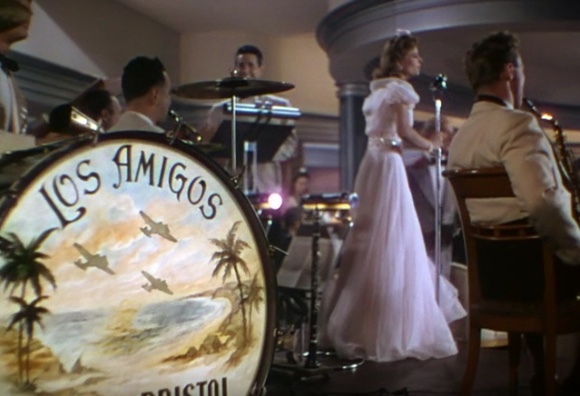
The song’s line “Probably I’m boring you” cues in a dinner dance to which Doug and Joe have taken dates Linda (Alexis Smith) and Helen (Ann Doran). The men distractedly ignore both women, preoccupied by their shared task: the design of a pressure suit to combat pilots’ altitude sickness.

The scene is rich with subtle and not-so-subtle clues regarding the dynamics of the pilots’ friendship, from the visual emblazoned on the band’s bass drum –

Dive Bomber 20--band

– to a sequence in which, as they sketch suit designs on a tablecloth, Linda’s lipstick furnishes the inspiration for “a slide valve with a fine screw on the stem. Each turn opens it just a hair. This is it!”

The phallic emergence of the red lipstick from its tube, seen in close-up, is eye-popping. Bored and annoyed, the women go, despatching a young waiter to recite a short poem to Doug and Joe: “We don’t like quarrels, we don’t like scenes / The Navy’s too busy, we’ll try the Marines”.

After Joe sacrifices his life in testing the pressure suit prototype, Doug commemorates him at a naval ceremony as “my friend and co-worker, Lieutenant Commander Blake, a very gallant gentleman”. In a solitary moment at this event, he kisses his hand and plants it on Joe’s plane, before taking to the skies with other pilots, and ritually throwing Joe’s special cigarette case into the clouds (an act that would surely kill anyone unfortunate enough to be standing where it landed). It is a story of love, but the film can claim it’s just about men working together for the war effort.

The three acts of Torch Song Trilogy give us years in the life of New York drag performer Arnold (Harvey Fierstein). At the end of the second act, a gang of men murder Alan (Matthew Broderick), his first real love, in a homophobic attack. Billie Holiday’s recording of ‘What’s New’ accompanies a scene early in the third (here, at 1:24.56), starting mid-way through the penultimate chorus. Arnold returns home to find his on-again, off-again lover Ed (Brian Kerwin) asleep on the couch, where he removes Ed’s glasses tenderly. At this point the song seems to signify Arnold’s affection, and the extent of what Ed, a man who isn’t open about his sexuality, can offer in their relationship. But then Benny Carter’s saxophone solo begins, and we see Arnold get into bed, now in his pyjamas. He takes Alan’s portrait, which sits on his bedside table, in his arms, then rolls his eyes, saying “how Alice Faye can I get?!” The shot cuts to the morning kitchen radio, where Carter’s solo continues. Time jumps but the song flows on unbroken: love is unending and loss ever-present.

Torch Song Trilogy ultimately refuses a tragic ending. Put together, I see both films mapping and subverting the sexual limits heteropatriarchy laid down in the twentieth-century. What they share with ‘What’s New?’ goes beyond the specific lines they use concerning conversational distraction and lost love: all speak of how social convention and desire interact.

14: Baby, It’s Cold Outside (1949)

This song mixes things up.

Frank Loesser wrote the duet ‘Baby, It’s Cold Outside’ in 1944 as a novelty party piece that he and his wife Lynn performed for friends at their housewarming. The song’s incongruous appearance in the romantic comedy Neptune’s Daughter (1949) garnered it an Academy Award and a clutch of other recordings in the same year by popular music and jazz greatsElla Fitzgerald & Louis Jordan, Margaret Whiting & Johnny Mercer, and Dinah Shore & Buddy Clark among them. Sixty years on, the song’s account of seduction fuels hot takes on sexual politics like no other. ‘Baby, It’s Cold Outside’: cute celebration of wintry flirtation, or vile dramatisation of sexual coercion?

The lyrics give us a couple who, in the score, are each assigned the nicknames ‘Wolf’ and ‘Mouse’. Gesturing to the bitter weather and his cosy living room’s roaring fire, the guy keenly insists that his gal should stay. Hyper-alert to the reputational consequences of such a choice, she invokes nosy neighbours and all her family members eagerly awaiting her chaste return – the most judgemental being her “maiden aunt”, whose “mind is vicious”. The story ends merrily with the Mouse’s seeming capitulation, the two singers delivering the song’s title lyric harmoniously together.

The contemporary debate about the song’s power dynamic has become frenzied. In 2018, an array of North American radio stations went so far as to ban it, one DJ making the assessment that “in a world where #MeToo has finally given women the voice they deserve, the song has no place”. In a similar vein, John Legend not uncontroversially adapted its lyrics with Natasha Rothwell for a 2019 #MeToo-responsive recording with Kelly Clarkson – who herself had previously recorded the song with Ronnie Dunn in 2013.

This fraught scene has given rise to some really amazing writing. I concur with Chris Willman’s hilarious view, which opens his 2018 survey piece for Variety:

There is one group, and one group only, that should be crusading against the performance of ‘Baby, It’s Cold Outside’ in public: vicious maiden aunts.

For Willman, Zoey Deschanel and Will Ferrell’s shower-scene performance in Elf (2003) is the fountainhead of the song’s becoming “ubiquitous almost to the point of torture” – a suggestion in interesting historical accordance with Amelia McDonell-Parry’s 2018 article for Rolling Stone. There, she writes that current critique of the song’s sexual politics first got underway in 2004. She refers to a truly brilliant 2016 Tumblr post by a “former English teacher/nerd”, who argues that the now-incendiary lyric “Say what’s in this drink?”, penned in 1944, was “a stock joke at the time, and the punchline was invariably that there’s actually pretty much nothing in the drink, not even a significant amount of alcohol”. This writer concludes:

it’s a song about a woman finding a way to exercise sexual agency in a patriarchal society designed to stop her from doing so. But it’s also, at the same time, one of the best illustrations of rape culture that pop culture has ever produced. It’s a song about a society where women aren’t allowed to say yes…which happens to mean it’s also a society where women don’t have a clear and unambiguous way to say no.

Unlike clickbait determined that ‘Baby, It’s Cold Outside’ should be either one thing or the other, the best recordings of the song find similar both-and depth.

Admittedly, Frank Sinatra’s performance with Dorothy Kirsten fully embraces predation: it features a cartoonish spoken word section in which, in Pepe Le Pew-style, he locks her in his house and swallows the key. But Carmen McRae and Sammy Davis Jr’s increasingly funny version gives us a boss female protagonist. Louis Armstrong and Velma Middleton’s is also packed with jokes. Like its fairytale fantasy video, Tom Jones and Cerys Matthews’s is almost psychedically hyperbolic, topped off with Matthews commenting “Bloody freezin’, innit?” in a broad Welsh accent.

Plus there are plenty that flip the heteronormative script, assigning the Wolf to the female vocalist, or presenting two male or female singers – Caroline Pennell, She&Him (Zooey Deschanel and M. Ward), Kelley Jakle & Shelley Regner, Nathaniel Rateliff & Julie Davis, John Travolta & Olivia Newton-John, the version from Glee. Scott Bradlee’s Postmodern Jukebox delightfully substitutes a tap dancer for the Wolf. In this context, rewritings of the song seem quite baffling. As I receive it, John Legend’s adaptation presents a controlling guy and an anxious girlfriend – similarly, Lydia Liza and Josiah Lemanski’s. (The comments on the Legend YouTube video are golden.) It’s notable that in both of these versions the Mouse’s lyrics remain largely unaltered.

In Neptune’s Daughter, the song’s first public outing was in fact performed with and without role reversal.

A comedy of mistaken identity, the film hinges on hot ‘South American’ masculinity and sexuality being compared to ‘North American’ schlubby haplessness, and ‘right’ and ‘wrong’ kinds of feminine conduct. Swimming champion turned swimsuit designer Eve Barrett (Esther Williams) is anxious to protect her man-obsessed sister Betty (Betty Garrett) from herself – in particular her yearning for José O’Rourke (Ricardo Montalban), the captain of the South American polo team (yes, all of South America). Betty confuses masseur Jack Spratt (Red Skelton) with José, and commences an aggressive programme of seduction, much to Jack’s initial terror. Meanwhile, Eve tackles José, and he cultivates her misapprehension that Betty is dating him.

The song takes place mid-way through the film, improbably on a “warm summer’s evening”, and contrasts the two couples: Eve sidestepping José’s wolfish overtures, and Betty ardently pinning Jack to a couch. The scene quickly segues to ‘Jungle Rhumba’, an extended dance number orchestrated by Xavier Cugat, an exoticising proxy for what Betty and Jack may or may not be getting up to.

It’s a strange, not unproblematic film. But with its pantomimic cross-dressing, presentation of desire, and a decidedly homoerotic massage scene between José and Jack, Neptune’s Daughter both establishes and messes with Eve’s opening gambit: “men are men, and women are women, and, well, that’s just the way it is” – as do the richest interpretations of Loesser’s ingenious song.

12: I Only Have Eyes For You (1934)

This song is a fantasy.

Harry Warren and Al Dubin wrote ‘I Only Have Eyes For You’ for the movie Dames (1934), a satire on theatrical censorship featuring Busby Berkeley’s choreography. In context, the song is a sweet serenade given by budding Broadway composer and impresario Jimmy (Dick Powell) to his dancer girlfriend Barbara (Ruby Keeler). Their love story is a slight vehicle for Dubin’s intense lyrics. But thematically the song suits the film – a comedy of errors about gazing at beautiful actresses.

‘I Only Have Eyes For You’ asks how somebody smitten sees the world. Or rather, what they see. As the (very infrequently performed) verse has it, love is selectively ‘blind’, an ‘optical illusion’. The choruses describe how, to a person in love, all things – stars, gardens, crowded avenues – confusedly ‘disappear from view’. This feat is performed cinematically in Dames, which magically vanishes people from the street and the subway as Jimmy croons to Barbara.

The song’s massive recording history kind of reflects this disappearing act. There are plenty of straight ahead interpretations by jazz greats – Louis Armstrong’s story of gentle flirtation, Frank Sinatra’s confident seducer, Billie Holiday’s effervescent party-goer, coquettish Carmen McRae. Mary Wells gives a big Motown rendition, while Etta Jones swings languidly, weaving in Billie Holiday’s invented lyric ‘big, bulging eyes’ towards the end. But the haunting doo-wop recording made by The Flamingos in 1959, exquisitely arranged by band member Terry Johnson, has influenced so many others that it almost comes to substitute for the original.

‘My love must be a kind of blind love’, it begins. ‘I can’t see anyone but you.’ Having collaged these two lines from the verse to the top, this version then unfolds the choruses. Its mesmerising sound suggests being underwater, at the top of a mountain, inside a cathedral of ice. But its defining aesthetic characteristic is the cold – which sort of makes sense of the really odd apres-ski mise-en-scene of The Flamingos’ TV performance in the clip above. According to the YouTube poster, that edition of The Dick Clark Show was shot in the sticky New York heights of July.

There are also plenty of recordings that are simple covers of The Flamingos’ version – from Boyz II Men’s to Tashaki Miyaki’s – while others, like Catherine Russell’s, draw momentarily on its variation of the melody. Liane Carroll’s fierce shuffle funk interpretation is absolutely stunning. Differently captivating is Oneohtrix Point Never’s hypnotic composition, which seems to bring an android into conversation with a sinister gang of monks.

For ‘I Only Have Eyes For You’, one of the finest episodes of Buffy the Vampire Slayer (1997-2003), The Flamingos’ version is pretext for and backdrop to its story.

The spirit of James Stanley, class of Sunnydale 1955, is stalking the school’s halls. He is compulsively re-enacting the night when, crazed with controlling grief, he shot teacher and ex-lover Grace Newman. Both spirits are possessing current students, caretakers and teachers, almost always resulting in a death. Buffy correctly and angrily surmises that he wants forgiveness, a recognition based on her own recent catastrophe: sex with her boyfriend Angel, which transformed him back into murderous vampire Angelus, who then promptly killed her watcher Giles’ beloved partner, teacher and Clan Kalderash member Jenny Calendar.

James calls Buffy to the school by night, where she finds Angelus lurking. They become surrogates in James and Grace’s unhappy story, which uncannily echoes their own.

https://www.youtube.com/watch?v=SM2eLr9nIsM

Following these events, Buffy, in shock, places the ethereal Flamingos’ record on a turntable, and gazes into a mirror, where she sees James’ reflection look back at her. But embodying Grace, Angelus’s vampiric undeadness allows both stories to be resolved. Instead of falling for the umpteenth time over the school’s balcony to her death, Grace/Angel returns, declaring love for James/Buffy and the shooting (sexual metaphor alert) an accident, releasing them both.

(Historical accuracy quibble: why not make James class of 1959? The answer is probably Back To The Future (1985). I mean, ok. But come on.)

In this phenomenal episode, ‘I Only Have Eyes For You’ means obsession, grief, not-seeing, the same scene playing out across different bodies. Though different in kind, it shares spooky parallels with the song’s appearances in Dames.

First, Jimmy serenades Barbara on the Staten Island ferry, the Statue of Liberty in the background. Couples coo around them. Love is heteronormative sequence and sameness.

Later, extending the scene of Jimmy’s flight of fancy on the subway train, in which ads bearing women’s faces blend into Barbara’s, Busby Berkeley’s spectacular choreography presents a proliferation of Barbaras, suggesting women as interchangeable commodities, everywhere different but the same. As Lucy Fischer brilliantly puts it, the doppelganger girls’ ‘aimless, repetitive movement‘ embodies a kind of ‘zombiism‘.

The end of the Buffy episode sets all these stagings of surrogacy off. Buffy tentatively ventures to Giles: ‘part of me just doesn’t understand why she would forgive him’. Her sideways look of guilt reveals that really she is asking why Giles would forgive her. Anthony Stewart Head’s delivery of Giles’ patient response ‘does it matter?’ is magnificent. Anger, pain and loss commingle and dissolve in his performance. The scene evokes a unique unconditional love, but equally, how different stories of love can bear a resemblance.

9: More Than You Know (1929)

This song disturbs.

In The Fabulous Baker Boys (1989), as novice vocalist Susie Diamond, Michelle Pfeiffer delivers a captivating performance of a section from ‘More Than You Know’. Former escort Susie has rocked up extremely late for an audition to join the struggling piano duo of Jack (Jeff Bridges) and Frank (Beau Bridges). Following a moment of antagonism with controlling jobsworth Frank, she casts a magic spell over the dilipidated piano showroom with an unexpectedly mesmerising rendition. The selection of lyrics anticipates their unfolding relationships, and the boom and catastrophic bust of the brothers’ business. Frank’s wedding ring gleams in shot as he fights back unexpected emotion.

‘More Than You Know’ first appeared in the short-lived Broadway musical Great Day! addressed by its plantation-owning protagonist to her love interest. For Thomas S. Hischak, the song is ‘a languid yet stately ballad that seems to tumble forth effortlessly as it explains how one’s love is greater than the object of affection can ever realize’. Definitely, but in terms of its overall structure and effect I tend to agree with Alec Wilder and James T. Maher:

The verse is very florid and ‘inspirational’. It isn’t a verse as much as an exclamatory introduction to the chorus. The latter for those who have never heard it, comes as a complete surprise in that it is much less dramatic than the verse.

Wilder and Maher are talking about Vincent Youman’s composition, but the same dynamic applies to Billy Rose and Edward Eliscu’s lyrics.

The sharp distinction between ‘florid’ verse and ‘stately’ chorus accentuates the song’s unfolding of insecurity in love. In the verse, nonchalance (‘Whether you remain or wander / I’m growing fonder of you’) quickly escalates to grandiosity (‘Wouldn’t I be glad to take you? / Give you the break you need’) before the chorus lays out a more consistent scenario: I’ll be around, how you must need me, I know this is just sex for you, please don’t get bored. It’s an extraordinary portrait of self-deception and brutal frankness all at once.

The ups and downs of the song’s story are discomfiting to read on the page – maybe why many versions redact the verse – but so much else is possible in performance.

One of the earliest of the song’s hundreds of recordings, by The Scamps, claws back agency on the part of the protagonist with gentle harmonies and unexpected humour. In a dramatic arrangement, Della Reese openly treads a line between anger and desperate tenderness. Beverly Kenney’s restrained and wistful delivery hints at volcanic passion. Jackie Paris offers unsteady yearning. Dee Dee Bridgewater’s rich performance admits to no vulnerability whatsover.

The song’s uses on-screen are similarly divergent – to take two examples of the five films in which it has featured, Hit the Deck (1955) and The Fabulous Baker Boys (1989). As films, despite massive differences in genre and tone, there are spooky affinities between them: both are about the entertainment business, and social and sexual legitimacy.

Hit The Deck tells the convoluted story of three couples getting it together. It hinges on a dodgy hotel suite audition undertaken by ingenue Susan (Jane Powell) with the vile actor-manager of a production, also entitled ‘Hit The Deck’, which features musical theatre actress Carol (Debbie Reynolds). Accompanied by fellow naval officers Bill (Tony Martin) and Rico (Vic Damone), all of whom are on shore leave, Danny (Walter Pidgeon) runs to the hotel suite to protect his sister’s chastity. Cue hijinks as the sailors attempt to escape disciplinary action for trashing the suite. Before this pivotal event, Bill sings in ‘Keepin’ Myself For You’ a club cabaret number danced by Ginger (Ann Miller), his fiancee of six years, and Danny horns in on Carol’s dress rehearsal of the suggestive song ‘A Kiss Or Two’.

While all this is going on, Ginger has had enough of waiting around to get married, and unconvincingly dumps Bill for ‘someone else’. ‘More Than You Know’ is his effort to win her back.

It’s a strange choice. The song far better suits Ginger’s own vulnerable position in their long-distance relationship. But then, as a cabaret performer, the film has presented her as from the wrong side of the theatrical and sexual abstinence tracks. Sung by Bill, ‘Whether you’re right / whether you’re wrong’ and ‘Loving may be all you can give’ take on an unpleasant moralising dimension. (Also dodgy: as in The Fabulous Baker Boys’ highly questionable representation of jazz club Henry’s, Ginger’s earlier number ‘The Lady from the Bayou’ racialises desire.) Bill croons, and Ginger distracts herself by tapping on her parakeet’s cage. With the kiss that seals the marital deal, the cage remains prominently in shot – an unusual, pro-Ginger moment of critique in a film that just can’t make up its mind about women and sex.

Hit the Deck--cage

8: You Go To My Head (1938)

This song is a struggle.

‘You Go To My Head’ was written by John Frederick Coots and Haven Gillespie in 1936, and first recorded in 1938. Its tone and story could not be further away from their earlier hit, the enduring Christmas earworm ‘Santa Claus Is Coming To Town’ (1934).

Gillespie’s lyrics give us a protagonist engulfed in the fog of infatuation. Addressing the object of their desire, the person speaks of incessant thoughts, flights of fancy, involuntary physical reaction to the ‘very mention’ of the other person, and straight up libidinal heat brought on by their eyes and smile. Rational self-talk (‘get a hold of yourself’) competes ineffectually with full-bodied feeling.

Philip Furia jokes that though the song’s many booze analogies are explicit only in the first A section, Gillespie returns to the theme later ‘by reminding us that alcohol, like mercury, rises in thermometers’. The abstraction of the cover sketch on the sheet music published by the Remick Music Corporation offers another sense of the body as machine. Meanwhile, in terms of its harmonic progressions, Ted Gioia proposes that ‘this song comes closer than any tune I know to capturing in musical form the feeling of losing control’. In form and content, it’s all about being under the influence.

More than twice the versions by vocalists have been recorded by women than men.

Wandering around Spotify in search of some of the nearly four hundred recordings of the song is an object lesson in interpretative variety. My current favourite is Reginald Chapman’s addictive funk arrangement featuring vocalist Sam Reed – which, like Dinah Washington’s live Latin take with Clifford Brown, is packed with energetic dilemma.


Meanwhile, Billie Holiday’s two recordings, made in 1938 and 1952, each overflow with tender sadness. Lush, expansive orchestral arrangements accompany Ella Fitzgerald and Frank Sinatra‘s gentle performances. Johnny Hartman’s intimate rendition speaks of solitary contemplation – and even more so, Stacey Kent’s, a stunning performance with pianist David Newton that summons up a moonlit landscape of ice.

And various interpretations imbue the song’s angst and sexuality with a drama adjacent to film noir – a move that reflects the song’s earliest uses in film, in Otto Preminger’s Laura (1944) and Howard Hawks’ The Big Sleep (1946).

Sarah Vaughan’s 1961 version with Count Basie has a vaguely sinister sensibility: a clamorous city is filled with threat, both from the self and from others. The texture of its horns echoes the anxiety-inducing arrangement on Stan Kenton’s New Concepts of Artistry in Rhythm (1953) – a more intensely swirling vortex of urban noise. Also unsettling is Lio‘s 1980 electropop interpretation, whose metallic vocals, synths and strings anticipate the narrative concerns of Ridley Scott’s Blade Runner (1982). Differently strange is Bryan Ferry’s 1975 performance. Its video sees a listless, tuxedo-clad Ferry visited by a self-objectifying femme fatale: her spidery hand pulls open the door to his weirdly daylit room, where she is revealed to be a figment of his imagination.

This video treads a fine line between critique and indulgence of misogynistic fetishism – a psychological concern at the heart of Preminger’s Laura.

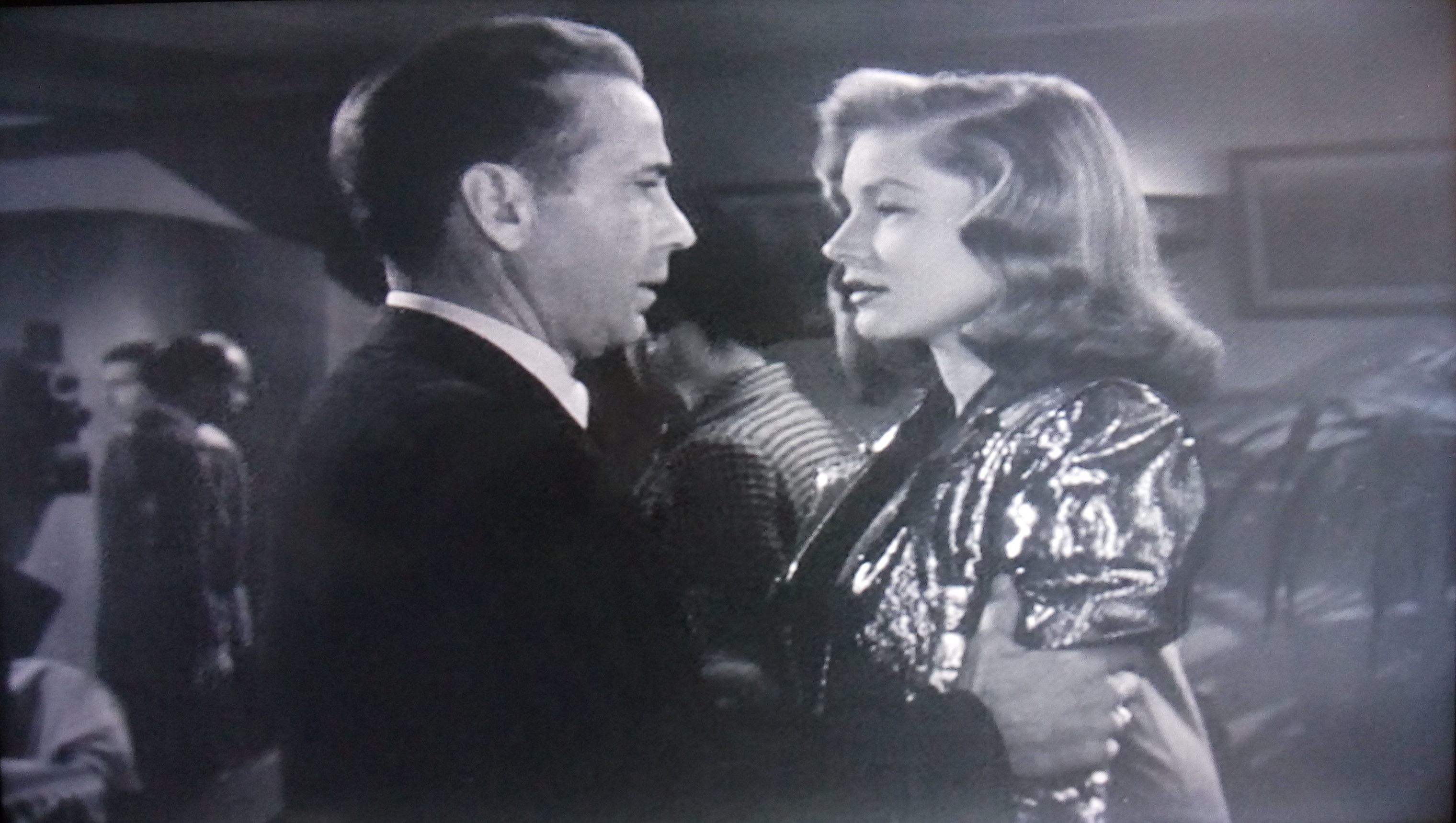
Both Laura and The Big Sleep feature restaurant scenes where instrumental performances of ‘You Go To My Head’ act as the backdrop to key events. In The Big Sleep, the song marks the acceleration of the attraction between detective Philip Marlowe (Humphrey Bogart) and client Vivian Rutledge (Lauren Bacall) – a narrative use of the song that extends no further than that electric moment.

IMG_20190424_113648

A different instrumental theme entitled ‘Laura’a standard subsequently recorded almost as many times as ‘You Go To My Head’ – conspicuously dominates Laura‘s action. But the film’s very brief, particular placement of ‘You Go To My Head’, and the lyrics which ghost its performance, signpost with mordant accuracy the identity of the murderer, and their motivation for killing its eponymous heroine.

The killer could be any of the three characters in the frame: Laura’s patron Waldo Lydecker (Clifton Webb), her fiance Shelby Carpenter (Vincent Price), and her aunt Ann Treadwell (Judith Anderson). Investigating officer Detective Mark McPherson (Dana Andrews) soon begins to succumb to an obsession with Laura (Gene Tierney) himself.

At one point in the film, Laura is seen to utter the crucial line: ‘I never have been and I never will be bound by anything I don’t do of my own free will’. As elsewhere in Preminger’s oeuvre, Laura dramatizes ‘the battle between a woman’s self-definition and a definition imposed by men’. It takes as its subtle text a beautiful song amenable to numerous interpretations – among them, obsessive fixation and self-undoing. In Laura, its ‘singer’, as it were, is not the film’s female heroine but someone entirely different.