20: My Ship (1941)

This song is about how we got here.

NB. Major spoilers ahead for Lady in the Dark (1944) and Phantom Thread (2017).

I first heard ‘My Ship’ several years ago – probably Nancy Wilson’s very beautiful big band recording from 1963, whose choppy instrumental introduction soon settles into golden plain sailing. Ira Gershwin’s lyrics fantasise luxuries arriving from far away, which are as nothing without the delivery of a soul-mate:

My ship has sails that are made of silk
The decks are trimmed with gold
And of jam and spice
There’s a paradise
In the hold
My ship’s aglow with a million pearls
And rubies fill each bin,
The sun sits high
In a sapphire sky
When my ship comes in
I can wait the years
Till it appears
One fine day one spring
But the pearls and such
They won’t mean much
If there’s missing just one thing
I do not care if that day arrives
That dream need never be
If the ship I sing doesn’t also bring
My own true love to me

Despite its sun, the song’s story reminded me of Christmas, most likely because of the carol ‘I Saw Three Ships (Come Sailing In)’. The nursery rhyme ‘I saw a ship a-sailing’, about a merchant vessel packed with treats and crewed by mice-sailors with “chains about their necks” was probably somewhere in my mind too: it appeared in ‘Ship in a Bottle’ (1974), the very first episode of Bagpuss.
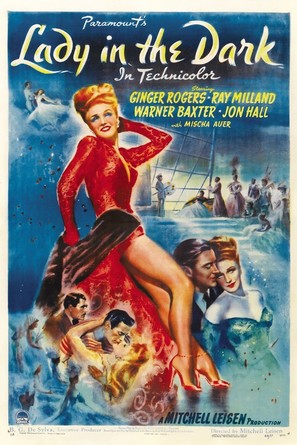
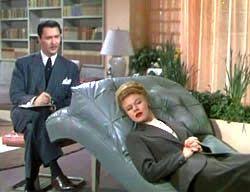
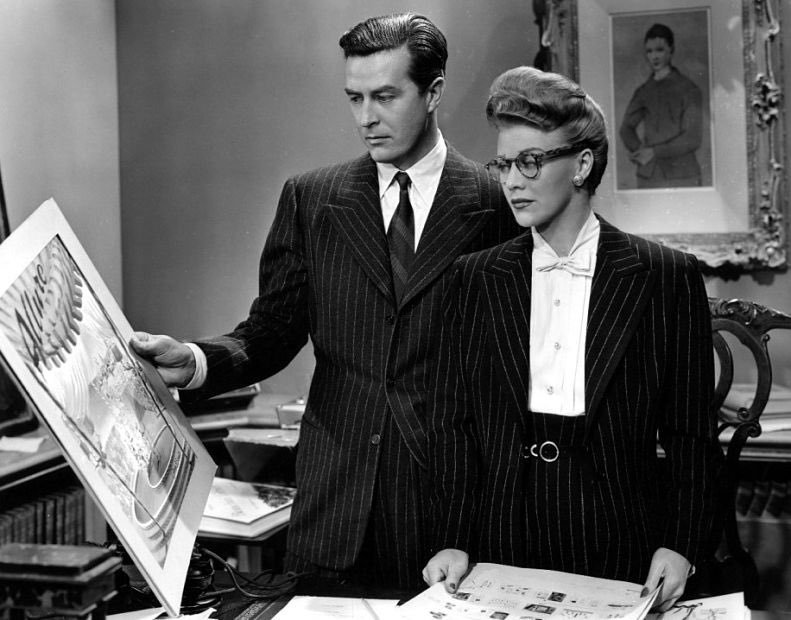
With Ira Gershwin, Kurt Weill composed the song for Moss Hart’s stage musical Lady in the Dark (1941). Liza Elliott, ambitious and successful editor of fashion magazine Allure, is in crisis. Her doctor recommends psychoanalysis. In the 1944 film dramatization – one of the highest grossing movies of the year – Liza (Ginger Rogers) finds herself humming a phrase from ‘My Ship’ repeatedly: an elusive echo of a repressed trauma. Psychoanalysis allows her to recall that as a young child she tried to perform the song at a family party. Her self-absorbed mother, preoccupied by male attention, is indifferent; the guests are thoughtlessly unkind, saying she is plain. As a child, Liza begins to hate her appearance. When her mother dies soon after, she is unable to grieve. She tries on her mother’s special blue dress, and her father chastises her angrily: a terrible rejection.

As Bruce McClung writes, ‘I saw a ship a-sailing’ is “the song’s predecessor”; further, “the gradual decoding of what ‘My Ship’ signifies sustains the drama, a process like the ‘Rosebud’ cipher in Citizen Kane. In relation to the song’s image of a ship bearing bounties, Lady in the Dark is also, mindblowingly, ghosted by Shakespeare’s The Merchant of Venice (1596) – a play that dramatizes, amongst other things, “the new set of economic interactions that accompanied the birth of capitalism”. McClung notes that Moss Hart’s own experience of psychoanalysis was formative of the story, but that Freud’s ‘The Theme of the Three Caskets’ (1913) is what gives Lady in the Dark its structure. In the essay, Freud theorises the lottery for Portia’s hand in The Merchant of Venice: a choice between gold, silver and lead caskets, one of which contains her portrait. Like Bassanio, Hart has Liza select between three ‘caskets’ – publisher Kendall Nesbitt (Warner Baxter), actor Randy Curtis (Jon Hall), and her magazine’s advertising executive Charley Johnson (Ray Milland), who represent simplistically “the roles of father, lover, and husband”.

This film is a gorgeous waking nightmare, and watching it I was furious from beginning to end.
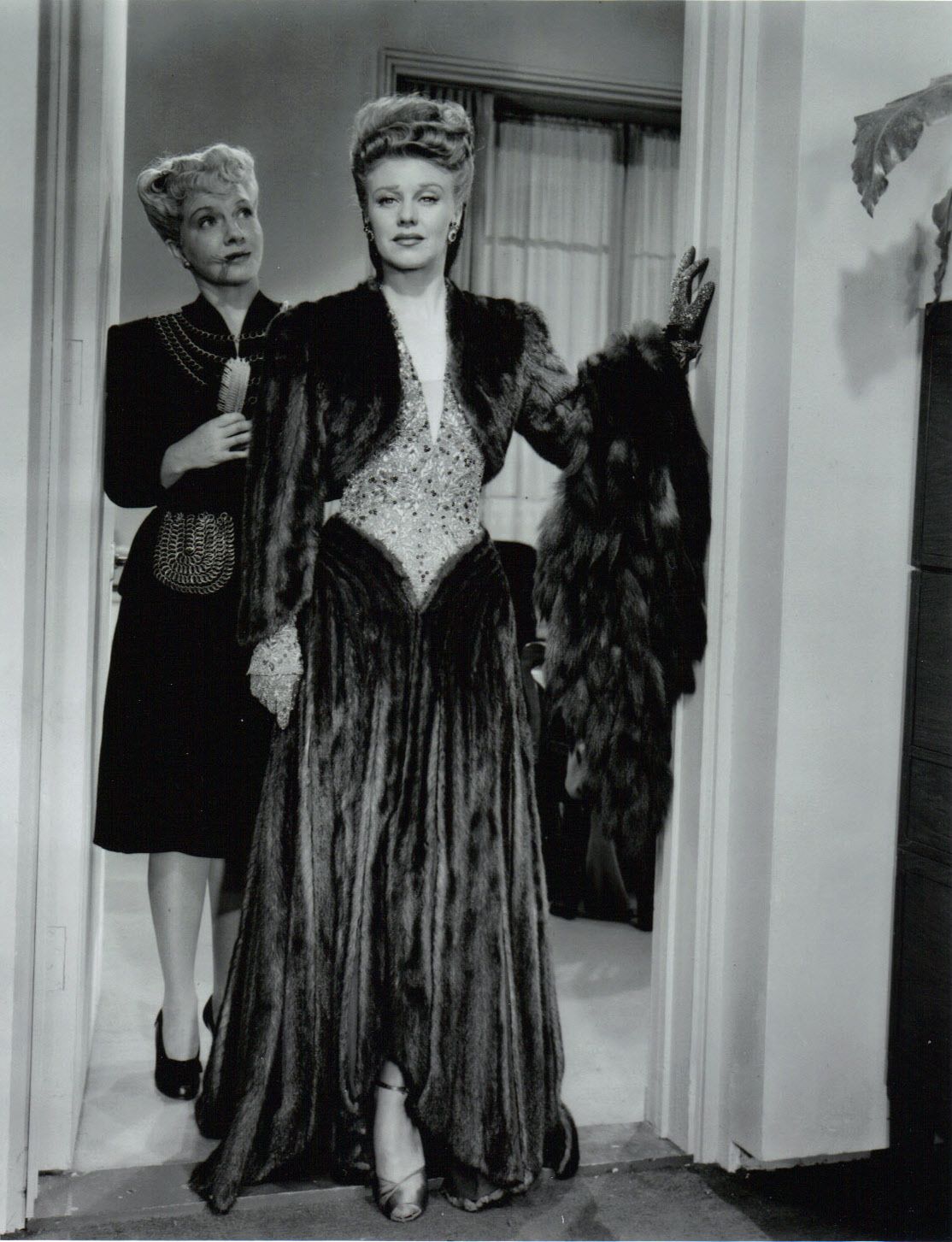
Amid the opulence of Allure‘s offices – the film’s lavish design and dream sequences subvert its maniacal heteronormativity – Charley attacks Liza continually, questioning her gender, sex life, and style, and brazenly declaring his desire for her job. When unusually she wears an evening gown on a date with Randy – a garment of sequin and mink that cost Paramount an eyewatering $35,000 dollars to produce – he jibes “you look wonderful – you actually look like a woman!” Her psychoanalyst Dr Brooks (Barry Sullivan) meanwhile proposes that, stemming from her childhood experiences, her distress lies with her reluctance to embrace femininity and “compete with other women”. Ignoring the injustices it so clearly lays out, the film egregiously weaponises psychoanalysis to confirm the “sex/gender system” and everything it supports. It ends with Liza agreeing to co-run the magazine with Charley, her literal tumble to the ground as he grabs her editorial chair for himself, and a kiss of unlikely passion between the two. This great review including on point picture captions (“Ray Milland is a shithead with a whip and Ginger Rogers is the lady in a cage in the circus dream”) fully has the measure of the film, as do these others on Letterboxd.

Paul Thomas Anderson’s extraordinary Phantom Thread (2017) includes ‘My Ship’. And Lady in the Dark seems to me to haunt the film in other ways, not least Freud’s essay.

At its conclusion Freud correlates the caskets to the mythological Fates (Moirai), the “three weaving goddesses who assign individual destinies to mortals at birth”, and thus to

the three inevitable relations that a man has with a woman – the woman who bears him, the woman who is his mate and the woman who destroys him; or that they are the three forms taken by the figure of the mother in the course of a man’s life – the mother herself, the beloved one who is chosen after her pattern, and lastly the Mother Earth who receives him once more. But it is in vain that an old man yearns for the love of a woman as he had it first from his mother; the third of the Fates alone, the silent Goddess of Death, will take him into her arms.

The relationship that Paul Thomas Anderson concocts between celebrated and exacting dressmaker Reynolds Woodcock (Daniel Day-Lewis) and his lover and model Alma (Vicky Krieps) attempts to have this cake and eat it. So consumed is Reynolds with his mother, and control over himself and his surroundings, that he cannot tolerate interruption or vulnerability, keeping his shrewd sister Cyril (Lesley Manville) close by as his safe companion. In these constrained, even hostile emotional circumstances, Alma (‘soul’) undertakes to derail his “games” by bringing him close to death: she feeds him poisonous mushrooms, then nurses him back to health, thereby impossibly occupying all three relations. This sadomasochistic gambit allows Reynolds to let go, to fall in love, to commit to her totally, and they have their own child. And so another cycle begins.
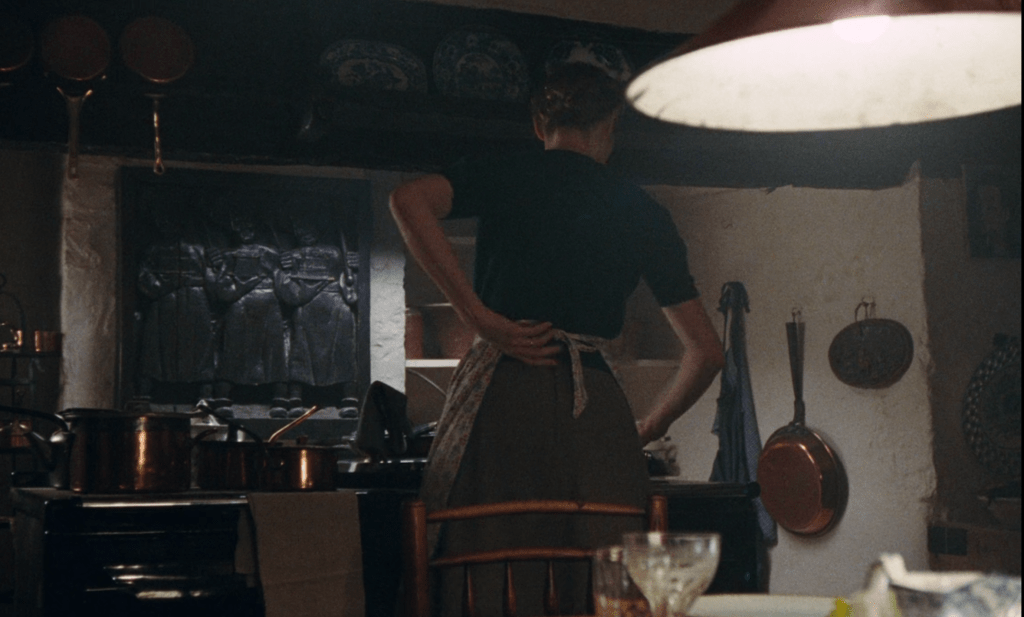
Oscar Peterson’s performance of ‘My Ship’ plays in the tearoom in which Woodcock first encounters Alma as a waitress, where he orders a ridiculous breakfast. Learning of Paul Thomas Anderson’s passion for big band jazz, I’m convinced that the narrative structure of Reynolds and Alma’s relationship is based on Nelson Riddle’s wonderful orchestral arrangement: brass and woodwind signal ‘watch out!’ before the song moves to surging strings, the solitary multiplicity of Peterson’s piano, and so on, periodically undercut by ambiguous, if not outrightly sinister harmonic choices. Key changes mark new phases, ascension to new heights. It’s almost unbearably poignant but also weirdly unserious somehow. It finishes with a steadying rallentando and fluttering flutes: a happy ending.

Aleksandar Hemon in the New Yorker concludes that Phantom Thread is “nothing if not propaganda for patriarchy”, and for sure I agree that it is in one sense a deep stitch-up, leaving little room for its women’s own desires beyond surviving these conditions, and doling out punishment for their perceived infractions. But like the stunning arrangement of ‘My Ship’ that it features, it is laced with compassionate unease, skewering power and fantasy with a delicate comic touch.

17: Almost Like Being In Love (1947)

This song is about time.

Right at the beginning of the lockdown, having missed the start of the National Theatre’s livestream launch of One Man, Two Guvnors, a friend and I decided to watch Groundhog Day (1993) in tandem in our respective flats instead. Nat King Cole’s sparkling version of Alan Jay Lerner and Frederick Loewe’s ‘Almost Like Being In Love’ brings the film to a close.

Lerner and Loewe wrote their by now much-recorded classic for the musical Brigadoon (1947), which received its pre-Broadway premiere on Groundhog Day that year. Over and above its lyrical aptness, was this choice a deliberate reference on the part of Groundhog Day‘s director Harold Ramis to the musical’s stage history? Encouraged by music editor Sally Boldt, Ramis resisted studio bosses’ demands for something poppier and more contemporary for the final moments of his film. Three months later, similarly distantly ensconced, we watched Vincente Minnelli’s film dramatisation of Brigadoon (1954). The song and this moment of calendrical serendipity only hint at the extent of what they share.

The golden thread that ties them together is their use of the single day as a narrative device. In Brigadoon, while lost with companion Jeff (Van Johnson) on a hunting trip in Scotland, jaded Tommy Albright (Gene Kelly) encounters the love of his life. Fiona Campbell (Cyd Charisse) is the denizen of an enchanted eighteenth century village that can reveal itself from the mist only once every one hundred years. Meanwhile, until he finds meaningful self-love, Groundhog Day‘s sardonic weatherman Phil Connors (Bill Murray) is condemned to repeatedly relive February 2 in the small town of Punxsutawney, whose annual groundhog ritual predicts the timeliness of spring.

‘Almost Like Being In Love’, Brigadoon‘s “only un-Scottish number”, places both punctuality and uncertainty at the heart of the experience of love. The full lyrics present a verse about the invigorating qualities of the Scottish Highlands and include the voice of the character Fiona, but the choruses, the basis of the majority of recordings, focus blissfully and more generally on the relationship between love and time’s markings.

What a day this has been! What a rare mood I’m in!
Why, it’s almost like being in love!
There’s a smile on my face for the whole human race!
Why, it’s almost like being in love!
All the music of life seems to be like a bell that is ringing for me!
And from the way that I feel when that bell starts to peal,
I could swear I was falling, I would swear I was falling,
It’s almost like being in love.

The present is of necessity constantly on the move. Likewise, the euphoria of love, which makes the person experiencing it a witness to their own self. These amazing lyrics achieve the perfect paradox of capturing the uncapturable – which may be why the final additional line of Frank Sinatra’s 1947 recording for Columbia (“In fact I have fallen in love”) feels so crashingly disappointing. (His infinitely livelier 1961 recording for Capitol, arranged by Billy May, doesn’t do this.)*

But what about the choice to characterise the music of life, which I understand to mean the divine energies that manifest as joy, as the sound of a bell ringing? With this phrase, modern timekeeping and the inevitability of wedlock threaten the song’s magical inbetweenness – reminiscent of the later lyric “get me to the church on time”, immortalised in My Fair Lady’s ‘I’m Getting Married in the Morning’ (1956), another famous Lerner and Loewe composition featuring bells.

Whatever. It’s hard to unthink these things, but to be honest I would rather focus on the song’s evocation of love as generous call and response, and music as sonorous vibration.

Still, both of these films are absolutely concerned with modernity – from the cultural and historical contrasts in Brigadoon between the villagers and their visitors Tommy and Jeff, and the screeching return of the two to a frenetic New York where Tommy’s fiancee (doppelganger of Fiona)** awaits, to Phil’s profession in Groundhog Day, which combines meterological prediction and small time celebrity and its discontents.

And the events that unfold in both rest on what modernity excludes. Magic isn’t supposed to happen in situations in which aeroplanes and cars are part of everyday life, and time marches forward relentlessly. Magic pauses that forward march, allowing different realities to emerge – the chance meeting of lovers from different historical times, a sequence of time that is endlessly replayed and reworked.

In this respect, these stories are both deeply theatrical too. Not unlike the weather forecast blue screen, Phil’s progress through the multiple reiterations of February 2 makes of Punxsutawney and its characters an ersatz stage setting for his cursed existential self-improvement – especially Rita (Andie MacDowell), the object of his desire, whose own kind self beneficently “makes him need himself”. Meanwhile, given the mystical threshold time of Brigadoon, Tommy struggles to take the reality of the feelings he and Fiona share seriously. As Serge Cardinal proposes in a wonderful discussion of the relation between temporality, music and image in Minnelli’s film, “music teaches him how to couple, to dance, in the deepest sense, with someone”.

When it appears at the end of Groundhog Day, ‘It’s Almost Like Being In Love’ sounds a bittersweet note. Phil knows Rita inside and out, but she, on a different temporal trajectory, hardly knows him at all. Not awesome in many respects.** But it’s also fitting that title lyric should become a hypothesis to be tested in a future that we won’t see. Set apart from the films’ narratives, the song expresses the radical uncertainty of all love as it begins. Worlds take on the character of contingency. These films literalise it. I said all this to my friend as we did post-match WhatsApp-ing about Brigadoon, and added that ‘almost like’ is just the maddest combination of words imaginable. “Which involves absolute risk”, he replied. “And all it is is… what you already hold, and is yours already.” So right. The beauty that lives in these films is how their protagonists move beyond fearful provisionality towards love for another, for themselves.


*Few recordings of ‘Almost Like Being In Love’ are as charming as Nat King Cole’s imo, but I really enjoy those by Beverley Kenny, Sallie Blair (“won’t you smoke the mood I’m in”), Chris Connor, Della Reese, Nancy Wilson, Etta Jones and Johnny Hartman. Michael Johnson’s takes the song in a unique direction.

**One million percent these are not feminist films. At all. Cf. the founding mythology of Brigadoon being flight from witches (Jeff: “Oh we have ’em. We pronounce it differently”), framing of almost every female bit part in Groundhog Day, etc etc.

12: I Only Have Eyes For You (1934)

This song is a fantasy.

Harry Warren and Al Dubin wrote ‘I Only Have Eyes For You’ for the movie Dames (1934), a satire on theatrical censorship featuring Busby Berkeley’s choreography. In context, the song is a sweet serenade given by budding Broadway composer and impresario Jimmy (Dick Powell) to his dancer girlfriend Barbara (Ruby Keeler). Their love story is a slight vehicle for Dubin’s intense lyrics. But thematically the song suits the film – a comedy of errors about gazing at beautiful actresses.

‘I Only Have Eyes For You’ asks how somebody smitten sees the world. Or rather, what they see. As the (very infrequently performed) verse has it, love is selectively ‘blind’, an ‘optical illusion’. The choruses describe how, to a person in love, all things – stars, gardens, crowded avenues – confusedly ‘disappear from view’. This feat is performed cinematically in Dames, which magically vanishes people from the street and the subway as Jimmy croons to Barbara.

The song’s massive recording history kind of reflects this disappearing act. There are plenty of straight ahead interpretations by jazz greats – Louis Armstrong’s story of gentle flirtation, Frank Sinatra’s confident seducer, Billie Holiday’s effervescent party-goer, coquettish Carmen McRae. Mary Wells gives a big Motown rendition, while Etta Jones swings languidly, weaving in Billie Holiday’s invented lyric ‘big, bulging eyes’ towards the end. But the haunting doo-wop recording made by The Flamingos in 1959, exquisitely arranged by band member Terry Johnson, has influenced so many others that it almost comes to substitute for the original.

‘My love must be a kind of blind love’, it begins. ‘I can’t see anyone but you.’ Having collaged these two lines from the verse to the top, this version then unfolds the choruses. Its mesmerising sound suggests being underwater, at the top of a mountain, inside a cathedral of ice. But its defining aesthetic characteristic is the cold – which sort of makes sense of the really odd apres-ski mise-en-scene of The Flamingos’ TV performance in the clip above. According to the YouTube poster, that edition of The Dick Clark Show was shot in the sticky New York heights of July.

There are also plenty of recordings that are simple covers of The Flamingos’ version – from Boyz II Men’s to Tashaki Miyaki’s – while others, like Catherine Russell’s, draw momentarily on its variation of the melody. Liane Carroll’s fierce shuffle funk interpretation is absolutely stunning. Differently captivating is Oneohtrix Point Never’s hypnotic composition, which seems to bring an android into conversation with a sinister gang of monks.

For ‘I Only Have Eyes For You’, one of the finest episodes of Buffy the Vampire Slayer (1997-2003), The Flamingos’ version is pretext for and backdrop to its story.

The spirit of James Stanley, class of Sunnydale 1955, is stalking the school’s halls. He is compulsively re-enacting the night when, crazed with controlling grief, he shot teacher and ex-lover Grace Newman. Both spirits are possessing current students, caretakers and teachers, almost always resulting in a death. Buffy correctly and angrily surmises that he wants forgiveness, a recognition based on her own recent catastrophe: sex with her boyfriend Angel, which transformed him back into murderous vampire Angelus, who then promptly killed her watcher Giles’ beloved partner, teacher and Clan Kalderash member Jenny Calendar.

James calls Buffy to the school by night, where she finds Angelus lurking. They become surrogates in James and Grace’s unhappy story, which uncannily echoes their own.

https://www.youtube.com/watch?v=SM2eLr9nIsM

Following these events, Buffy, in shock, places the ethereal Flamingos’ record on a turntable, and gazes into a mirror, where she sees James’ reflection look back at her. But embodying Grace, Angelus’s vampiric undeadness allows both stories to be resolved. Instead of falling for the umpteenth time over the school’s balcony to her death, Grace/Angel returns, declaring love for James/Buffy and the shooting (sexual metaphor alert) an accident, releasing them both.

(Historical accuracy quibble: why not make James class of 1959? The answer is probably Back To The Future (1985). I mean, ok. But come on.)

In this phenomenal episode, ‘I Only Have Eyes For You’ means obsession, grief, not-seeing, the same scene playing out across different bodies. Though different in kind, it shares spooky parallels with the song’s appearances in Dames.

First, Jimmy serenades Barbara on the Staten Island ferry, the Statue of Liberty in the background. Couples coo around them. Love is heteronormative sequence and sameness.

Later, extending the scene of Jimmy’s flight of fancy on the subway train, in which ads bearing women’s faces blend into Barbara’s, Busby Berkeley’s spectacular choreography presents a proliferation of Barbaras, suggesting women as interchangeable commodities, everywhere different but the same. As Lucy Fischer brilliantly puts it, the doppelganger girls’ ‘aimless, repetitive movement‘ embodies a kind of ‘zombiism‘.

The end of the Buffy episode sets all these stagings of surrogacy off. Buffy tentatively ventures to Giles: ‘part of me just doesn’t understand why she would forgive him’. Her sideways look of guilt reveals that really she is asking why Giles would forgive her. Anthony Stewart Head’s delivery of Giles’ patient response ‘does it matter?’ is magnificent. Anger, pain and loss commingle and dissolve in his performance. The scene evokes a unique unconditional love, but equally, how different stories of love can bear a resemblance.

1: My Future Just Passed (1930)

This beautiful song has a dark heart.

Shirley Horn’s dreamy version, recorded in 1963, leads the listener gently into the woods: an idle fantasy about a man encountered by chance escalates to stalkerish obsession. Her phenomenal interpretation of this song made me want to start this blog.

Yikes, I thought, when I first listened to it in 2014. The character is decisive, even powerful, which makes it all the more unsettling. At the time I was reading Muriel Spark’s The Driver’s Seat (1970), which may or may not have had something to do with how I received it.

It wasn’t initially written to be sung by a woman.

‘My Future Just Passed’ was written by Richard A. Whiting and George Marion Jr. for musical comedy film Safety in Numbers (1930). The musical linchpin of the film, the song features as an instrumental overture accompanying the opening credits, and as a duet between its romantic protagonists.

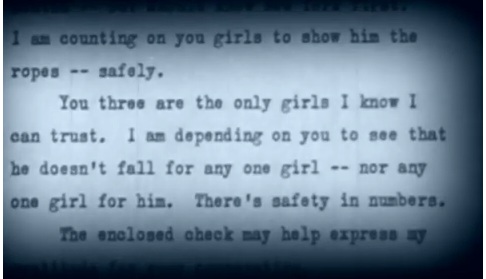
Naive young heir William Butler Reynolds (Charles ‘Buddy’ Rogers) arrives to New York City from the west, packed off by his uncle (Richard Tucker) to gain some practical knowledge of life. As he explains to his nephew in not so many words, the aim is to ensure that he doesn’t ultimately piss all of his gigantic fortune up the wall in nightclubs when he comes of age. In a letter, the uncle tasks Jacqueline (Kathryn Crawford), Maxine (Josephine Dunn) and Pauline (Carole Lombard), three Follies chorus girls, with introducing him to the city.

safety in numbers

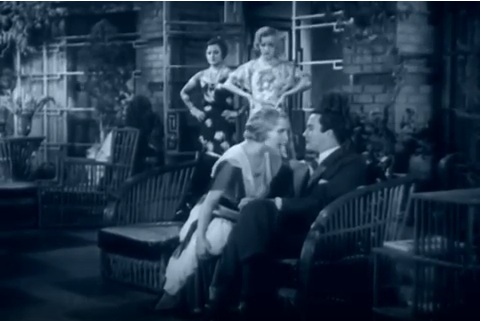
The girls cohabit stylishly in a palatial Art Deco apartment with two servants. (The IMDb bio of Louise Beavers, who plays housekeeper Messalina, is amazing reading.) Their guest immediately demonstrates his maximal unworldliness. He drops his entire allowance on gifts of jewellery for them all, is unable to recognise a bra when confronted with one resting on a chair, and so on. But suddenly he discovers untapped Casanova potential, charming each girl in turn through song. They duly fight over him, abandoning their urbane shrewdness, yet also band together to protect him from the advances of other predatory chorus girls.

safety in numbers 2

In a move that is only surprising if you forget that the film is basically about heteronormative training, these independent performers also allow the inexperienced youth to negotiate salary on their behalf with their show’s producer.

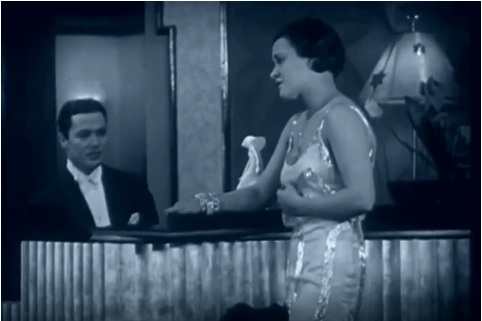
Safety in Numbers inevitably resolves with a match: though barely any conversation seems to have been exchanged, Reynolds and Jacqueline have fallen in love.

safety in numbers 3

‘My Future Just Passed’ is Reynolds’ declaration of love for Jacqueline, followed by her mournful solo reply (here, at 1:04:55). The first chorus’ stride piano is laden with sentimentality. The song overall is anodyne. The film has made Reynolds the centre of its universe, and the girls orbit around him, so this is standard love story stuff: boy pledges undying affection to vacillating girl, and he will sever her existing “ties”, win out for sure.

In the year in which the film came out, Annette Hanshaw released a single version of ‘My Future Just Passed’ that combines Reynolds’ lyrics with additional choruses. Shirley Horn’s much later version uses these additional lyrics, but removes the cheeky verse about playing the field as a young person, and the chorus with references to school.

In Hanshaw’s version, the inclusion of the verse sets the song up as a tongue-in-cheek story of teenage flirtation and preoccupation. Her wry performance refuses to take the song’s romantic narrative seriously. She concludes the whole thing archly with a catlike ‘that’s all!’ Compared to the film’s presentation of the song, this rendition is positively subversive.

Meanwhile, Shirley Horn’s interpretation puts blissful instrumentation next to fatalistic obsession. We get to listen in on her character’s dicey inner life in the midst of sweeping strings. This juxtaposition makes the song’s theatrical metaphors pop. “Ring down the curtain, I’m certain at present / My future just passed” and “Here are my arms, may he find illusion there / Kiss my two lips, remove all the rouge on there”, sung by Horn with languid smoothness, troublingly emphasise the constructed relation between femininity and artifice. Magical thinking, manipulation, and a hopeful wish for the physical contact that would wipe lipstick traces clean away: pretty bleak. A dark heart, but so beautiful.