This song is unforgettable.
Nora Ephron’s enduringly excellent romantic comedy When Harry Met Sally (1989), directed by Rob Reiner, hooks various elements of its narrative on a selection of jazz standards, including ‘Where Or When’.
The opening chorus of Ella Fitzgerald’s bright version cues the film’s early airport scene, in which Sally (Meg Ryan) is saying goodbye to her new boyfriend Joe (Steven Ford). There, she re-encounters Harry (Billy Crystal), who, passing by, sees former fellow building occupant Joe and stops for small talk. ‘Thank god he couldn’t place me’, she says grimly, glaring after Harry down the airport concourse. ‘I drove from college to New York with him five years ago and it was the longest night of my life.’
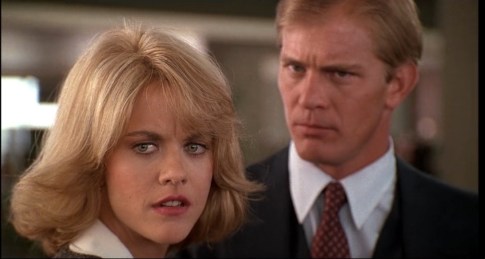
Richard Rodgers and Lorenz Hart wrote ‘Where Or When’ for their musical Babes in Arms (1937). In that context, the song is talking about deja-vu. Its verse makes this theme clear: ‘Sometimes you think you’ve lived before / All that you live today.’ The chorus, where most jazz interpretations of the song start, ponders memory: ‘It seems we stood and talked like this before / We looked at each other in the same way then / But I can’t remember where or when.’ Amazingly, the performance history of the musical has active forgetting written into it, having been reimagined twice with various degrees of change to plot, racial politics and line-up of songs: as a 1939 film starring Judy Garland and Mickey Rooney, and as a stage version created by George Oppenheimer in 1959. ‘Where Or When’ features in all three versions.
The song can speak of casual flirtations.
On Etta Jones’ recording, easygoing puzzlement develops into joy, like a chance morningtime encounter that becomes a day-into-night date. Frank Sinatra’s live take with Count Basie on the other hand suggests cocktail-fuelled and quickly forgotten nights of carnal enjoyment. But the song is more than open to less celebratory, more emotionally searching interpretations.
For example, Harry Connick Jr’s rendition for the When Harry Met Sally soundtrack – a set of companion arrangements for which he won a Grammy – is intense and melancholy. It proposes forgiveness, a deliberate reckoning with a relationship’s beautiful past, whose patterns are re-emerging in the present. As the teen owner of this recording on cassette I fell completely in love with its piano solo (here, from 1.57-2.34), rewinding it repeatedly. Bryan Ferry’s folkish version, featured on his album of standards As Time Goes By (1999), performs an act of tremulous alchemy, making of the song a dreadfully sad story of memory loss and partial recognition. There, the line ‘But who knows where or when’ possesses terrible tragic irony: in the scenario that the song conjures, the experience of forgetting does not seem to be shared.
Donald Shirley’s solo piano version, released in 2001, is something else altogether. In the wake of the release of the controversial Academy Award-winner Green Book (2018), various features have reflected on his body of work: a concert pianist confronted with institutionalised racism, Shirley created beautiful interpretations of jazz compositions inflected with classical allusions. A New York Times piece refers to Kris Bowers, composer of Green Book‘s score:
“‘Lullaby of Birdland’ was one of the first ones that I knew I wanted to include, because he starts off quoting a couple of classical pieces, and then when he goes into the song, it’s almost like a false start, because he uses the melody as the beginning of a fugue,” Bowers said in an interview. “He’s doing a proper fugue, exposing the subject, et cetera, within a jazz context. I listened to that and said, ‘Wow, I’ve never heard anybody do that before.’”
Shirley’s rendition of ‘Where Or When’ alludes poignantly to phrases and chord progressions from Rachmaninoff’s Piano Concerto No. 2 in C minor and Chopin’s Prelude in D flat (Raindrop Prelude). (These are the two I recognised; for sure there will be more that I can’t yet hear.) It evokes Noel Coward’s Brief Encounter (1945), directed by David Lean, a film indelibly associated with the Rachmaninoff work.
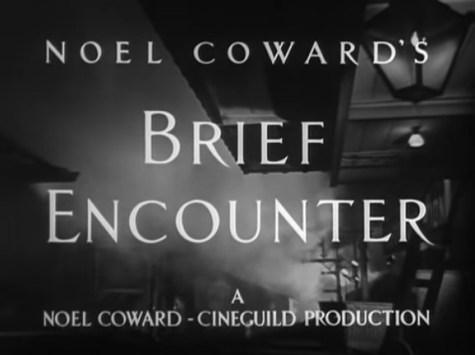
Shirley’s piece chimes painfully with the desperate longing dramatized by the film: a story of doomed interwar love ignited between Laura (Celia Johnson) and Alec (Trevor Howard), both of whom are married. Clouds gather at its outset. Snatches of melody promise to become more substantially themselves, but never do.


‘Some things that happen for the first time / Seem to be happening again.’ In Shirley’s exquisite performance, the ghosts of an earlier composition haunt ‘Where Or When’. Meanwhile, on-screen, a last tryst in a railway station cafe is tragically, irretrievably interrupted; love begins in a bookshop thanks to a re-meeting in ‘personal growth’.
 People Think This Is Romantic