23: A Certain Smile (1958)

This song puts up a front.

Composer Sammy Fain and lyricist Paul Francis Webster wrote this winsome, Academy Award-nominated song for Jean Negulesco’s A Certain Smile (1958) – a sweeping cinematic adaptation of Françoise Sagan’s uncompromising novella about love, sex and infidelity. Critics at the time found the film’s treatment of Sagan’s story to be average at best: a “glossy, emotional yarn” (Variety), a “tepid romantic interlude” (New York Times). The song has been infrequently recorded since the 1970s.

No-one:

Me: ‘A Certain Smile’ is integral – INTEGRAL – to A Certain Smile‘s re-articulation of Sagan’s book as a melodramatic touristic visual feast – yes, and in case you imagine this is a situation of FILM = BAD, BOOK = GOOD, the last of those is an aspect that weirdly resonates with Sagan’s own literary style, which makes much of staging things to look at!* Plus, existentialist cynic Sagan wrote romantic song lyrics for Juliette Greco?!**

NB. “no-one” meme format for me still fresh as daisy because not on Twitter and this too probably. Anyway, let’s get into it.

‘A Certain Smile’ has been a rabbit hole to fall down. Back in the spring, Spotify gave me Ted Greene’s 1977 night sky of a solo recording. Confusion descended: did I know the song already, or was this sparkling arrangement enchanting me into thinking I did? (Martin Taylor’s intensely beautiful 1993 solo guitar rendition did similar magic.) I listened to the inaugural 1958 recording by Johnny Mathiswho performs the song with verse in a nightclub set piece in the film – and was still none the wiser. I couldn’t decide if it was the sing-song pattern of the melody that felt familiar, or the song itself. When I asked my mum about ‘A Certain Smile’, she knew it immediately, lyrics and all. From the generational point of view, this makes sense: more than half of the vocal recordings to be released professionally were out by the late 1960s, with ten of those released in 1958. This smash hit – Mathis’ recording reached #4 in the UK – has been in the atmosphere for decades, with diminishing density over time.

The song’s apparent sweetness contrasts with Sagan’s A Certain Smile (1956) – a text that begins archly with an epigraph from Roger Vailland: Love is what happens between two people who love each other.

Dominique, in a relationship with fellow Sorbonne student Bertrand, tells the winding story of her short but unexpectedly emotionally shattering affair with Bertrand’s married uncle, Luc. For one critic reviewing the book in 1957, Sagan communicates the experience of “serene despair” with immaculate precision, featuring “none of the obsession with the details of external reality so common in her contemporaries: ‘and now I shall show you what Life is really like in Paris, Moscow or New York’, in attempts which finally show what? nothing”.

Paul Francis Webster’s lyrics, prepared for the film, are of a different order of business.

What do you meet down a crooked little street in Paris
Vendors who sell pretty flowers that tell of spring
Once in a while you may meet a certain smile in Paris
So excitingly gay that it seems to say ‘cherie, fall in love with me’

A certain smile, a certain face
Can lead an unsuspecting heart on a merry chase
A fleeting glance can say so many lovely things
Suddenly you know why my heart sings

You’ll love awhile and when love goes
You try to hide the tears inside with a cheerful pose
But in the hush of night exactly like a bittersweet refrain
Comes that certain smile to haunt your heart again

Set against a dramatic minor key, the verse’s clever internal rhymes and their fantasy of Paris resolve into the optimistic choruses, their rhyming couplets, and their protagonist, sharing the wisdom of their experience while presenting a brave exterior. It’s strangely labyrinthine in its temporal journey, and much more complicated than it first appears to be.

This isn’t unlike the movie – although I will say I found A Certain Smile to be a rough watch, at least first time around. It rearranges the essential components of Sagan’s book to produce a morality tale that visually “abounds with mouth-watering vistas of the French Riviera”. Characters bear only marginal resemblance to their sources: the ingénue (Christine Carère), her parents (Eduard Franz, Katherine Locke) in extended grief for the loss of their son, said ingénue’s feckless boyfriend (Bradford Dillman), his rich and selfish mother (Kathryn Givney), the playboy uncle (Rossano Brazzi), his long-suffering wife Françoise (Joan Fontaine), and a rogues’ gallery of assorted friends and associates. Dominique’s red beret amid the grey stone of the Sorbonne marks her out as a scarlet woman in the making. Her fate is confirmed when, soon after Luc hits on Dominique in a café-bar she has attended with Bertrand, Françoise airily offers Dominique a red coat during her visit to their home, declaring it “far too young for me” – misogynising, if you will, a more or less throwaway moment in the book, in which the couple extravagantly buy a coat “in a reddish woollen material” for their nephew’s new girlfriend in a shop.

‘A Certain Smile’ instrumentally underscores the beats of Dominique’s entire emotional arc, from her misguided entanglement with Luc to her rapprochement with Bertrand. So closely is the song woven into the fabric of the film that it’s almost imperceptible, smoothing the way for the romance’s compliance with the sanitising “shibboleths of the Production Code”.

As recounted in Michaelangelo Capua’s Jean Negulesco: The Life and Films (2017), here is how Sagan – whose text features extra-marital sex, pregnancy scares and so on – reacted to A Certain Smile‘s screenplay in a meeting with Negulesco in Paris:

I gave her an appointment in a café not too far from where we were shooting. She was sitting on the terrace eating a ham and cheese sandwich in the company of young man. I approached her a bit confused.

‘Miss Sagan?’
‘Yes.’
‘Excuse me, I’m Jean Negulesco. Have you read the script?’
‘Yes.’
‘Did you like it?’
‘No.’
‘Could you tell me why?’
‘No.’
‘Do you want to join me on the set?’
‘No.’
‘Would you allow me to pay for your sandwich?’
‘Yes.’

She then said to the young man: ‘It’s not him that pays, it’s 20th Century Fox.’

Despite Sagan’s understandable aversion to the film’s adaptation of her book, they end up at similar destinations. Rachel Cusk praises her “fearless and astute portrayal of love as a psychical event that has its roots in family life and the early formation of personality”. As I watched the film a second time, I realised that Dominique’s bizarre actions were imagined to hinge on the death of her brother and the consequences for her family, and that every character in their own way was struggling with loss. All three of these interconnected works – novella, film and song – are grappling with the depths of pain and its origins, though Sagan’s writing looks at them most directly and dispassionately.

*In both visual and psychological modes. A particularly economical example of narrative reflexivity from A Certain Smile‘s fourth chapter: “I couldn’t help feeling quite warm towards myself.” (p. 186)

**From a fascinating short biographical post entitled ‘That Charming Monster, Francoise Sagan’: “It is not widely known that Françoise Sagan dabbled in song writing, composing lyrics for romantic songs and even librettos for ballets. This aspect of her career came about when, at the age of twenty, haunting the bars and nightclubs of Saint Germain des Prés, she met the musician Michel Magne. Having already tried out over fifty lyricists for his songs, Magne thought Sagan’s style would be perfect. Her lyrics reflect a maturity beyond her years and lack the cynicism of her books. They are often about people wrestling with private pain and angst, deep into alcohol-fuelled nights. Vous mon Coeur (You my Heart) is a plea to a lover not leave: ‘You, my heart/You my life/You who smile/You who embrace me/You, one day…..will leave me, my heart.’”

22: Answer Me, My Love (1953)

This song has been through a lot.

Lyrically speaking, ‘Answer Me, My Love’ is a text of self-torture. But it started life as the diametric opposite: a rose-tinted homage to maternal love and protection.

German composer and lyricist Gerhard Winkler wrote ‘Mütterlein’ (1952) as a nostalgic waltz and birthday tribute to his 75 year old mother – a tune quick to be translated and recorded by other artists in Swedish, Icelandic, Finnish and Danish. It is idealising in the extreme: a paean to unending, self-sacrificing support. Then in 1953, two adaptations took it in a radically different and tragic direction.

American songwriter Carl Sigman set ‘Answer Me, Lord Above’ to Winkler’s music. It is a story of abandonment: a person demanding of God why their lover has left them. And either before, after or during Sigman’s process of writing – it is not clear which – Fred Rauch wrote German lyrics for the song with the title ‘Glaube Mir (Believe Me)’.* Rauch’s protagonist, like Sigman’s, has been rejected by a lover out of the blue – but here they speak to them, not God, directly. Affirming the depth of their love, they plaintively request an explanation.

As Carl Sigman’s son Michael describes in a terrific 2013 Huffington Post piece, the song’s subsequent trajectory is absolutely wild.

What 60 year-old song co-written by a German and an American reached No. 1 on the UK singles charts by two different singers at the same time; was penned by an atheist but banned by the BBC for its “religious” content; was secularized by said atheist via a change of three syllables; subsequently became a U.S. chart smash; has been covered by hundreds of pop, doo wop, rock, country, r&b, folk, jazz, gospel and classical artists; and bears a fascinating (though not remotely plagiaristic!) resemblance to a 48 year-old number that happens to be the most popular pop song of all time?

The “two different singers” were American crooner Frankie Laine and British singer David Whitfield, whose releases of ‘Answer Me’ in the UK in the winter of 1953 spent many weeks in the charts, despite the BBC’s ban on the basis of the song’s supposed “‘sentimental mockery of Christian prayer'”.** In the interests of his song’s commercial viability, Sigman was persuaded to delete reference to God. His substitution of “Lord Above” with “Oh My Love” reflects the address of Rauch’s lyrics. Nat King Cole scored a US hit with Sigman’s revised version in 1954, a recording bearing credits for Winkler, Rauch and Sigman together. And as Michael Sigman writes, these popular recordings of ‘Answer Me’ may well have earwormed an 11 year old Paul McCartney: according to musicologists, its formal and thematic aspects echo through the Beatles’ ‘Yesterday’ (1965).

This is an extraordinary story, and I have Spotify’s algorithm to thank for learning about it.

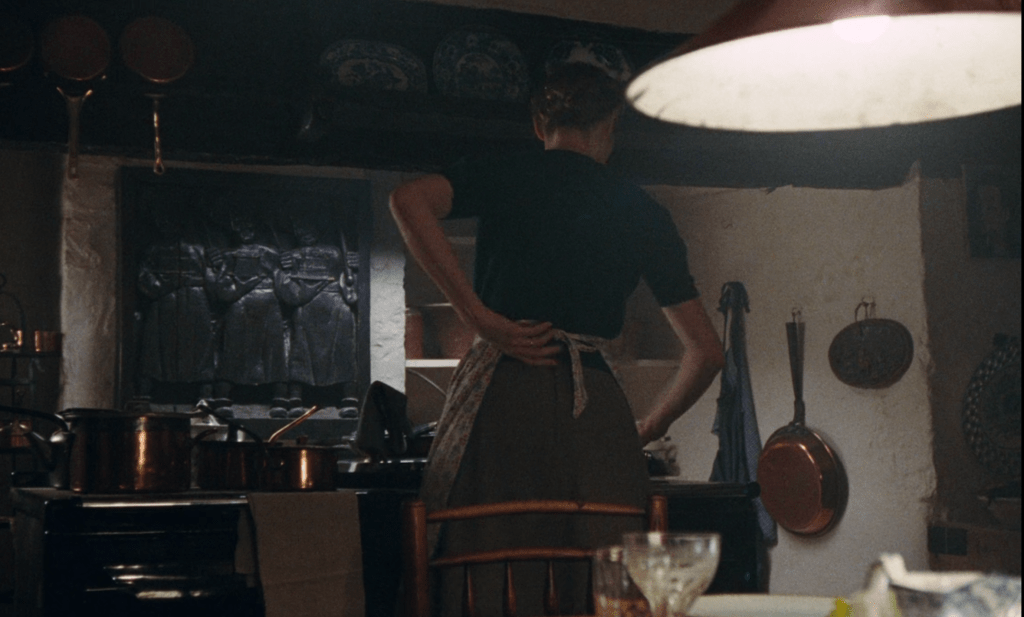
A few weekends ago, while I was absent-mindedly washing dishes, something amazing and surprising popped up on my Discover Weekly playlist: Swamp Dogg’s phenomenal 2018 version of ‘Answer Me, My Love’. The kitchen resounded with the song’s introduction: dark brass redolent of a disaster movie, melodious woodwind and strings, and then the artist’s voice, deep in a sonic mist bouncing with electric harpsichord. I stopped what I was doing and laughed spontaneously in delight: I thought it was fucking awesome. “Answer me, oh my love / Just what sins have I been guilty of / Tell me how I came to lose your love” – here the brass phrase crashed in again – “Please answer me, my love”. More strings and brass announced the sadness of the minor B section, but the words – “If you’re happier without me / I’ll try not to care / But if you still think about me / Please listen to my prayer” – were now robotic with autotune, a screech of despair that persisted into the next verse, as if the human had been taken over by an uncertain machine. Comforting gospel harmonies commingled with electronic noise and glissando strings on secondment from sci-fi and horror. It was stunning: a voice reverberating through the past, present, and future – ethereal, material, godly and diabolic.

A Rolling Stone review quotes Swamp Dogg on this song, his choice of opener for his album Love, Loss and Autotune (2018):

“‘Answer Me, My Love’ is what we call a ‘money record’ and since I need money, I recorded it,” Swamp Dogg said in a statement. “You can’t go wrong with a Nat ‘King’ Cole hit! He never recorded a bad song and always got hits. I need to pay some bills.”

Pitchfork has the album as dealing in “the ecstasies of love, the misery of loss, and the economic desperation of life in Trumpland”, themes shared by Chloe Zhao’s Nomadland (2020), a film which briefly features Nat King Cole’s ‘Answer Me, My Love’.

Enclosed in the living space of her van, by the dim light of a battery-operated lamp hanging above and her radio’s tinny sound, the recently widowed and now nomadic Fern (Frances McDormand) peruses a box of photographs. “I believed that love was here to stay / Won’t you tell me where I’ve gone astray / Please answer me my love”. She gazes upon her family members’ images with a giggle, then a wry smile. “If you’re happier without me / I’ll try not to care / But if you still think about me / Please listen to my prayer”. She turns a slightly torn photograph of her husband as a young man in her fingers, and we are given time to look upon him, as she does. Joy in her face drops as grief takes over – “You must know I’ve been true / Won’t you say that we can start anew / In my sorrow now I turn to you” – and quickly the scene cuts to outdoors late some other day.

This solitary moment is beautiful: a scene of less than a minute that juxtaposes lyrics and images with tenderness and subtlety in a totally unreductive way.

It may be that Swamp Dogg’s version has flooded my sense of how ‘Answer Me’ expresses time, action and even age, but against Nat King Cole’s voice, Fern’s simple act of reflecting on photographs seems to take on a numinous quality. Like the song and its numerous lives, this moment questions the mysterious substance and longevity of love, life, bonds with others, and how stories play their part in constructing them.***

*Music writers John Kutner and Spencer Leigh say that Rauch wrote ‘Glaube Mir’ “following Sigman’s lead”, but if so why is Rauch’s credit on Nat King Cole’s recording? Did Sigman’s first adaptation come first, then Rauch’s, then Sigman’s revisions? Or both of Sigman’s, then Rauch’s?

**Frankie Laine released a recording of Sigman’s revised version in 1955. Whether or not the Whitfield recording that went to #1 was definitely the “secularized” one remains unclear imo, despite the decisive account of Kutner and Leigh. The Decca catalogue number for Whitfield’s chart-topper was F10192: ‘Answer Me, Lord Above’. A contributor to discography forum 45worlds.com, mister_tmg, notes the September and October 1953 recording dates for Whitfield’s two versions, specifies two slightly different matrix DR numbers, and notes that the song “first made #1 on 7 November 1953, so the re-pressed version may have been in the shops by that point. It certainly would have been by the time it returned to the top on 12 December”. I was today years old when I learned what a matrix number was. Main overall finding: people are amazing and social media isn’t always horrific.

***This song harbours so many: I enjoy Gene Ammons, Donald Shirley, Etta Jones, Barbara Dickson, Owen Gray, Renee Fleming, Hilde Hefte, Keith Jarrett. Joni Mitchell’s beautiful orchestral performance inspires this absorbing experimental text by Geraldine Finn, which brilliantly asks ‘what kind of a saying is a song?’ in a deep exploration of attachment, family, desire, and interlocution.

20: My Ship (1941)

This song is about how we got here.

NB. Major spoilers ahead for Lady in the Dark (1944) and Phantom Thread (2017).

I first heard ‘My Ship’ several years ago – probably Nancy Wilson’s very beautiful big band recording from 1963, whose choppy instrumental introduction soon settles into golden plain sailing. Ira Gershwin’s lyrics fantasise luxuries arriving from far away, which are as nothing without the delivery of a soul-mate:

My ship has sails that are made of silk
The decks are trimmed with gold
And of jam and spice
There’s a paradise
In the hold
My ship’s aglow with a million pearls
And rubies fill each bin,
The sun sits high
In a sapphire sky
When my ship comes in
I can wait the years
Till it appears
One fine day one spring
But the pearls and such
They won’t mean much
If there’s missing just one thing
I do not care if that day arrives
That dream need never be
If the ship I sing doesn’t also bring
My own true love to me

Despite its sun, the song’s story reminded me of Christmas, most likely because of the carol ‘I Saw Three Ships (Come Sailing In)’. The nursery rhyme ‘I saw a ship a-sailing’, about a merchant vessel packed with treats and crewed by mice-sailors with “chains about their necks” was probably somewhere in my mind too: it appeared in ‘Ship in a Bottle’ (1974), the very first episode of Bagpuss.

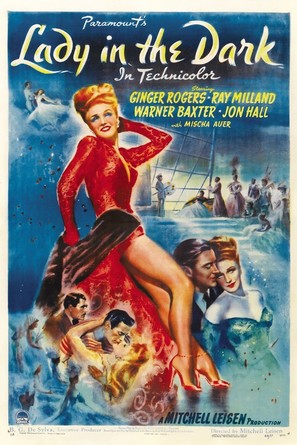
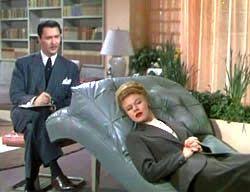
With Ira Gershwin, Kurt Weill composed the song for Moss Hart’s stage musical Lady in the Dark (1941). Liza Elliott, ambitious and successful editor of fashion magazine Allure, is in crisis. Her doctor recommends psychoanalysis. In the 1944 film dramatization – one of the highest grossing movies of the year – Liza (Ginger Rogers) finds herself humming a phrase from ‘My Ship’ repeatedly: an elusive echo of a repressed trauma. Psychoanalysis allows her to recall that as a young child she tried to perform the song at a family party. Her self-absorbed mother, preoccupied by male attention, is indifferent; the guests are thoughtlessly unkind, saying she is plain. As a child, Liza begins to hate her appearance. When her mother dies soon after, she is unable to grieve. She tries on her mother’s special blue dress, and her father chastises her angrily: a terrible rejection.

As Bruce McClung writes, ‘I saw a ship a-sailing’ is “the song’s predecessor”; further, “the gradual decoding of what ‘My Ship’ signifies sustains the drama, a process like the ‘Rosebud’ cipher in Citizen Kane. In relation to the song’s image of a ship bearing bounties, Lady in the Dark is also, mindblowingly, ghosted by Shakespeare’s The Merchant of Venice (1596) – a play that dramatizes, amongst other things, “the new set of economic interactions that accompanied the birth of capitalism”. McClung notes that Moss Hart’s own experience of psychoanalysis was formative of the story, but that Freud’s ‘The Theme of the Three Caskets’ (1913) is what gives Lady in the Dark its structure. In the essay, Freud theorises the lottery for Portia’s hand in The Merchant of Venice: a choice between gold, silver and lead caskets, one of which contains her portrait. Like Bassanio, Hart has Liza select between three ‘caskets’ – publisher Kendall Nesbitt (Warner Baxter), actor Randy Curtis (Jon Hall), and her magazine’s advertising executive Charley Johnson (Ray Milland), who represent simplistically “the roles of father, lover, and husband”.

This film is a gorgeous waking nightmare, and watching it I was furious from beginning to end.

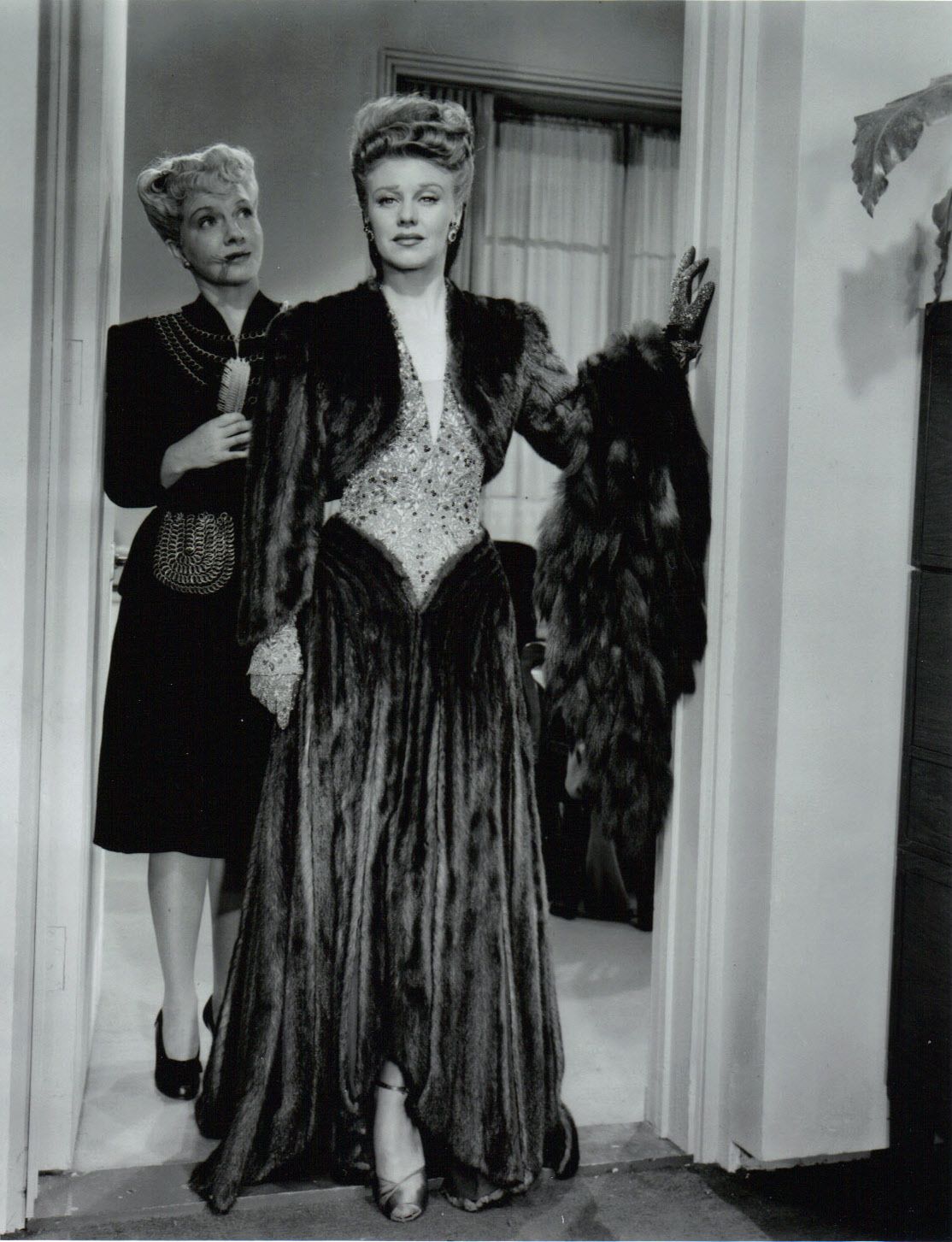
Amid the opulence of Allure‘s offices – the film’s lavish design and dream sequences subvert its maniacal heteronormativity – Charley attacks Liza continually, questioning her gender, sex life, and style, and brazenly declaring his desire for her job. When unusually she wears an evening gown on a date with Randy – a garment of sequin and mink that cost Paramount an eyewatering $35,000 dollars to produce – he jibes “you look wonderful – you actually look like a woman!” Her psychoanalyst Dr Brooks (Barry Sullivan) meanwhile proposes that, stemming from her childhood experiences, her distress lies with her reluctance to embrace femininity and “compete with other women”. Ignoring the injustices it so clearly lays out, the film egregiously weaponises psychoanalysis to confirm the “sex/gender system” and everything it supports. It ends with Liza agreeing to co-run the magazine with Charley, her literal tumble to the ground as he grabs her editorial chair for himself, and a kiss of unlikely passion between the two. This great review including on point picture captions (“Ray Milland is a shithead with a whip and Ginger Rogers is the lady in a cage in the circus dream”) fully has the measure of the film, as do these others on Letterboxd.

Paul Thomas Anderson’s extraordinary Phantom Thread (2017) includes ‘My Ship’. And Lady in the Dark seems to me to haunt the film in other ways, not least Freud’s essay.

At its conclusion Freud correlates the caskets to the mythological Fates (Moirai), the “three weaving goddesses who assign individual destinies to mortals at birth”, and thus to

the three inevitable relations that a man has with a woman – the woman who bears him, the woman who is his mate and the woman who destroys him; or that they are the three forms taken by the figure of the mother in the course of a man’s life – the mother herself, the beloved one who is chosen after her pattern, and lastly the Mother Earth who receives him once more. But it is in vain that an old man yearns for the love of a woman as he had it first from his mother; the third of the Fates alone, the silent Goddess of Death, will take him into her arms.

The relationship that Paul Thomas Anderson concocts between celebrated and exacting dressmaker Reynolds Woodcock (Daniel Day-Lewis) and his lover and model Alma (Vicky Krieps) attempts to have this cake and eat it. So consumed is Reynolds with his mother, and control over himself and his surroundings, that he cannot tolerate interruption or vulnerability, keeping his shrewd sister Cyril (Lesley Manville) close by as his safe companion. In these constrained, even hostile emotional circumstances, Alma (‘soul’) undertakes to derail his “games” by bringing him close to death: she feeds him poisonous mushrooms, then nurses him back to health, thereby impossibly occupying all three relations. This sadomasochistic gambit allows Reynolds to let go, to fall in love, to commit to her totally, and they have their own child. And so another cycle begins.

Oscar Peterson’s performance of ‘My Ship’ plays in the tearoom in which Woodcock first encounters Alma as a waitress, where he orders a ridiculous breakfast. Learning of Paul Thomas Anderson’s passion for big band jazz, I’m convinced that the narrative structure of Reynolds and Alma’s relationship is based on Nelson Riddle’s wonderful orchestral arrangement: brass and woodwind signal ‘watch out!’ before the song moves to surging strings, the solitary multiplicity of Peterson’s piano, and so on, periodically undercut by ambiguous, if not outrightly sinister harmonic choices. Key changes mark new phases, ascension to new heights. It’s almost unbearably poignant but also weirdly unserious somehow. It finishes with a steadying rallentando and fluttering flutes: a happy ending.

Aleksandar Hemon in the New Yorker concludes that Phantom Thread is “nothing if not propaganda for patriarchy”, and for sure I agree that it is in one sense a deep stitch-up, leaving little room for its women’s own desires beyond surviving these conditions, and doling out punishment for their perceived infractions. But like the stunning arrangement of ‘My Ship’ that it features, it is laced with compassionate unease, skewering power and fantasy with a delicate comic touch.