22: Answer Me, My Love (1953)

This song has been through a lot.

Lyrically speaking, ‘Answer Me, My Love’ is a text of self-torture. But it started life as the diametric opposite: a rose-tinted homage to maternal love and protection.

German composer and lyricist Gerhard Winkler wrote ‘Mütterlein’ (1952) as a nostalgic waltz and birthday tribute to his 75 year old mother – a tune quick to be translated and recorded by other artists in Swedish, Icelandic, Finnish and Danish. It is idealising in the extreme: a paean to unending, self-sacrificing support. Then in 1953, two adaptations took it in a radically different and tragic direction.

American songwriter Carl Sigman set ‘Answer Me, Lord Above’ to Winkler’s music. It is a story of abandonment: a person demanding of God why their lover has left them. And either before, after or during Sigman’s process of writing – it is not clear which – Fred Rauch wrote German lyrics for the song with the title ‘Glaube Mir (Believe Me)’.* Rauch’s protagonist, like Sigman’s, has been rejected by a lover out of the blue – but here they speak to them, not God, directly. Affirming the depth of their love, they plaintively request an explanation.

As Carl Sigman’s son Michael describes in a terrific 2013 Huffington Post piece, the song’s subsequent trajectory is absolutely wild.

What 60 year-old song co-written by a German and an American reached No. 1 on the UK singles charts by two different singers at the same time; was penned by an atheist but banned by the BBC for its “religious” content; was secularized by said atheist via a change of three syllables; subsequently became a U.S. chart smash; has been covered by hundreds of pop, doo wop, rock, country, r&b, folk, jazz, gospel and classical artists; and bears a fascinating (though not remotely plagiaristic!) resemblance to a 48 year-old number that happens to be the most popular pop song of all time?

The “two different singers” were American crooner Frankie Laine and British singer David Whitfield, whose releases of ‘Answer Me’ in the UK in the winter of 1953 spent many weeks in the charts, despite the BBC’s ban on the basis of the song’s supposed “‘sentimental mockery of Christian prayer'”.** In the interests of his song’s commercial viability, Sigman was persuaded to delete reference to God. His substitution of “Lord Above” with “Oh My Love” reflects the address of Rauch’s lyrics. Nat King Cole scored a US hit with Sigman’s revised version in 1954, a recording bearing credits for Winkler, Rauch and Sigman together. And as Michael Sigman writes, these popular recordings of ‘Answer Me’ may well have earwormed an 11 year old Paul McCartney: according to musicologists, its formal and thematic aspects echo through the Beatles’ ‘Yesterday’ (1965).

This is an extraordinary story, and I have Spotify’s algorithm to thank for learning about it.

A few weekends ago, while I was absent-mindedly washing dishes, something amazing and surprising popped up on my Discover Weekly playlist: Swamp Dogg’s phenomenal 2018 version of ‘Answer Me, My Love’. The kitchen resounded with the song’s introduction: dark brass redolent of a disaster movie, melodious woodwind and strings, and then the artist’s voice, deep in a sonic mist bouncing with electric harpsichord. I stopped what I was doing and laughed spontaneously in delight: I thought it was fucking awesome. “Answer me, oh my love / Just what sins have I been guilty of / Tell me how I came to lose your love” – here the brass phrase crashed in again – “Please answer me, my love”. More strings and brass announced the sadness of the minor B section, but the words – “If you’re happier without me / I’ll try not to care / But if you still think about me / Please listen to my prayer” – were now robotic with autotune, a screech of despair that persisted into the next verse, as if the human had been taken over by an uncertain machine. Comforting gospel harmonies commingled with electronic noise and glissando strings on secondment from sci-fi and horror. It was stunning: a voice reverberating through the past, present, and future – ethereal, material, godly and diabolic.

A Rolling Stone review quotes Swamp Dogg on this song, his choice of opener for his album Love, Loss and Autotune (2018):

“‘Answer Me, My Love’ is what we call a ‘money record’ and since I need money, I recorded it,” Swamp Dogg said in a statement. “You can’t go wrong with a Nat ‘King’ Cole hit! He never recorded a bad song and always got hits. I need to pay some bills.”

Pitchfork has the album as dealing in “the ecstasies of love, the misery of loss, and the economic desperation of life in Trumpland”, themes shared by Chloe Zhao’s Nomadland (2020), a film which briefly features Nat King Cole’s ‘Answer Me, My Love’.

Enclosed in the living space of her van, by the dim light of a battery-operated lamp hanging above and her radio’s tinny sound, the recently widowed and now nomadic Fern (Frances McDormand) peruses a box of photographs. “I believed that love was here to stay / Won’t you tell me where I’ve gone astray / Please answer me my love”. She gazes upon her family members’ images with a giggle, then a wry smile. “If you’re happier without me / I’ll try not to care / But if you still think about me / Please listen to my prayer”. She turns a slightly torn photograph of her husband as a young man in her fingers, and we are given time to look upon him, as she does. Joy in her face drops as grief takes over – “You must know I’ve been true / Won’t you say that we can start anew / In my sorrow now I turn to you” – and quickly the scene cuts to outdoors late some other day.

This solitary moment is beautiful: a scene of less than a minute that juxtaposes lyrics and images with tenderness and subtlety in a totally unreductive way.

It may be that Swamp Dogg’s version has flooded my sense of how ‘Answer Me’ expresses time, action and even age, but against Nat King Cole’s voice, Fern’s simple act of reflecting on photographs seems to take on a numinous quality. Like the song and its numerous lives, this moment questions the mysterious substance and longevity of love, life, bonds with others, and how stories play their part in constructing them.***

*Music writers John Kutner and Spencer Leigh say that Rauch wrote ‘Glaube Mir’ “following Sigman’s lead”, but if so why is Rauch’s credit on Nat King Cole’s recording? Did Sigman’s first adaptation come first, then Rauch’s, then Sigman’s revisions? Or both of Sigman’s, then Rauch’s?

**Frankie Laine released a recording of Sigman’s revised version in 1955. Whether or not the Whitfield recording that went to #1 was definitely the “secularized” one remains unclear imo, despite the decisive account of Kutner and Leigh. The Decca catalogue number for Whitfield’s chart-topper was F10192: ‘Answer Me, Lord Above’. A contributor to discography forum 45worlds.com, mister_tmg, notes the September and October 1953 recording dates for Whitfield’s two versions, specifies two slightly different matrix DR numbers, and notes that the song “first made #1 on 7 November 1953, so the re-pressed version may have been in the shops by that point. It certainly would have been by the time it returned to the top on 12 December”. I was today years old when I learned what a matrix number was. Main overall finding: people are amazing and social media isn’t always horrific.

***This song harbours so many: I enjoy Gene Ammons, Donald Shirley, Etta Jones, Barbara Dickson, Owen Gray, Renee Fleming, Hilde Hefte, Keith Jarrett. Joni Mitchell’s beautiful orchestral performance inspires this absorbing experimental text by Geraldine Finn, which brilliantly asks ‘what kind of a saying is a song?’ in a deep exploration of attachment, family, desire, and interlocution.
19: Moonlight in Vermont (1944)

This song is unexpected.

Karl Suessdorf and John Blackburn’s 1944 classic ‘Moonlight in Vermont’ features on Stardust (1978), Willie Nelson’s first album of jazz standards. His spacious interpretation became the surprise favourite of its lyricist. Blackburn’s nephew Bill Rudman reflects on his uncle’s reaction for jazz podcast I’ve Heard That Song Before:

He just couldn’t hear in his head how ‘Moonlight in Vermont’ could sort of cross over and be done by ostensibly a country singer. So he just didn’t believe that it was going to be any good at all, and when the LP came out he was just blown away by it.

Willie Nelson’s arrangement is tender and expansive: a solitary moonlit wish in the autumn is realised as a shared enchantment in the summer. Hope and desire are there, but they are unhurried. Things grow at their own pace.

For musicologist K. J. McElrath, Suessdorf’s beautiful composition’s “harmonic progression – quite advanced for its time and heralding the advent of ‘cool’ – makes sophisticated use of simple elements”. The same sophisticated simplicity applies to Blackburn’s lyrics.

Pennies in a stream

Falling leaves, a sycamore

Moonlight in Vermont

Icy finger waves

Ski trails on a mountain side

Snowlight in Vermont

Telegraph cables, they sing down the highway

And travel each bend in the road

People who meet in this romantic setting

Are so hypnotized by the lovely

Evening summer breeze

Warbling of a meadowlark

Moonlight in Vermont

You and I and moonlight in Vermont

The song conspicuously lacks a rhyme scheme. Less obvious is the haiku structure of its A sections. Each phrase obliquely describes an event, trusting its audience to make their own sense of what’s happening without the need for exposition. “Pennies in a stream”: have these coins been thrown there recently, or are they the rusted evidence of past wishful visits, or do they perhaps signify the people (who are not necessarily lovers) at the heart of the song’s story, or represent an idea of the flux of human existence? These four words in combination harbour all these possibilities and more. And the sensate evocations of “icy finger waves”, electric telegraph cables that “sing”, luminescence of “snowlight” – together, these images refuse pastoral nostalgia, instead tracing out modern holidaymaking amid the larger magic of seasonal change. The transition from the B section to the final A uncannily skips over spring, spiriting us directly from winter to summer – a time when, having nested, meadowlarks begin to sing again. It is brilliant.

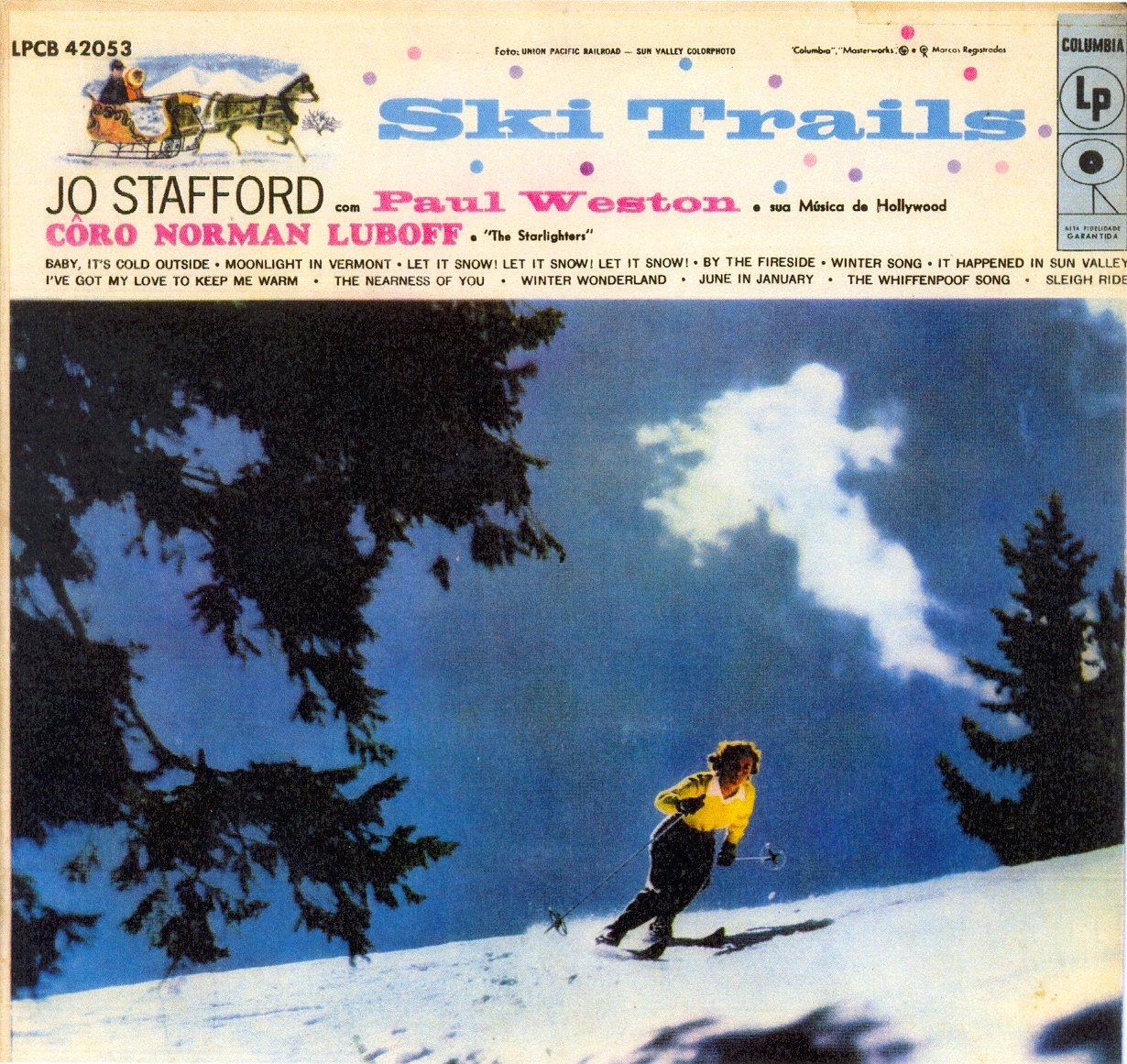
It seems bizarre that people would want to mess with this poetry, but mess with it they have. The most radical example is Jo Stafford’s recording for an album entitled Ski Trails (1956), whose comprehensive rewrite makes winter of the whole thing. In Andy Williams’ live concert performance, the lines “snowflakes in the wind, blanketing the countryside” likewise obliterate the balmy summer of the original.

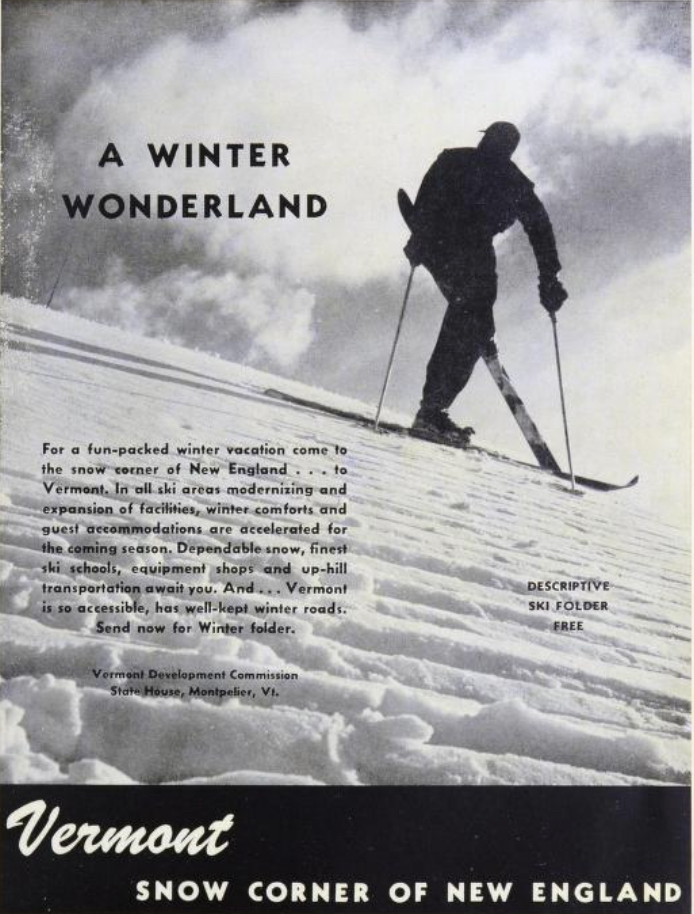
These specific lyrical choices, and the song’s rocketing popularity in the 1950s, could arguably be to do with skiing. As historian Andrew Denning has it, skiing was “the quintessence of that defining strain of postwar consumer culture: democratized luxury”. This was certainly the case in Vermont, where magazine Vermont Life aggressively promoted “the slopes of Vermont as a nearly year-round vacation destination” throughout the 1950s. To be ultra-specific, it presented Vermont as “a series of vacation areas catering to the modern family man from out of town looking for an all-encompassing winter escape”. What better snowy venue for a departure from routine, for the experience of the once-in-a-lifetime, unrepeatable romance fantasised by these recordings.

The many vocal interpretations of the song run the full stylistic gamut. Particularly enjoyable is its first outing, Billy Butterfield’s big band arrangement with Margaret Whiting – also Betty Carter’s early performance with the Ray Bryant Trio, the excessive vocal harmonies of the Lewis Sisters, Billy Stewart’s soulful re-imagining, Ella Fitzgerald’s intimate dialogue with Joe Pass. But I will say that it is possible to have too much of a good thing. Listening to tens of performances of once-in-a-lifetime, unrepeatable romance fantasies on the bounce is akin to eating a lot of cake: beyond a certain point the experience is empty and just a bit much.

Among the handful of films that include the song is the recent Hallmark TV movie Moonlight in Vermont (2017): “After Fiona [Lacey Chabert] gets dumped, she escapes to her family’s Vermont Inn for a few days to evaluate her life. When her ex Nate [Jesse Moss] shows up with a new girlfriend, Fiona devises a plan to win him back: pretend head chef Derek [Carlo Marks] is her new boyfriend.”

A Kindle search for the movie’s novelisation unexpectedly revealed other, self-published novels of the same name. These include a 2013 country house murder mystery on the model of Agatha Christie (page turner, holds out promise of subverting patriarchal constructs, just doesn’t) and the eleventh instalment in Olivia Gaines’ Modern Mail Order Brides series of romance novels, released in 2020 (the same, to an outlandish comedic degree).

But back to the movie. Moonlight in Vermont, a classic opposites attract scenario, is totally enjoyable, escapist, and implausible. Its characters say and do the most illogical things. Savvy and practical Manhattan real estate agent Fiona wears four inch spike heeled boots to walk in the snowy fields with Derek so she can look hot in front of her ex. Chef Derek, a man whose profession is predicated on the capacity to follow instructions, insists on savouring pancakes slowly in the context of a ‘how many pancakes can you eat in 60 seconds’ contest at the town’s annual Maple Faire. The town’s mayor presides over this contest, and later adjudicates a maple syrup tasting contest in a completely different shop, as if contests are his only job. The ex Nate, crazed with competitive jealousy, snippily declares to his new girlfriend “I’m counting on you here” to beat Fiona and Derek in the maple syrup tasting contest. Thus the movie sets up the beginnings of romance between Fiona and Derek: an enjoyable dinner at the inn, in which each listens with genuine interest to what the other is saying. In the light of the movie’s other strange situations, this conversation seems like the height of real intimacy. It was weird and I loved all of it.

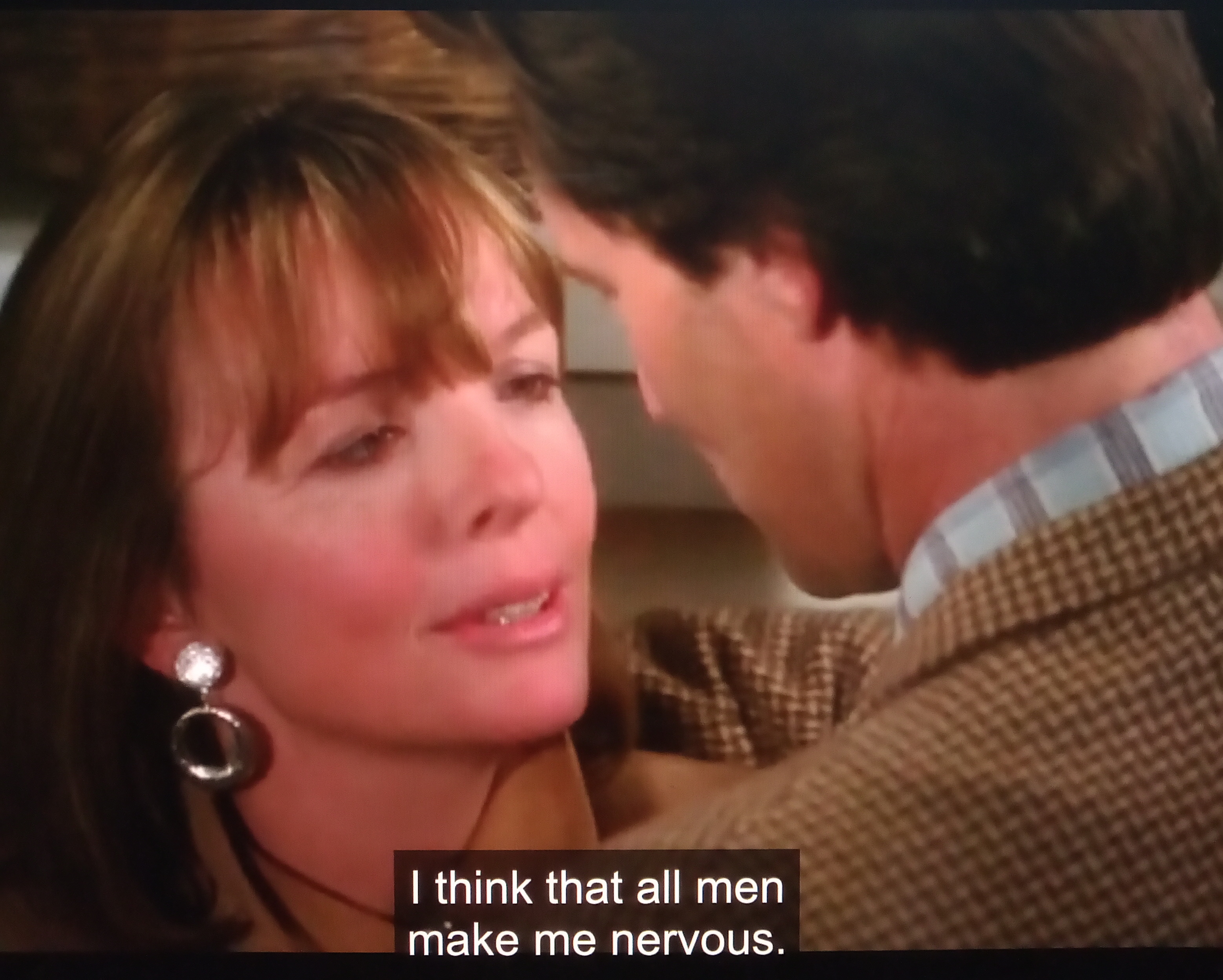
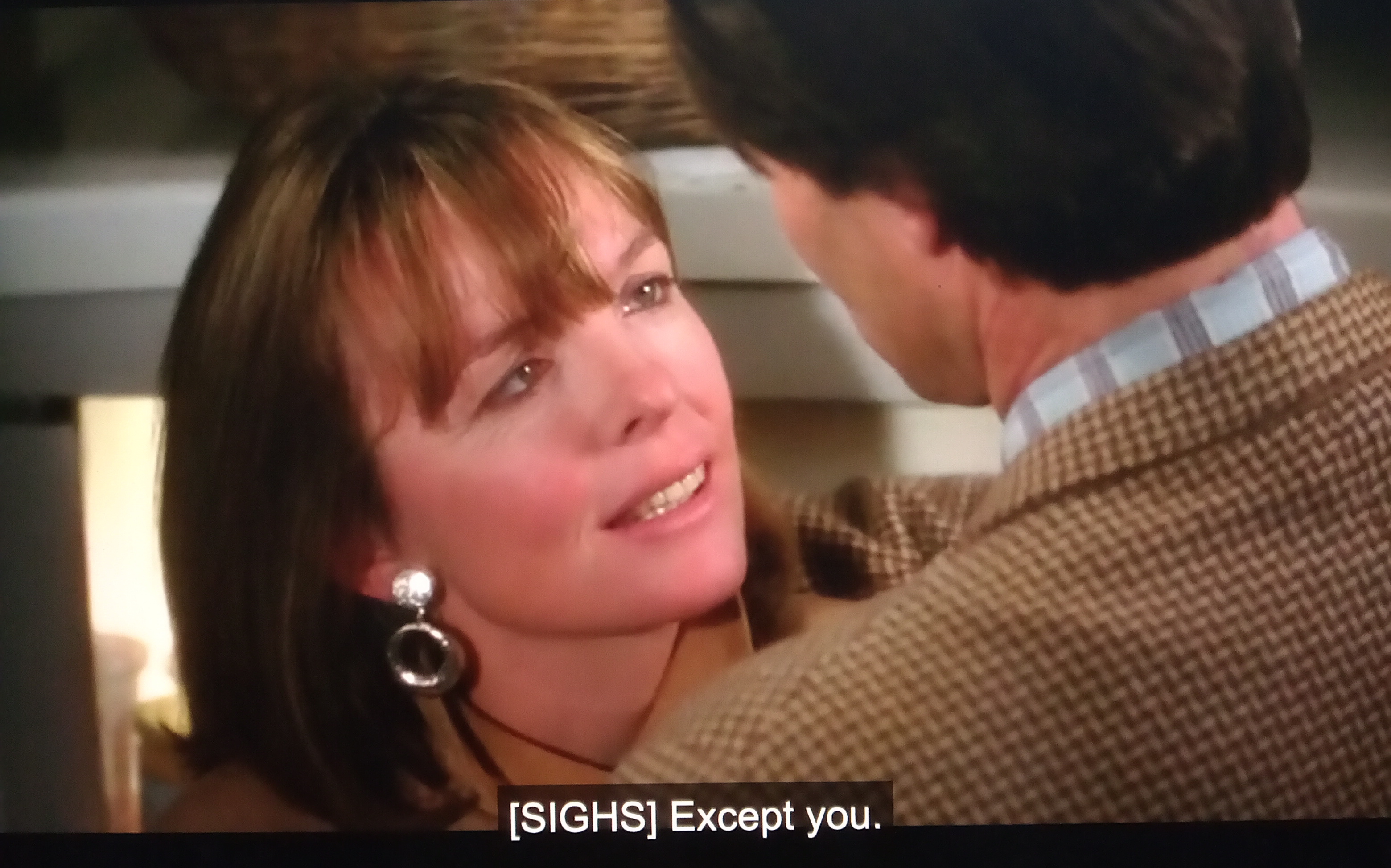
What I take from Moonlight in Vermont is this: some of the appeal of this kind of romantic plotline may be to do with the promise of respite from what Jane Ward calls the tragedy of heterosexuality. Part of that tragedy consists in attachment to “the heteroerotic fantasy of binary, biologically determined, and naturally hierarchical gender oppositeness” (cf. all of the above, plus the leads’ opening barbs: “Vermont lumberjack” / “New York princess”). In moments of beautiful utopian connection, this powerful and damaging nonsense falls away. Supplementary evidence: Baby Boom (1987), ‘Moonlight in Vermont’-having comedy of the nightmare struggle of career woman J.C. (Diane Keaton) against a patriarchal culture hostile to motherhood. Here, having found a new life in Vermont, she is getting together with vet Jeff (Sam Shepard).

Of course heteroerotic fantasies are inevitably re-established: for a female romantic protagonist, it’s true love or bust, and four days in to her visit, Fiona decides to quit New York and move to Vermont. The openness of ‘Moonlight in Vermont’ as a song makes it highly amenable to whirlwind stories of romantic destiny, but also to performances like Willie Nelson’s, a story of ease and grace that makes no demands, is in no rush at all.

11: For All We Know (1934)

This song is now, then, and forever.

The recording history of J. Fred Coots and Sam M. Lewis’s ‘For All We Know’, written in 1934, begins merrily with a version by Hal Kemp and His Orchestra, sung by Bob Allen. Its optimistic trills and honeyed vocals belie the song’s depths.

On the surface, ‘For All We Know’ is about a tentative encounter between two people, about to part on an enchanted night. One person speaks to the other of the fleeting quality of the evening and what the future may or may not hold, pledging their heart and soliciting the other person’s love. When Coots first heard Lewis’s lyrics, he thought they were ‘worthy of great poetry’, and promptly promised him $200 of IOUs.

The verse, as performed by Billie Holiday, Aretha Franklin and Bette Midler, locks down the song’s story as one of romantic love (‘A kiss that is never tasted / Forever and ever is wasted’). (Susannah McCorkle and Gladys Knight’s alternative verse intros are variations on that theme.) But Lewis’s words in the choruses are nothing short of a meditation on human existence itself: the experience of love, loss, consciousness, and temporality.

For all we know
We may never meet again
Before you go
Make this moment sweet again

We won’t say ‘goodnight’
Until the last minute
I’ll hold out my hand
And my heart will be in it

For all we know
This may only be a dream
We come and go
Like a ripple on a stream

So love me tonight
Tomorrow was made for some
Tomorrow may never come
For all we know

My favourite versions as of now are by Brad Mehldau, Bill Evans and Jose James and Jef Neve, each one tender and devastating in its own way.

But given the sheer quantity of interpretations, many of them straight ahead – one even by Ken Dodd – it’s weird that the first one I ever heard, again and again, should have been Nina Simone’s radical 1958 reworking. As she put it to Steve Allen in 1964, she interpreted the song in ‘a hymn-Bach-like way’. In her arrangement, whose melody departs substantially from the original, the eighteenth and twentieth centuries touch: a reflection in performance of the lyrics’ attention to endurance and transience.

With Joan Plowright as an elderly widow and Rupert Friend as her surrogate grandson Ludo, Mrs Palfrey at the Claremont (2005) does much more with the song than simply include Rosemary Clooney’s version in the end credits. Endurance and transience pervade the film: Mrs Palfrey’s recent loss, her arrival in London to stay long-term at a mediocre hotel, her daughter and actual grandson’s neglect, and her accidental encounter with Ludo, which becomes a tender friendship.

The film is uneven and sometimes quite strange, but this scene is lovely. At Ludo’s flat, Mrs Palfrey has reminisced about falling in love with her husband, including a twinkling nod to their healthy sex life, and days out in Beaulieu. Ludo asks her another question, and an unexpected, touching serenade unfolds.

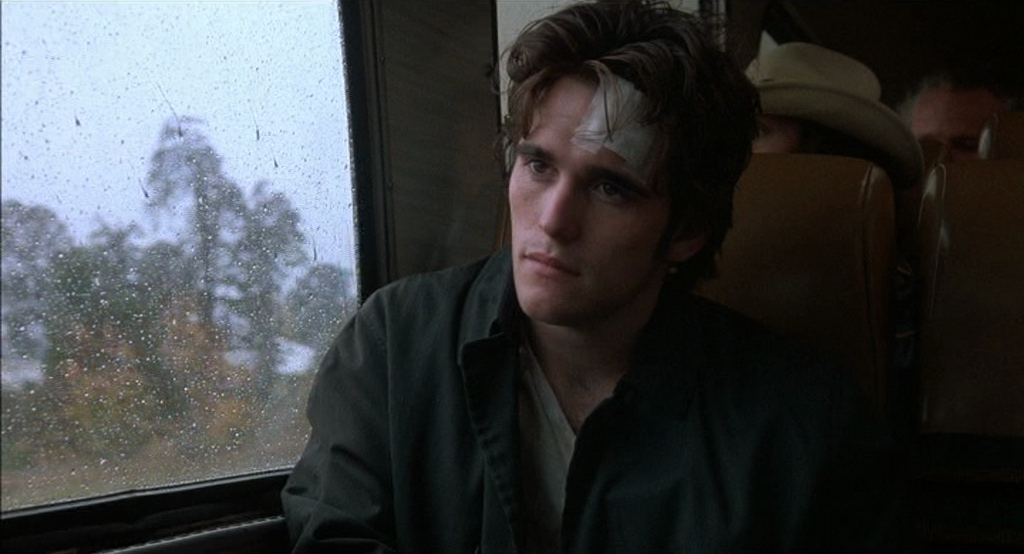
In Gus Van Sant’s Drugstore Cowboy (1989), set in 1971, Abbey Lincoln’s gut-wrenching interpretation is used repeatedly to speak of the dangerous tenacity of addiction – from the opening sequence, which introduces junkie Bob (Matt Dillon), sweating from a seeming overdose on an ambulance stretcher, to his earlier bus ride back to Portland to enter a methadone programme, to the film’s final moments, which return us to the ambulance.

The first ambulance scene, accompanied by the song, has an ironic, hallucinatory quality, compounded with a cut to a cinefilm of Bob with his crew of fellow addicts and thieves.

Later, Bob gazes silently through the misted, rain-spattered window of the bus at the agricultural landscape around.

Matt Dillon--Drugstore Cowboy

Adrenalised pharmacy and hospital heists, obsessive superstitions, and violence have given way to a more prosaic reality, which the film complicates with the lyric ‘For all we know / This may only be a dream’. ‘We come and we go / Like the ripples in a stream’ plays over shots of street drinkers gathered outside decrepit storefronts. ‘So love me tonight / Tomorrow was made for some / Tomorrow may never come / For all we know’ suggests both hope and desperation as Bob enters his new abode, the St Francis Hotel.

The last moments in the ambulance, as he struggles not with an overdose but a revenge gunshot injury from a dealer, make clear that Bob intends to abandon clock-time and production line work, and return to his life as a junkie. As Abbey Lincoln sings the song’s final choruses, contemplating the ebbs and flows of time and love, Bob explains.

It’s this fucking life. You never know what’s going to happen next. […] See, most people, they don’t know how they’re going to feel from one minute to the next. But a dope fiend has a pretty good idea. All you gotta do is look at the labels on the little bottles.

On his way to ‘the fattest pharmacy in town’, he wants to live. It’s an incredible use of the subtleties of this wonderful song, which can accommodate the paradox of hedonistic control as well as gentle acceptance of the future’s sadnesses and joys, which so quickly become the past.

Laura Mvula on screen

Watching Laura Mvula headline Love Supreme at the Roundhouse last night, I remembered this text sitting lonely on my computer, which I wrote the day after attending the 5 March 2015 cinema broadcast of her performance with Metropole Orkest, recorded at Paradiso Amsterdam on 28 November 2014.

At Screen 5 of the Ritzy in Brixton, the usher confirmed in a whisper that the screening of Laura Mvula’s gig hadn’t started yet (‘they are still doing the interviews’) and held open the door. The cinema was two-thirds empty and unusually chilly. Laura Mvula was on-screen in conversation with a male interviewer, responding to tweets coming in about the broadcast of the gig, displayed at the bottom of the screen. The interviewer advised the audience – the audience to their interview, wherever it was, and us, witnessing their exchange live – that we may have to pretend at various points that we have something in our eye, such was the emotive impact of what we were about to see.

Eating popcorn, I was curious. The camera filming the interview from the back of the venue suggested that the auditorium to which the artist was speaking was disappointingly half-empty – an image counterbalanced by a later view from the front, which showed row upon row filled with people. This, in combination with our own sparsely populated and cold auditorium, felt like something of an opening anticlimax.

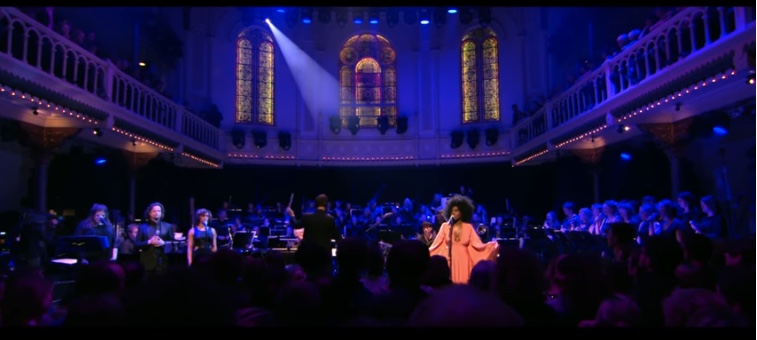
The recorded gig itself begins with the conductor Jules Buckley entering the stage of the Paradiso in Amsterdam. The venue is a former church, and intricate blue stained-glass windows adorn the wall behind the orchestra. A gallery level rests on top of corniced pillars – an architectural arrangement smaller but not dissimilar in shape to the Palau Música de Catalana in Barcelona where I’d seen a slightly odd performance by Aloe Blacc the previous summer, which had concluded with the audience being encouraged to rush the stage while the artist slipped away. The cameras filming the gig reveal that the auditorium is heaving. The ensemble of more than fifty musicians is packed onto the stage, a choir standing beneath the gallery stage left, and three backing singers positioned downstage right. Jules Buckley makes a cheesy Jaws reference in relation to the sell-out gig (‘we’re going to need a bigger boat!’) and warmly introduces the Metropole Orkest, before welcoming Laura Mvula herself onto the stage.

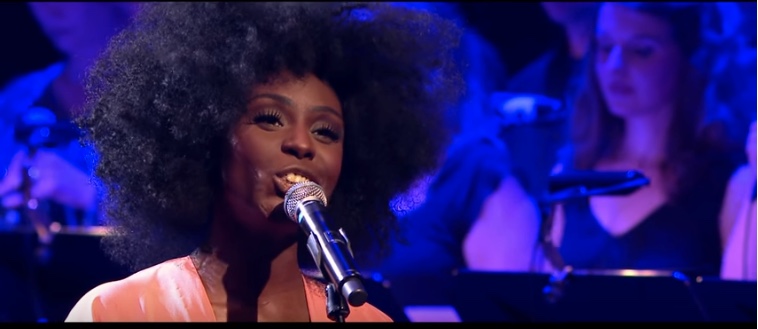
She walks into the auditorium through a door to the left of the front of the audience, passing amongst people standing to ascend the shallow stage. In March 2015, Laura Mvula has a shaven head, and wears a long white jacket and black top. In November 2014, her afro and peach nylon dress, long sleeves draping down, speak of the 1970s. When she stretches her right arm towards the audience as if in supplication – a gesture she will make frequently during her performance – her sleeve punctuates the movement. At first, she doesn’t speak except to say ‘thank you’.

Laura Mvula

The performance is revelatory. The rich orchestration lends a new dimension to the songs, which now tell stories that are different to those of the intimate arrangements on Sing to the Moon (2013), on which the gig is based. The first number, ‘Like the Morning Dew’, describes the insubstantiality of a relationship: ‘Our love is / Like the morning clouds / Like the morning dew / That goes away / Early.’ The expansiveness of the arrangement envelops the voice of the soloist, speaking of the disappearance of the world that the song’s protagonist thought was there. Its resonant universe conjures imaginative flight, fantasy, and a strange kind of optimistic sadness about the flimsiness of that imagined world. ‘She’ describes a woman’s quest for intimacy, the lyric ‘she don’t stop / she don’t stop / she don’t stop’ underscored by percussion, giving the impression of a relentless progression forward. As she sings, her movement alludes to walking a path, although of course, standing on the spot, she goes nowhere. Whether the intended meaning or not, as she performs ‘Is There Anybody Out There?’ I think of how precious life must feel to someone facing death: ‘Is this the end / Before it’s even started / I can’t survive this way / I’m broken-hearted.’ The improvisation of the lead vocalist over the chorus constructs both a sense of internal dialogue and a conversation between people. As in the original arrangement, the tumbling strings give way to a dissonant passage, and the sensation of floating in space.

Laura Mvula 3

With ‘Father Father’, I recognize what the interviewer meant. Seated at the piano, she introduces the song by acknowledging Jules Buckley’s new arrangement for the orchestra (‘it’s better’). The purity of the brass at the start of the song seems to refer perfectly and incongruously to Vaughan Williams and Elgar. As she sings ‘I lost my heart / In the dark with you’, its attack is brutal. The texture of the song builds with the introduction of strings, piano, and timpani, creating an almost meteorological landscape of sound. Then, the song continues for as long again, with her beautiful improvisation around the lyrics ‘Father father / Please don’t let me go / Father father / Why’d you let me go’ as the music swells around her. Her gaze directed at no-one in particular, she speaks to herself, to the audience, to God. I now hear the song as the tragedy of the loss of faith, and wonder whether all of the songs in the concert are in some way circling that idea.

Laura Mvula 2

Huddled beneath my coat in the cold cinema, I moved in and out of absorption in the gig, fascinated by the technical execution of the music producing such intense emotional effects in the audience, occasionally feeling tears spring in my own eyes and roll down the side of my face. A large gathering of musicians had met an audience of 1,500, met in turn later by a much more disparately spread audience, watching silently in cinemas as the first audience clapped and cheered. At the end of each number, her face would wrinkle into a huge smile, puncturing the emotional world of the songs and reasserting the humour of the everyday.

The gig finished with an encore performance of ‘Make Me Lovely’.

Towards its end she said: ‘I just want to thank you all for being the most wonderful audience, ever’. At this, I smiled, feeling warmth toward this past audience but not feeling myself a part of it. Having concluded, the recorded concert was then unexpectedly followed up by a live performance from Laura Mvula in the venue of the interview, performing solo on a keyboard. It was unexpected, it seemed, to everyone – the screen showed a couple of audience members caught short attempting to get up. The much more minimal rendition of three of the numbers she had performed exposed again the texture of the orchestral arrangements, and the controlled power of her voice. Strangely, this live performance felt intimate, just for us, despite the ‘us’ being scattered in cinemas across the country. When she finished this reprise, she smiled, and said ‘thank you for coming’ again. In the Ritzy, the credits rolled silently, and no-one moved.