23: A Certain Smile (1958)

This song puts up a front.

Composer Sammy Fain and lyricist Paul Francis Webster wrote this winsome, Academy Award-nominated song for Jean Negulesco’s A Certain Smile (1958) – a sweeping cinematic adaptation of Françoise Sagan’s uncompromising novella about love, sex and infidelity. Critics at the time found the film’s treatment of Sagan’s story to be average at best: a “glossy, emotional yarn” (Variety), a “tepid romantic interlude” (New York Times). The song has been infrequently recorded since the 1970s.

No-one:

Me: ‘A Certain Smile’ is integral – INTEGRAL – to A Certain Smile‘s re-articulation of Sagan’s book as a melodramatic touristic visual feast – yes, and in case you imagine this is a situation of FILM = BAD, BOOK = GOOD, the last of those is an aspect that weirdly resonates with Sagan’s own literary style, which makes much of staging things to look at!* Plus, existentialist cynic Sagan wrote romantic song lyrics for Juliette Greco?!**

NB. “no-one” meme format for me still fresh as daisy because not on Twitter and this too probably. Anyway, let’s get into it.

‘A Certain Smile’ has been a rabbit hole to fall down. Back in the spring, Spotify gave me Ted Greene’s 1977 night sky of a solo recording. Confusion descended: did I know the song already, or was this sparkling arrangement enchanting me into thinking I did? (Martin Taylor’s intensely beautiful 1993 solo guitar rendition did similar magic.) I listened to the inaugural 1958 recording by Johnny Mathiswho performs the song with verse in a nightclub set piece in the film – and was still none the wiser. I couldn’t decide if it was the sing-song pattern of the melody that felt familiar, or the song itself. When I asked my mum about ‘A Certain Smile’, she knew it immediately, lyrics and all. From the generational point of view, this makes sense: more than half of the vocal recordings to be released professionally were out by the late 1960s, with ten of those released in 1958. This smash hit – Mathis’ recording reached #4 in the UK – has been in the atmosphere for decades, with diminishing density over time.

The song’s apparent sweetness contrasts with Sagan’s A Certain Smile (1956) – a text that begins archly with an epigraph from Roger Vailland: Love is what happens between two people who love each other.

Dominique, in a relationship with fellow Sorbonne student Bertrand, tells the winding story of her short but unexpectedly emotionally shattering affair with Bertrand’s married uncle, Luc. For one critic reviewing the book in 1957, Sagan communicates the experience of “serene despair” with immaculate precision, featuring “none of the obsession with the details of external reality so common in her contemporaries: ‘and now I shall show you what Life is really like in Paris, Moscow or New York’, in attempts which finally show what? nothing”.

Paul Francis Webster’s lyrics, prepared for the film, are of a different order of business.

What do you meet down a crooked little street in Paris
Vendors who sell pretty flowers that tell of spring
Once in a while you may meet a certain smile in Paris
So excitingly gay that it seems to say ‘cherie, fall in love with me’

A certain smile, a certain face
Can lead an unsuspecting heart on a merry chase
A fleeting glance can say so many lovely things
Suddenly you know why my heart sings

You’ll love awhile and when love goes
You try to hide the tears inside with a cheerful pose
But in the hush of night exactly like a bittersweet refrain
Comes that certain smile to haunt your heart again

Set against a dramatic minor key, the verse’s clever internal rhymes and their fantasy of Paris resolve into the optimistic choruses, their rhyming couplets, and their protagonist, sharing the wisdom of their experience while presenting a brave exterior. It’s strangely labyrinthine in its temporal journey, and much more complicated than it first appears to be.

This isn’t unlike the movie – although I will say I found A Certain Smile to be a rough watch, at least first time around. It rearranges the essential components of Sagan’s book to produce a morality tale that visually “abounds with mouth-watering vistas of the French Riviera”. Characters bear only marginal resemblance to their sources: the ingénue (Christine Carère), her parents (Eduard Franz, Katherine Locke) in extended grief for the loss of their son, said ingénue’s feckless boyfriend (Bradford Dillman), his rich and selfish mother (Kathryn Givney), the playboy uncle (Rossano Brazzi), his long-suffering wife Françoise (Joan Fontaine), and a rogues’ gallery of assorted friends and associates. Dominique’s red beret amid the grey stone of the Sorbonne marks her out as a scarlet woman in the making. Her fate is confirmed when, soon after Luc hits on Dominique in a café-bar she has attended with Bertrand, Françoise airily offers Dominique a red coat during her visit to their home, declaring it “far too young for me” – misogynising, if you will, a more or less throwaway moment in the book, in which the couple extravagantly buy a coat “in a reddish woollen material” for their nephew’s new girlfriend in a shop.

‘A Certain Smile’ instrumentally underscores the beats of Dominique’s entire emotional arc, from her misguided entanglement with Luc to her rapprochement with Bertrand. So closely is the song woven into the fabric of the film that it’s almost imperceptible, smoothing the way for the romance’s compliance with the sanitising “shibboleths of the Production Code”.

As recounted in Michaelangelo Capua’s Jean Negulesco: The Life and Films (2017), here is how Sagan – whose text features extra-marital sex, pregnancy scares and so on – reacted to A Certain Smile‘s screenplay in a meeting with Negulesco in Paris:

I gave her an appointment in a café not too far from where we were shooting. She was sitting on the terrace eating a ham and cheese sandwich in the company of young man. I approached her a bit confused.

‘Miss Sagan?’
‘Yes.’
‘Excuse me, I’m Jean Negulesco. Have you read the script?’
‘Yes.’
‘Did you like it?’
‘No.’
‘Could you tell me why?’
‘No.’
‘Do you want to join me on the set?’
‘No.’
‘Would you allow me to pay for your sandwich?’
‘Yes.’

She then said to the young man: ‘It’s not him that pays, it’s 20th Century Fox.’

Despite Sagan’s understandable aversion to the film’s adaptation of her book, they end up at similar destinations. Rachel Cusk praises her “fearless and astute portrayal of love as a psychical event that has its roots in family life and the early formation of personality”. As I watched the film a second time, I realised that Dominique’s bizarre actions were imagined to hinge on the death of her brother and the consequences for her family, and that every character in their own way was struggling with loss. All three of these interconnected works – novella, film and song – are grappling with the depths of pain and its origins, though Sagan’s writing looks at them most directly and dispassionately.

*In both visual and psychological modes. A particularly economical example of narrative reflexivity from A Certain Smile‘s fourth chapter: “I couldn’t help feeling quite warm towards myself.” (p. 186)

**From a fascinating short biographical post entitled ‘That Charming Monster, Francoise Sagan’: “It is not widely known that Françoise Sagan dabbled in song writing, composing lyrics for romantic songs and even librettos for ballets. This aspect of her career came about when, at the age of twenty, haunting the bars and nightclubs of Saint Germain des Prés, she met the musician Michel Magne. Having already tried out over fifty lyricists for his songs, Magne thought Sagan’s style would be perfect. Her lyrics reflect a maturity beyond her years and lack the cynicism of her books. They are often about people wrestling with private pain and angst, deep into alcohol-fuelled nights. Vous mon Coeur (You my Heart) is a plea to a lover not leave: ‘You, my heart/You my life/You who smile/You who embrace me/You, one day…..will leave me, my heart.’”

22: Answer Me, My Love (1953)

This song has been through a lot.

Lyrically speaking, ‘Answer Me, My Love’ is a text of self-torture. But it started life as the diametric opposite: a rose-tinted homage to maternal love and protection.

German composer and lyricist Gerhard Winkler wrote ‘Mütterlein’ (1952) as a nostalgic waltz and birthday tribute to his 75 year old mother – a tune quick to be translated and recorded by other artists in Swedish, Icelandic, Finnish and Danish. It is idealising in the extreme: a paean to unending, self-sacrificing support. Then in 1953, two adaptations took it in a radically different and tragic direction.

American songwriter Carl Sigman set ‘Answer Me, Lord Above’ to Winkler’s music. It is a story of abandonment: a person demanding of God why their lover has left them. And either before, after or during Sigman’s process of writing – it is not clear which – Fred Rauch wrote German lyrics for the song with the title ‘Glaube Mir (Believe Me)’.* Rauch’s protagonist, like Sigman’s, has been rejected by a lover out of the blue – but here they speak to them, not God, directly. Affirming the depth of their love, they plaintively request an explanation.

As Carl Sigman’s son Michael describes in a terrific 2013 Huffington Post piece, the song’s subsequent trajectory is absolutely wild.

What 60 year-old song co-written by a German and an American reached No. 1 on the UK singles charts by two different singers at the same time; was penned by an atheist but banned by the BBC for its “religious” content; was secularized by said atheist via a change of three syllables; subsequently became a U.S. chart smash; has been covered by hundreds of pop, doo wop, rock, country, r&b, folk, jazz, gospel and classical artists; and bears a fascinating (though not remotely plagiaristic!) resemblance to a 48 year-old number that happens to be the most popular pop song of all time?

The “two different singers” were American crooner Frankie Laine and British singer David Whitfield, whose releases of ‘Answer Me’ in the UK in the winter of 1953 spent many weeks in the charts, despite the BBC’s ban on the basis of the song’s supposed “‘sentimental mockery of Christian prayer'”.** In the interests of his song’s commercial viability, Sigman was persuaded to delete reference to God. His substitution of “Lord Above” with “Oh My Love” reflects the address of Rauch’s lyrics. Nat King Cole scored a US hit with Sigman’s revised version in 1954, a recording bearing credits for Winkler, Rauch and Sigman together. And as Michael Sigman writes, these popular recordings of ‘Answer Me’ may well have earwormed an 11 year old Paul McCartney: according to musicologists, its formal and thematic aspects echo through the Beatles’ ‘Yesterday’ (1965).

This is an extraordinary story, and I have Spotify’s algorithm to thank for learning about it.

A few weekends ago, while I was absent-mindedly washing dishes, something amazing and surprising popped up on my Discover Weekly playlist: Swamp Dogg’s phenomenal 2018 version of ‘Answer Me, My Love’. The kitchen resounded with the song’s introduction: dark brass redolent of a disaster movie, melodious woodwind and strings, and then the artist’s voice, deep in a sonic mist bouncing with electric harpsichord. I stopped what I was doing and laughed spontaneously in delight: I thought it was fucking awesome. “Answer me, oh my love / Just what sins have I been guilty of / Tell me how I came to lose your love” – here the brass phrase crashed in again – “Please answer me, my love”. More strings and brass announced the sadness of the minor B section, but the words – “If you’re happier without me / I’ll try not to care / But if you still think about me / Please listen to my prayer” – were now robotic with autotune, a screech of despair that persisted into the next verse, as if the human had been taken over by an uncertain machine. Comforting gospel harmonies commingled with electronic noise and glissando strings on secondment from sci-fi and horror. It was stunning: a voice reverberating through the past, present, and future – ethereal, material, godly and diabolic.

A Rolling Stone review quotes Swamp Dogg on this song, his choice of opener for his album Love, Loss and Autotune (2018):

“‘Answer Me, My Love’ is what we call a ‘money record’ and since I need money, I recorded it,” Swamp Dogg said in a statement. “You can’t go wrong with a Nat ‘King’ Cole hit! He never recorded a bad song and always got hits. I need to pay some bills.”

Pitchfork has the album as dealing in “the ecstasies of love, the misery of loss, and the economic desperation of life in Trumpland”, themes shared by Chloe Zhao’s Nomadland (2020), a film which briefly features Nat King Cole’s ‘Answer Me, My Love’.

Enclosed in the living space of her van, by the dim light of a battery-operated lamp hanging above and her radio’s tinny sound, the recently widowed and now nomadic Fern (Frances McDormand) peruses a box of photographs. “I believed that love was here to stay / Won’t you tell me where I’ve gone astray / Please answer me my love”. She gazes upon her family members’ images with a giggle, then a wry smile. “If you’re happier without me / I’ll try not to care / But if you still think about me / Please listen to my prayer”. She turns a slightly torn photograph of her husband as a young man in her fingers, and we are given time to look upon him, as she does. Joy in her face drops as grief takes over – “You must know I’ve been true / Won’t you say that we can start anew / In my sorrow now I turn to you” – and quickly the scene cuts to outdoors late some other day.

This solitary moment is beautiful: a scene of less than a minute that juxtaposes lyrics and images with tenderness and subtlety in a totally unreductive way.

It may be that Swamp Dogg’s version has flooded my sense of how ‘Answer Me’ expresses time, action and even age, but against Nat King Cole’s voice, Fern’s simple act of reflecting on photographs seems to take on a numinous quality. Like the song and its numerous lives, this moment questions the mysterious substance and longevity of love, life, bonds with others, and how stories play their part in constructing them.***

*Music writers John Kutner and Spencer Leigh say that Rauch wrote ‘Glaube Mir’ “following Sigman’s lead”, but if so why is Rauch’s credit on Nat King Cole’s recording? Did Sigman’s first adaptation come first, then Rauch’s, then Sigman’s revisions? Or both of Sigman’s, then Rauch’s?

**Frankie Laine released a recording of Sigman’s revised version in 1955. Whether or not the Whitfield recording that went to #1 was definitely the “secularized” one remains unclear imo, despite the decisive account of Kutner and Leigh. The Decca catalogue number for Whitfield’s chart-topper was F10192: ‘Answer Me, Lord Above’. A contributor to discography forum 45worlds.com, mister_tmg, notes the September and October 1953 recording dates for Whitfield’s two versions, specifies two slightly different matrix DR numbers, and notes that the song “first made #1 on 7 November 1953, so the re-pressed version may have been in the shops by that point. It certainly would have been by the time it returned to the top on 12 December”. I was today years old when I learned what a matrix number was. Main overall finding: people are amazing and social media isn’t always horrific.

***This song harbours so many: I enjoy Gene Ammons, Donald Shirley, Etta Jones, Barbara Dickson, Owen Gray, Renee Fleming, Hilde Hefte, Keith Jarrett. Joni Mitchell’s beautiful orchestral performance inspires this absorbing experimental text by Geraldine Finn, which brilliantly asks ‘what kind of a saying is a song?’ in a deep exploration of attachment, family, desire, and interlocution.

21: Willow Weep for Me (1932)

This song isn’t having it.

Ann Ronell – a female trailblazer in the sphere of Hollywood musical direction and Broadway composition – originated this wonderful chronicle of heartbreak in 1932. A publishing colleague of Irving Berlin rejected it for being too technically complicated, but support from Berlin himself brought the song to radio broadcast and wider critical and commercial success.

Willow weep for me
Willow weep for me
Bend your branches green along the stream that runs to sea
Listen to my plea
Hear me willow and weep for me
Gone my lovers’ dream
Lovely summer dream
Gone and left me here to weep my tears into the stream
Sad as I can be
Hear me willow and weep for me
Whisper to the wind and say that love has sinned
Left my heart a-breaking, and making a moan
Murmur to the night to hide its starry light
So none will see me sighing and crying all alone
Weeping willow tree
Weep in sympathy
Bend your branches down along the ground and cover me
When the shadows fall, hear me willow and weep for me

While hearing out their lonely protagonist’s pain, these lyrics wink theatrically: love in its entirety has “sinned” because the “lovely summer dream” of a seasonal romance hasn’t worked out for you? All the stars in the night sky should be obliterated to conceal your unique misery? Come on. There’s no shame in sadness.

Ronell’s celebrated, much recorded composition warmly presses that argument forward – in particular the major key in the A sections, its sing-song octave leap (Ted Gioia: “a vertiginous plunge followed by a reassuring triplet bounce unlike anything else in the jazz repertoire of the era”), and the way in which, as Alec Wilder notes, “the accompaniment moves into double time and out again the next measure”. Edward Jablonski interprets this choice as signifying “agitated stress”, but I’m not sure that’s it. Consider, for example, Ella Fitzgerald’s 1959 recording. “Listen to my plea”, entreats the song’s protagonist. Amid the dreaminess of Frank DeVol’s orchestral arrangement, this rhythmic shift counterargues: no, you need to shake things up.

The song’s appearance in the Marx Brothers’ Love Happy (1949) – a crime caper which brings together a diamond heist and a Broadway revue – sets off its refusal of the role of romantic victim in an utterly surprising way.

Ann Ronell scored Love Happy, and oversaw Frank Perkins’ instrumental arrangement of ‘Willow Weep for Me’ for one of the Broadway revue’s numbers. Choregraphed by Billy Daniel, it presents an extraordinary burlesque staging of the figure of Miss Sadie Thompson.

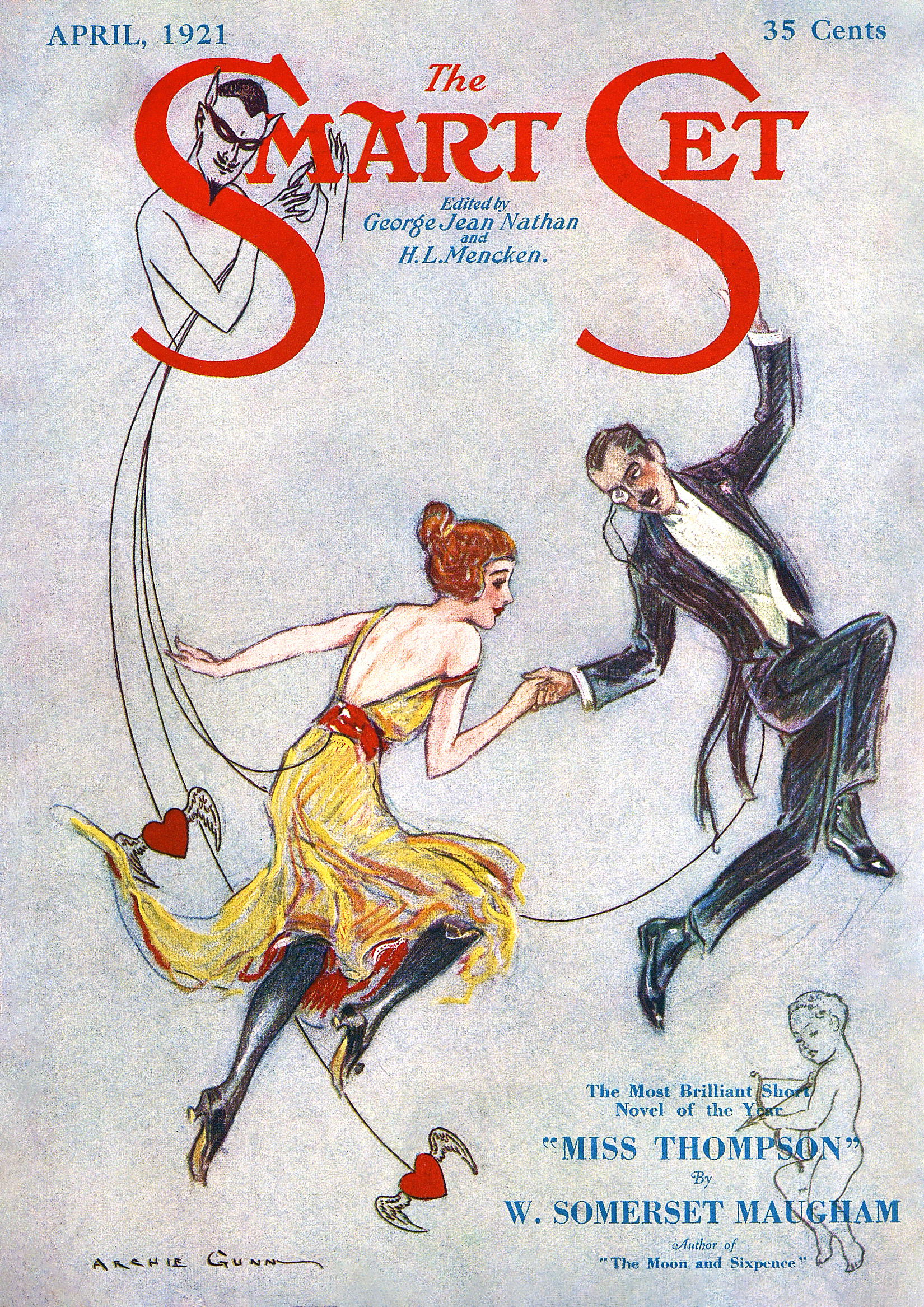
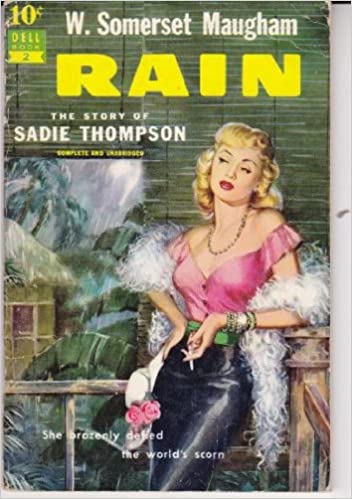
Sadie Thompson is a character in ‘Rain’ (1921), a short story by W. Somerset Maugham set in American Samoa. A ship’s crew member contracts measles, and its passengers are required to remain in port at Pago Pago for a period of quarantine: Dr and Mrs Macphail, missionary couple the Davidsons (ordinarily stationed elsewhere), and Sadie Thompson herself. All are offered accommodation in rooms above a shop. Sadie Thompson entertains sailors in her quarters, playing her gramophone loudly, to the the Davidsons’ infinite disapproval. They quickly infer that, having boarded at Iwelei (“plague spot of Honolulu. The Red Light district”), she is a prostitute, and Davidson himself undertakes to convert her. The missionary programme is vicious: the Davidsons expunge local practices of dancing and dress, impose fines on those who refuse to comply, and delight in destroying associates whose morality they deem insufficient. Davidson’s patriarchal fanaticism – of Sadie, he declares: “‘I want to put in her heart the passionate desire to be punished so that at the end, even if I offered to let her go, she would refuse'” – culminates in what the story very strongly implies is his rape of Sadie and his grisly death by cutting his own throat.

For Victoria Kuttainen, ‘Rain’ dramatises how missionary, medical and cultural regimes collide in the the “colonial, modernising Pacific”. She proposes that Somerset Maugham – both a literary figure and prolific writer for stage and screen – was acutely aware of the imagistic power of “fantasies of seductive starlets and beguiling tropical scenes”, and that his narrative choices comment on the performative power of speculation: other characters are given to report on Sadie’s conduct. In the diverse theatrical and cinematic adaptations of ‘Rain’,* meanwhile, “spectacle replaces speculation”. Stagings of Sadie melodramatically exoticise and evacuate the story of critical force.

The number in Love Happy quotes and exaggerates elements of these adaptations. It sweeps almost every hint of violence away, and reimagines the scenario as a comedy.

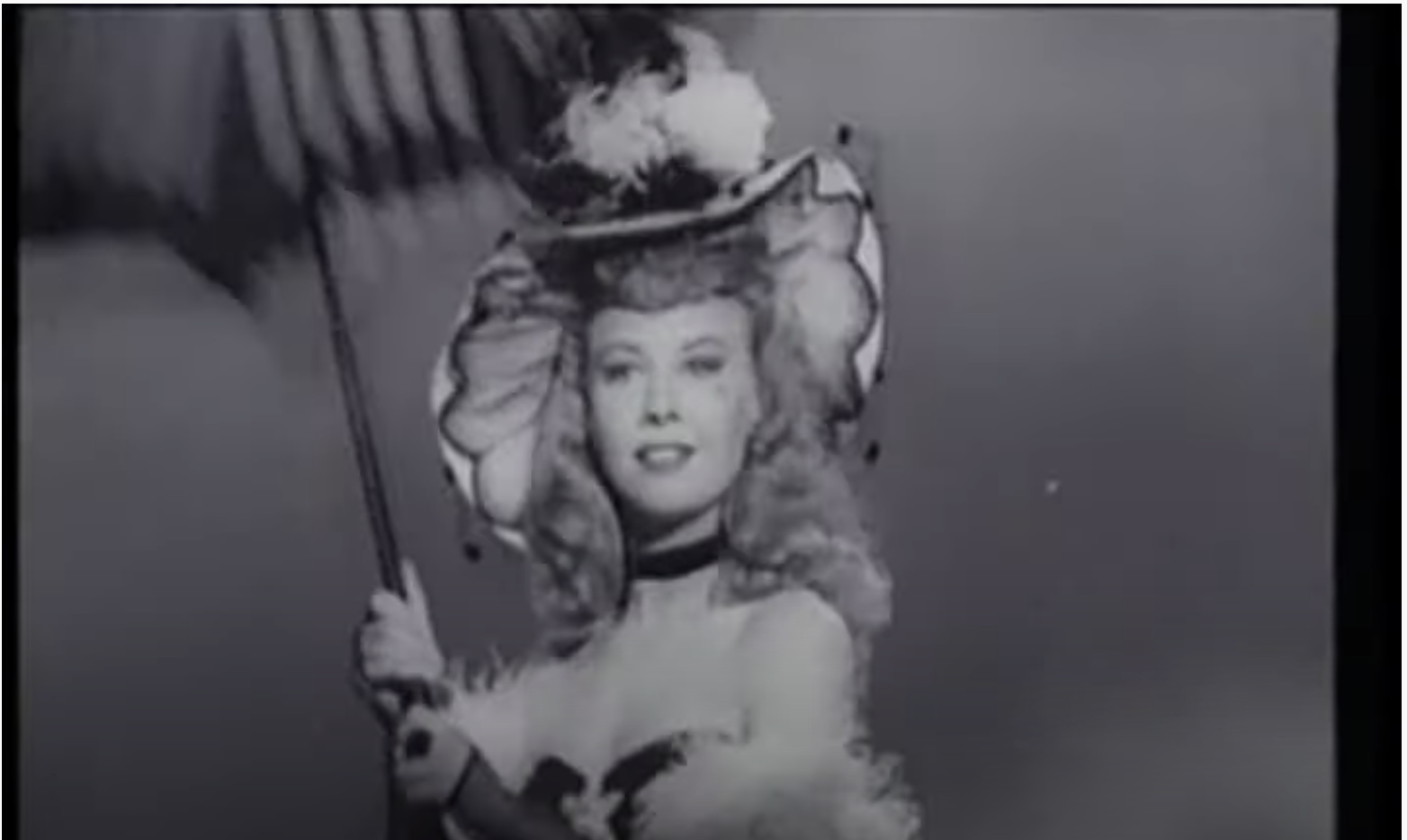
In this cartoon tropics, Sadie’s beau, Sergeant O’Hara (played by ‘Paul Valentine’, played by Mike Johnson) – a character introduced in these adaptations – places the needle on the gramophone, and the siren rasp of ‘Willow Weep For Me’ summons Sadie (played by ‘Maggie Phillips’, played by Vera-Ellen) to the stage. Marines gawp as she struts in, her hand magically conjuring her own spotlight. She roams about the stage with comic suggestiveness, occasionally knocking these uniformed men down like dominoes, while O’Hara gazes at her with deep desire. When, as in the story, Davidson (House Peters Jr.) stops the gramophone’s music, a drumbeat commences and a group representing Samoan dancers wearing what resemble lavalava enter the stage, supporting Sadie to continue – a section which trades in racialised stereotyping, places Sadie at its centre, but suggests collective solidarity between she and the islanders against the forces of missionary control. Davidson has failed, and exuberant music and dancing prevail. The gramophone resumes, and a whistle sends the Marines back, who have rushed Sadie like a pack of dogs. The number concludes softly: Sadie and O’Hara stand intimately together before the auditorium of the Broadway theatre to scattered applause.**

This larger-than-life musical rendition both sends up and luxuriates in the cultural habit of looking at Sadie. The lyrics and their sadness ghost the scene, a reminder of the tragedy of ‘Rain’, but here underscoring how Sadie just gets to go about her business.

Before watching the film, I had heard ‘Willow Weep for Me’ only in versions accentuating its bluesiness, as in the powerful recordings by Billie Holiday, Dinah Washington and Etta James, and Sarah Vaughan’s magical and hilarious live performance. With the exception of Stan Kenton’s 1946 arrangement featuring June Christy, the handful of recordings that precede Love Happy are a lively mix of foxtrot and cabaret, and a far cry from the sorrowful sentimentality of other later versions: Frank Sinatra, Julie London, Tony Bennett.

It begs so many questions: about the mood Ann Ronell originally intended for the song, how this scene in Love Happy was conceived and by whom,*** the direction of subsequent recordings. Regardless, it strikes me that its author’s well-documented determination, ambition, kindness and vivacity are of a piece with ‘Willow Weep for Me’. It is a song that “does exactly what it pleases”, recognising social and emotional limits, but isn’t about to accept them.

*John Colton & Clemence Randolph’s play Rain: a Play in Three Acts (1923); Sadie Thompson (1928), starring Gloria Swanson; Rain (1932), starring Joan Crawford; and Miss Sadie Thompson (1953), starring Rita Hayworth.

**Paul’s subsequent instruction to Maggie – “now go change into your ballet costume” – is arguably a misogynistic gag playing on the historical intersection of ballet and sex work.

***An edition of Film Music Notes speaks favourably of “the producer who allowed the composer select co-workers of her own choice wherever possible, thus assuring maximum of compatible tastes and efforts to musical production with minimum personnel”.

19: Moonlight in Vermont (1944)

This song is unexpected.

Karl Suessdorf and John Blackburn’s 1944 classic ‘Moonlight in Vermont’ features on Stardust (1978), Willie Nelson’s first album of jazz standards. His spacious interpretation became the surprise favourite of its lyricist. Blackburn’s nephew Bill Rudman reflects on his uncle’s reaction for jazz podcast I’ve Heard That Song Before:

He just couldn’t hear in his head how ‘Moonlight in Vermont’ could sort of cross over and be done by ostensibly a country singer. So he just didn’t believe that it was going to be any good at all, and when the LP came out he was just blown away by it.

Willie Nelson’s arrangement is tender and expansive: a solitary moonlit wish in the autumn is realised as a shared enchantment in the summer. Hope and desire are there, but they are unhurried. Things grow at their own pace.

For musicologist K. J. McElrath, Suessdorf’s beautiful composition’s “harmonic progression – quite advanced for its time and heralding the advent of ‘cool’ – makes sophisticated use of simple elements”. The same sophisticated simplicity applies to Blackburn’s lyrics.

Pennies in a stream

Falling leaves, a sycamore

Moonlight in Vermont

Icy finger waves

Ski trails on a mountain side

Snowlight in Vermont

Telegraph cables, they sing down the highway

And travel each bend in the road

People who meet in this romantic setting

Are so hypnotized by the lovely

Evening summer breeze

Warbling of a meadowlark

Moonlight in Vermont

You and I and moonlight in Vermont

The song conspicuously lacks a rhyme scheme. Less obvious is the haiku structure of its A sections. Each phrase obliquely describes an event, trusting its audience to make their own sense of what’s happening without the need for exposition. “Pennies in a stream”: have these coins been thrown there recently, or are they the rusted evidence of past wishful visits, or do they perhaps signify the people (who are not necessarily lovers) at the heart of the song’s story, or represent an idea of the flux of human existence? These four words in combination harbour all these possibilities and more. And the sensate evocations of “icy finger waves”, electric telegraph cables that “sing”, luminescence of “snowlight” – together, these images refuse pastoral nostalgia, instead tracing out modern holidaymaking amid the larger magic of seasonal change. The transition from the B section to the final A uncannily skips over spring, spiriting us directly from winter to summer – a time when, having nested, meadowlarks begin to sing again. It is brilliant.

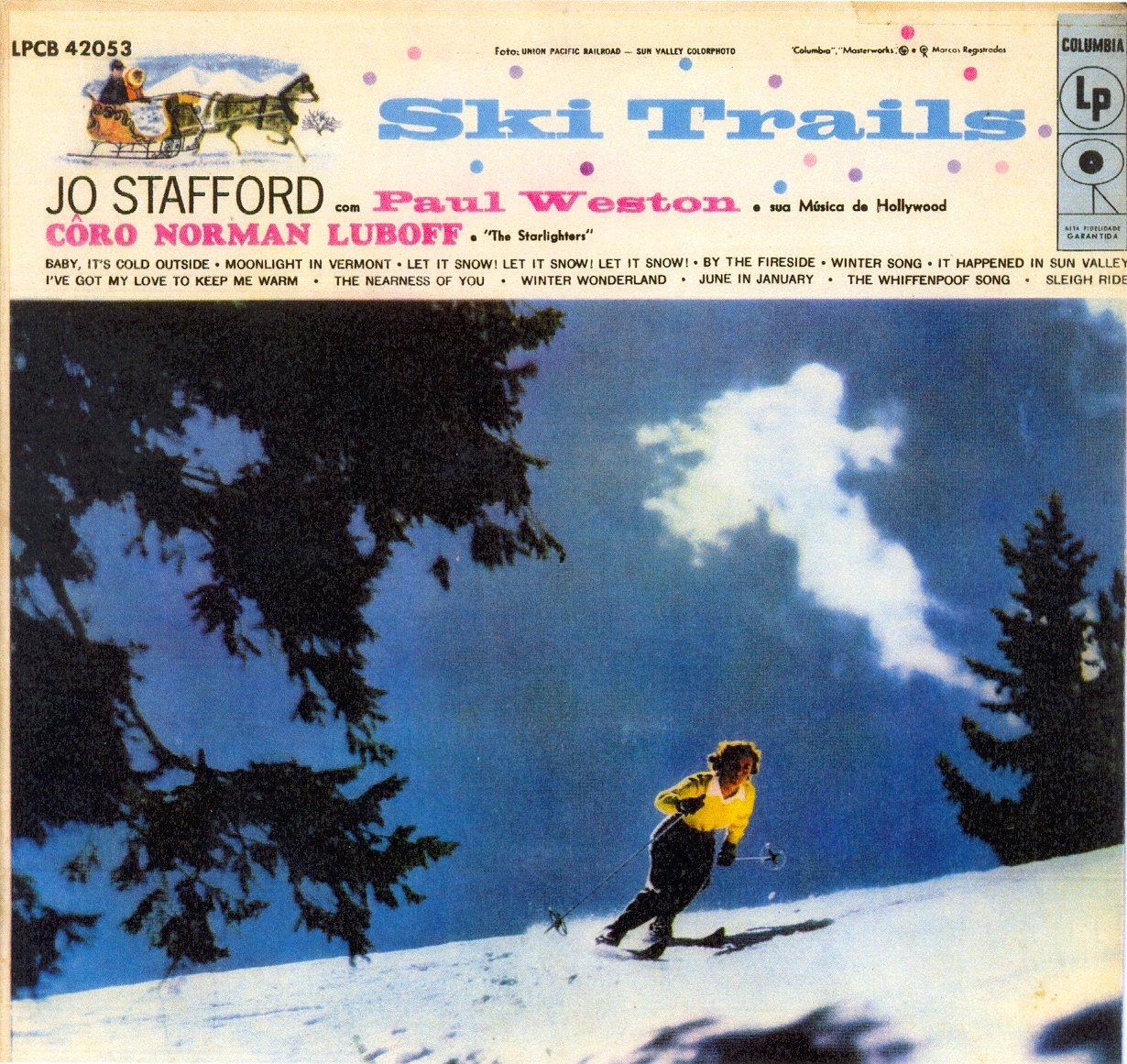
It seems bizarre that people would want to mess with this poetry, but mess with it they have. The most radical example is Jo Stafford’s recording for an album entitled Ski Trails (1956), whose comprehensive rewrite makes winter of the whole thing. In Andy Williams’ live concert performance, the lines “snowflakes in the wind, blanketing the countryside” likewise obliterate the balmy summer of the original.

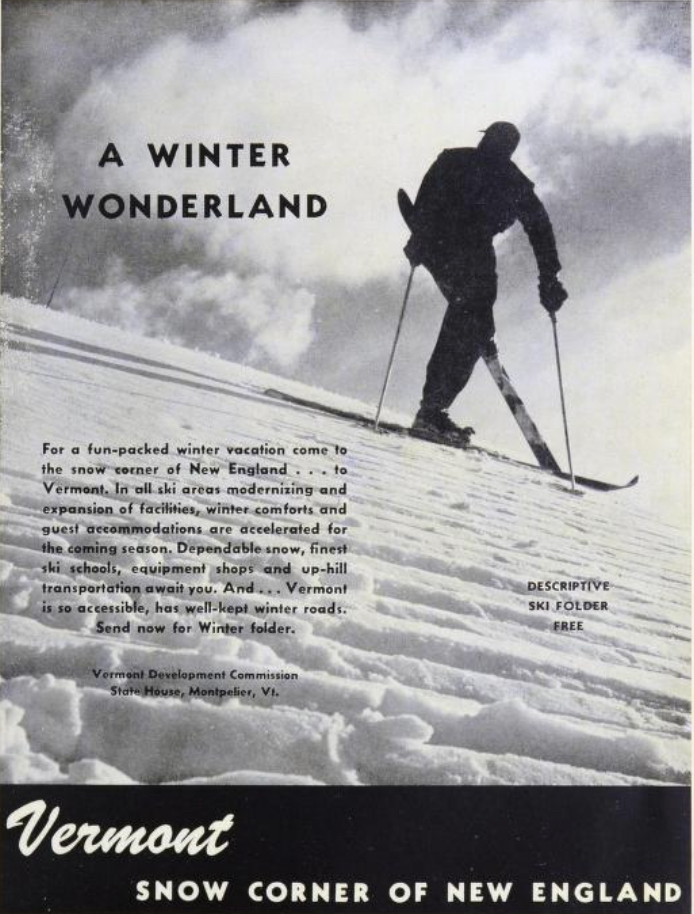
These specific lyrical choices, and the song’s rocketing popularity in the 1950s, could arguably be to do with skiing. As historian Andrew Denning has it, skiing was “the quintessence of that defining strain of postwar consumer culture: democratized luxury”. This was certainly the case in Vermont, where magazine Vermont Life aggressively promoted “the slopes of Vermont as a nearly year-round vacation destination” throughout the 1950s. To be ultra-specific, it presented Vermont as “a series of vacation areas catering to the modern family man from out of town looking for an all-encompassing winter escape”. What better snowy venue for a departure from routine, for the experience of the once-in-a-lifetime, unrepeatable romance fantasised by these recordings.

The many vocal interpretations of the song run the full stylistic gamut. Particularly enjoyable is its first outing, Billy Butterfield’s big band arrangement with Margaret Whiting – also Betty Carter’s early performance with the Ray Bryant Trio, the excessive vocal harmonies of the Lewis Sisters, Billy Stewart’s soulful re-imagining, Ella Fitzgerald’s intimate dialogue with Joe Pass. But I will say that it is possible to have too much of a good thing. Listening to tens of performances of once-in-a-lifetime, unrepeatable romance fantasies on the bounce is akin to eating a lot of cake: beyond a certain point the experience is empty and just a bit much.

Among the handful of films that include the song is the recent Hallmark TV movie Moonlight in Vermont (2017): “After Fiona [Lacey Chabert] gets dumped, she escapes to her family’s Vermont Inn for a few days to evaluate her life. When her ex Nate [Jesse Moss] shows up with a new girlfriend, Fiona devises a plan to win him back: pretend head chef Derek [Carlo Marks] is her new boyfriend.”

A Kindle search for the movie’s novelisation unexpectedly revealed other, self-published novels of the same name. These include a 2013 country house murder mystery on the model of Agatha Christie (page turner, holds out promise of subverting patriarchal constructs, just doesn’t) and the eleventh instalment in Olivia Gaines’ Modern Mail Order Brides series of romance novels, released in 2020 (the same, to an outlandish comedic degree).

But back to the movie. Moonlight in Vermont, a classic opposites attract scenario, is totally enjoyable, escapist, and implausible. Its characters say and do the most illogical things. Savvy and practical Manhattan real estate agent Fiona wears four inch spike heeled boots to walk in the snowy fields with Derek so she can look hot in front of her ex. Chef Derek, a man whose profession is predicated on the capacity to follow instructions, insists on savouring pancakes slowly in the context of a ‘how many pancakes can you eat in 60 seconds’ contest at the town’s annual Maple Faire. The town’s mayor presides over this contest, and later adjudicates a maple syrup tasting contest in a completely different shop, as if contests are his only job. The ex Nate, crazed with competitive jealousy, snippily declares to his new girlfriend “I’m counting on you here” to beat Fiona and Derek in the maple syrup tasting contest. Thus the movie sets up the beginnings of romance between Fiona and Derek: an enjoyable dinner at the inn, in which each listens with genuine interest to what the other is saying. In the light of the movie’s other strange situations, this conversation seems like the height of real intimacy. It was weird and I loved all of it.

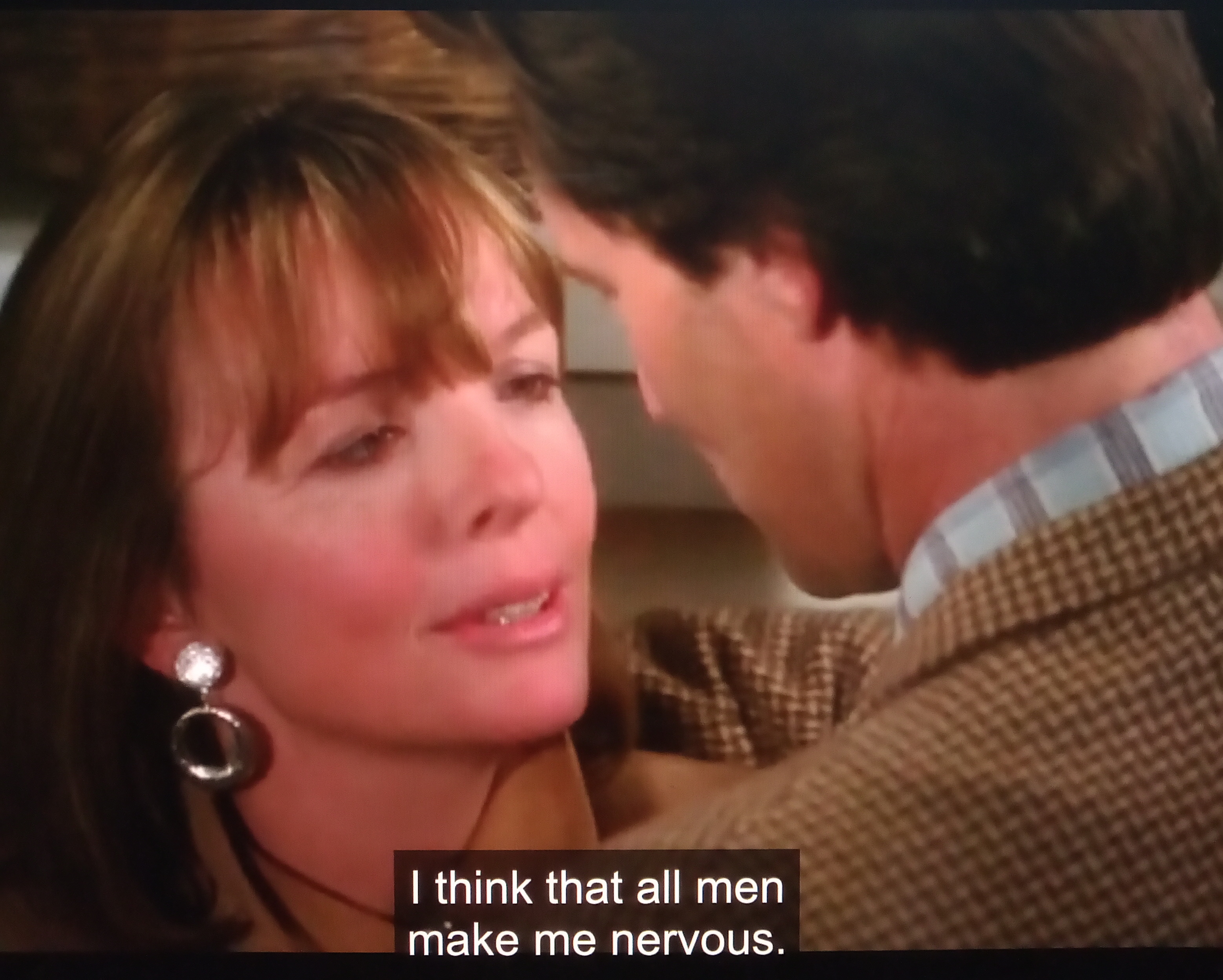
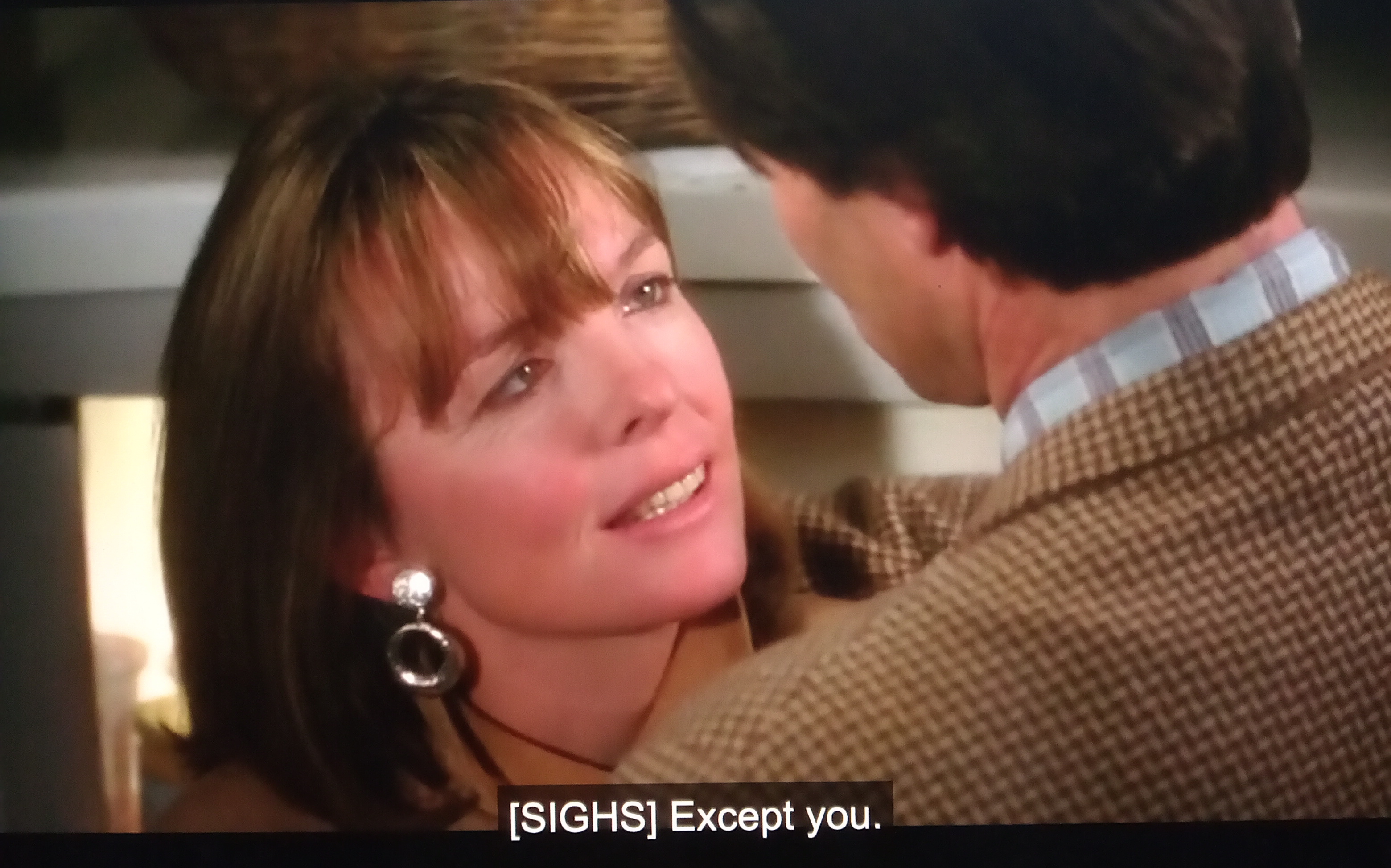
What I take from Moonlight in Vermont is this: some of the appeal of this kind of romantic plotline may be to do with the promise of respite from what Jane Ward calls the tragedy of heterosexuality. Part of that tragedy consists in attachment to “the heteroerotic fantasy of binary, biologically determined, and naturally hierarchical gender oppositeness” (cf. all of the above, plus the leads’ opening barbs: “Vermont lumberjack” / “New York princess”). In moments of beautiful utopian connection, this powerful and damaging nonsense falls away. Supplementary evidence: Baby Boom (1987), ‘Moonlight in Vermont’-having comedy of the nightmare struggle of career woman J.C. (Diane Keaton) against a patriarchal culture hostile to motherhood. Here, having found a new life in Vermont, she is getting together with vet Jeff (Sam Shepard).

Of course heteroerotic fantasies are inevitably re-established: for a female romantic protagonist, it’s true love or bust, and four days in to her visit, Fiona decides to quit New York and move to Vermont. The openness of ‘Moonlight in Vermont’ as a song makes it highly amenable to whirlwind stories of romantic destiny, but also to performances like Willie Nelson’s, a story of ease and grace that makes no demands, is in no rush at all.

18: I’m Thru With Love (1931)

This song is all about show.

Until it isn’t, that is. But I’m getting ahead of myself.

‘I’m Thru With Love’ is a work of necessary contradiction. A deep ocean of a song, twinkling with glorious sunlight, it brings grief and optimism into sweet contact. Its lyrics, by the prolific Gus Kahn, see a depressed, abandoned character talking to their ex-lover, uncompromisingly declaring time not only on all future relationships, but on love itself. But amid Matty Malneck and Fud Livingston’s bright composition, this story shifts its shape. It’s so much more than a “melancholy torch song that also has a touch of hope in it“, though it is also exactly that.

With the exception of the 1931 recordings by Lee Morse and Bing Crosby, and some later versions like Tony Bennett’s and Joe Williams’s, few vocalists address themselves to the verse:

I have given you my true love,

But you love

A new love.

What am I supposed to do now,

With you now,

You’re through now?

You’ll be on your merry way,

And there’s only this to say:

In this subtle passage, “love” is something bestowed, an action, and an object of desire, and “now” both a moment in time and a state of being. “You” becomes a psychological problem to be solved somehow. The nuance of these simple repetitions shows their author, as Gottlieb and Kimball write of Gus Kahn, to be “a superb and meticulous craftsman who made a lyric seem easy, even inevitable, rather than calling attention to its ingenuity or wit“. And although the choruses can stand alone magnificently, the verse frames “I’m through with love” as an embittered retort.

At least as it reads on paper, this retort comes from someone whose limited horizons, through this relationship, were briefly extended beyond their own front door. Now it’s over, they have “Said ‘Adieu’ to love / ‘Don’t ever call again'”. The staginess of these quotation marks, as printed in Gottlieb and Kimball’s book, suggests a certain kind of uptight formality – as does the terrible tragedy of the second chorus:

I’ve locked my heart,

I’ll keep my feelings there,

I have stocked my heart

With icy frigidaire.

And I mean to care for no-one,

Because I’m through with love.

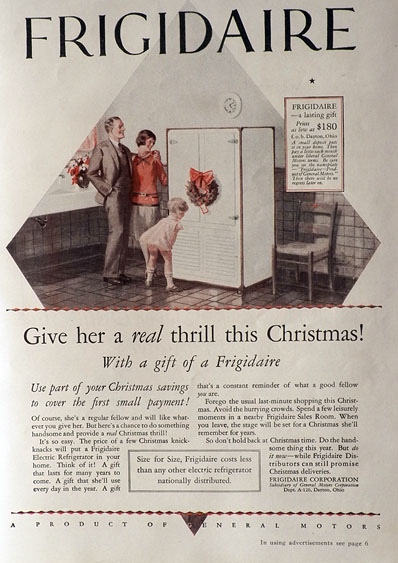
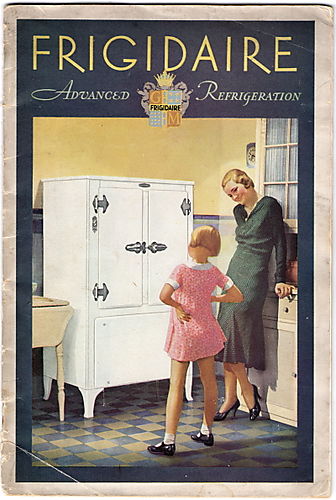
Frigidaire! Not only is the warm human body correlated with an (empty) household appliance, but the refrigerator as such is the reference of choice for this person! Fridge facts: Frigidaire launched the first electric “self-contained refrigerator” onto the market in 1923, the brand quickly becoming synonymous with the thing itself.

On the left is an ad for a 1927 model costing $180 – a value of $2,613.29 in 2020. And on the right, the front cover of a Frigidaire catalogue from 1931, the year of ‘I’m Thru With Love”s release. This image introduces a fascinating blogpost on Frigidaire by Liza Cowan, who gives this shrewd take on its idealisation of domesticity: “nothing says loving like a full fridge“.

All this is to say that the song’s images propose the protagonist as someone who naively thought that they were bopping their way to marriage, or a lonely wife whose affair with someone popular and sociable (“You didn’t need me for you had your share / Of slaves around you to hound you and swear, / With deep emotion, devotion to you”) lifted her beyond marital disappointments.

It’s all very melodramatic, and the song knows it. The major melody in the A sections soothes the narrative’s histrionics, while gut-wrenching chord choices and a sorrowful blue note gently affirm suffering. The B section makes a dramatic leap up to a minor key to emphasise its opening rhetorical question (“Why did you lead me to think you could care”), but doesn’t linger there long. Music puts the words at a distance from themselves, opening out all kinds of alternatives to unadulterated misery.

There are some devastating interpretations – see Etta Jones, Diana Krall, Mark Murphy, Arthur Prysock – but even these performances can’t help but slide into a kind of reflexive self-staging. Some versions are absolutely gigantic (Sallie Blair, Joan Merrill). Others exude an affecting warmth, even contentment (Carmen McRae, Ella Fitzgerald). Still others are in ‘wash that man right out of my hair’ high spirits (Sarah Vaughan, Jane Monheit). It’s a range of moods well sketched out in Swedish pianist Matti Ollikainenin’s ironic solo performance. Listening through multiple recordings on the trot makes for an experience not of utter desolation, as might be expected, but fun born of sadness that doesn’t take itself too seriously.

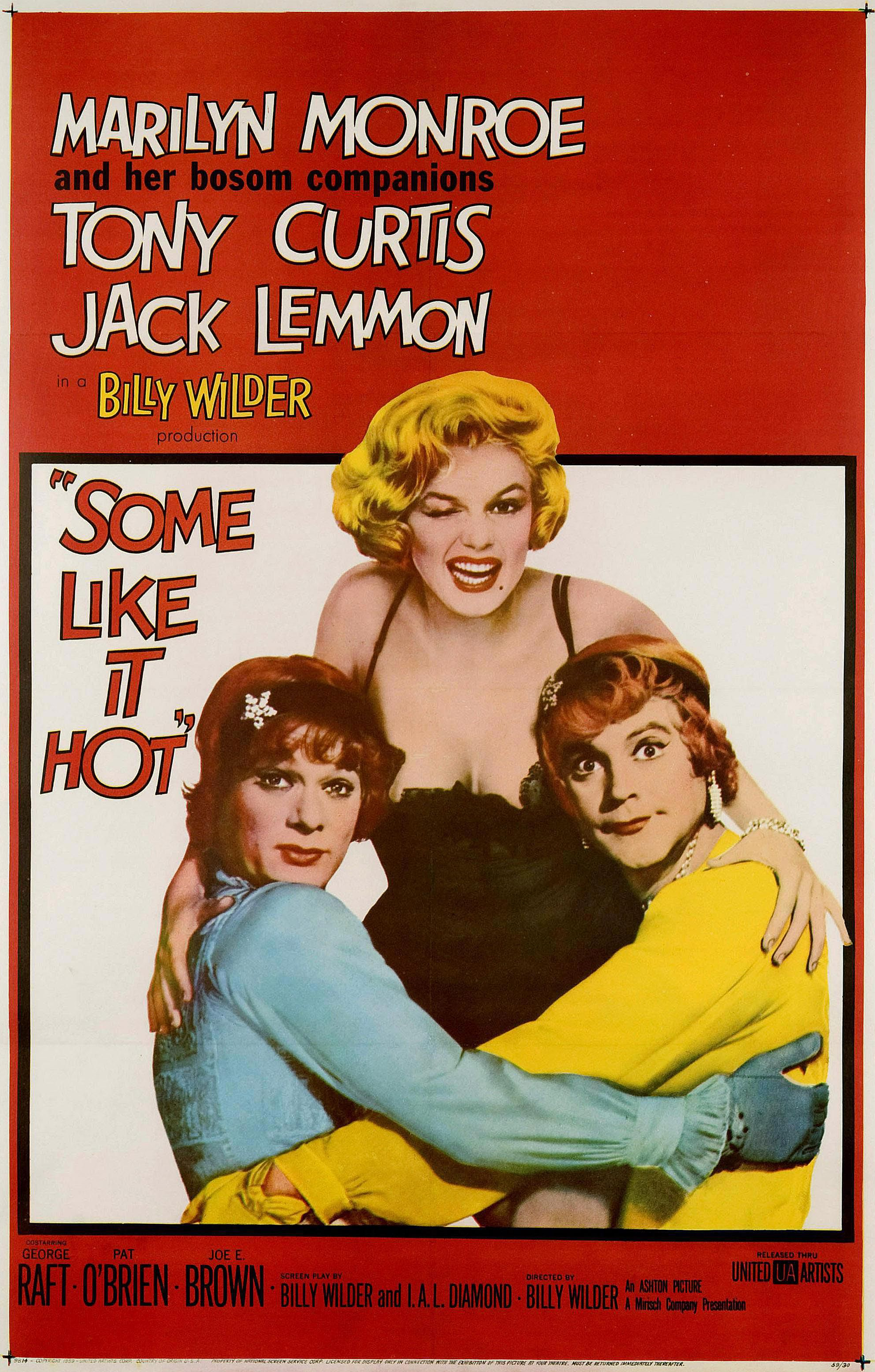
It seems apt then that the song’s most famous outing on screen should be in Billy Wilder’s Some Like It Hot (1959), a film comedy hingeing on disguise and an homage to multiple cinematic genres. As New York Times critic Manohla Dargis puts it, the film “feels like it was directed inside gigantic quotation marks“.

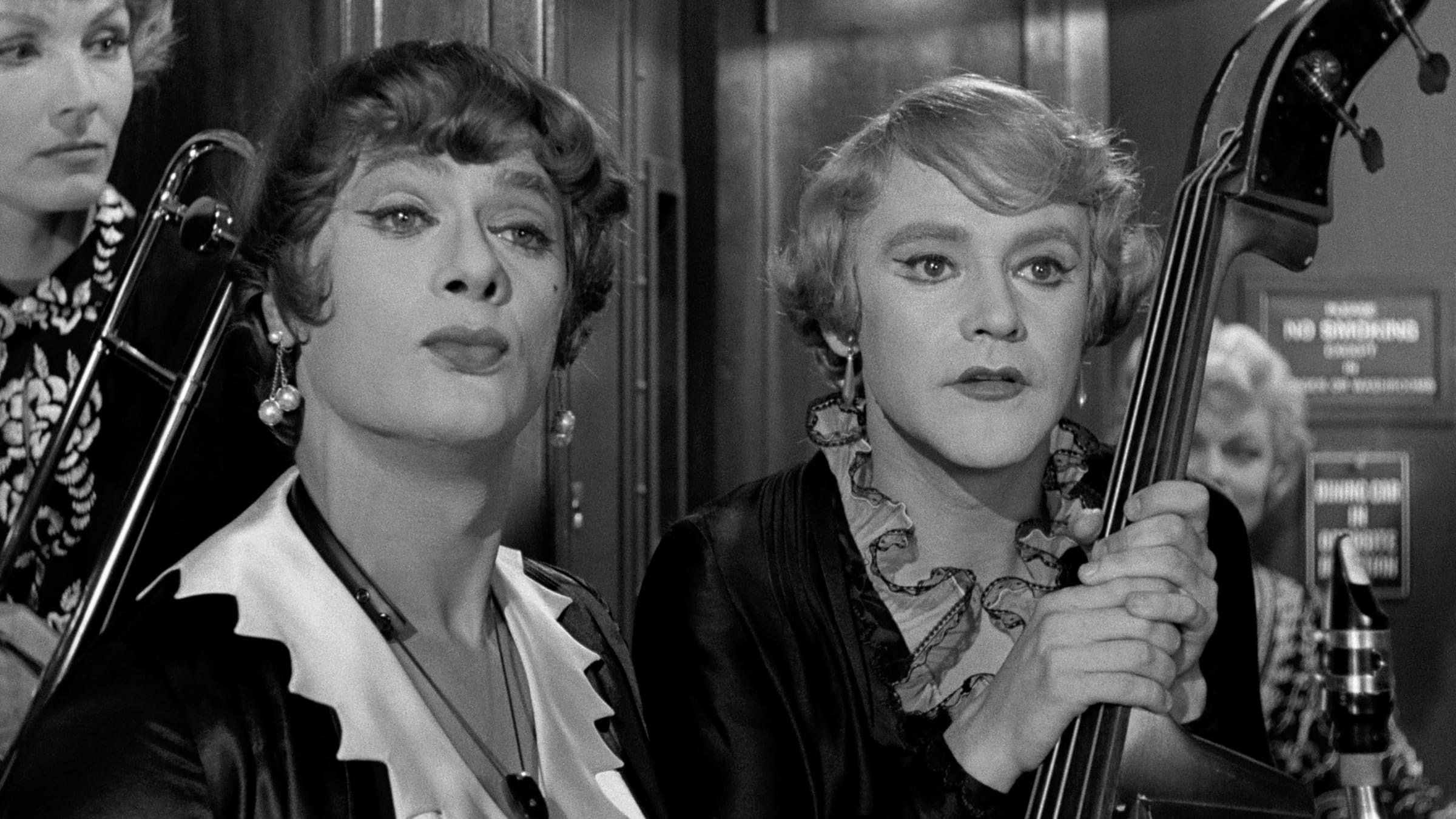
On-the-run jazz musicians Joe (Tony Curtis) and Jerry (Jack Lemmon) pass themselves off as ‘Josephine’ and ‘Daphne’ to join an all-female touring band. (Sidenote: the film’s musical supervisor was Matty Malneck, and its unreal lineup of musicians included Barney Kessel, Art Pepper and John Williams (yes).) To entice its chanteuse Sugar Kane (Marilyn Monroe), who intends to overcome her “thing for saxophonists” by snagging a Miami millionaire, saxophonist Joe masquerades as magnate Shell Oil Junior, and contrives to have her seduce him aboard a yacht appropriated from actual millionaire Osgood Fielding III (Joe E. Brown), himself in hot pursuit of Daphne.

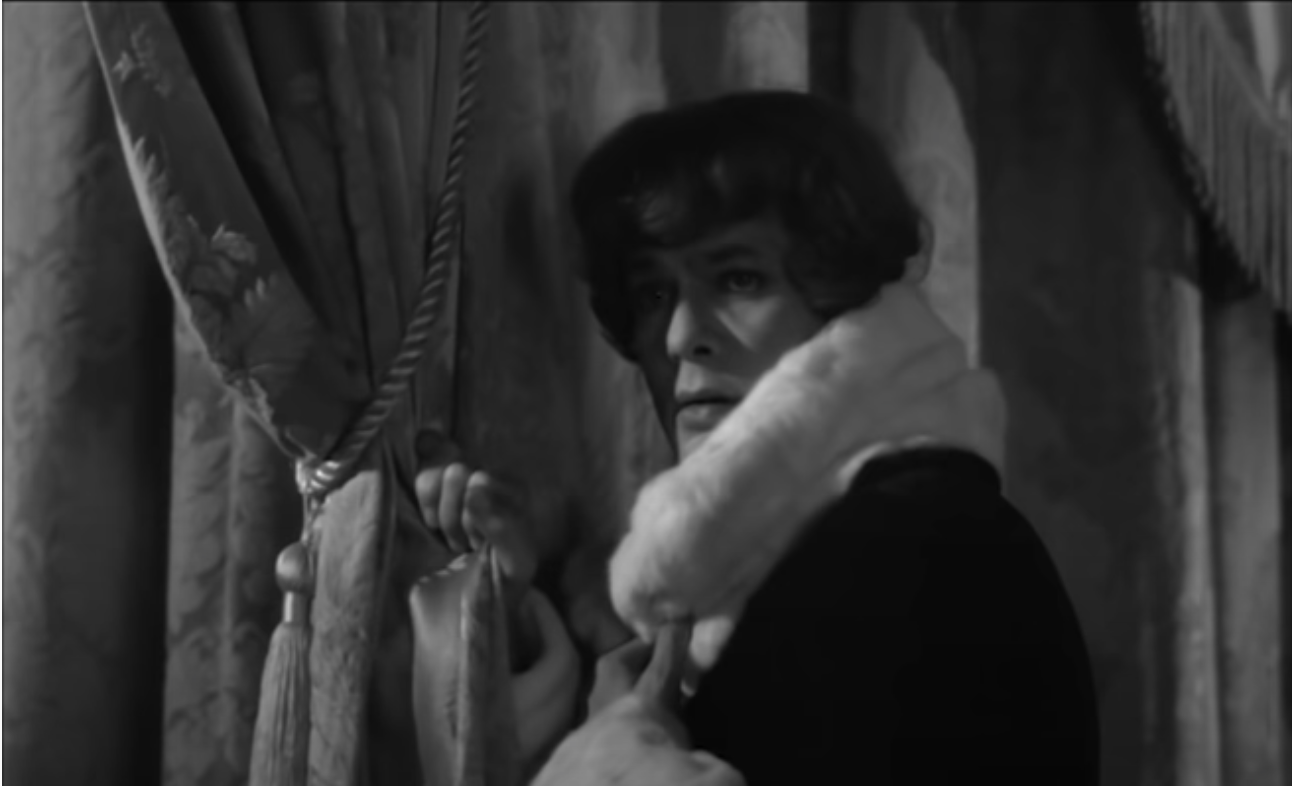
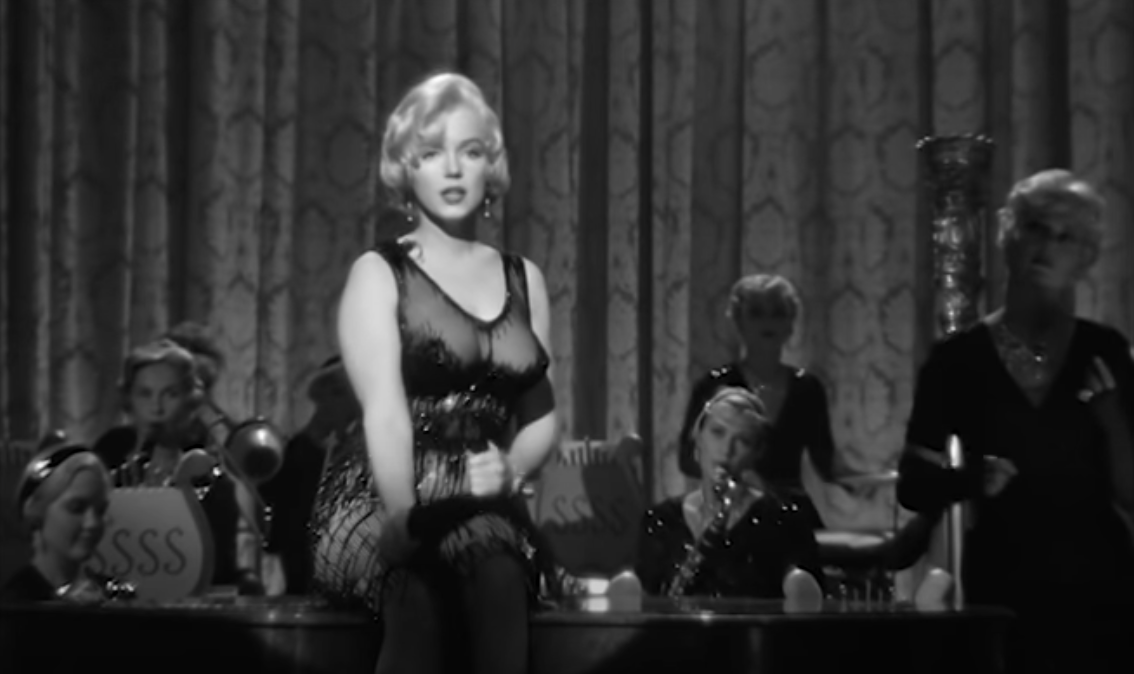
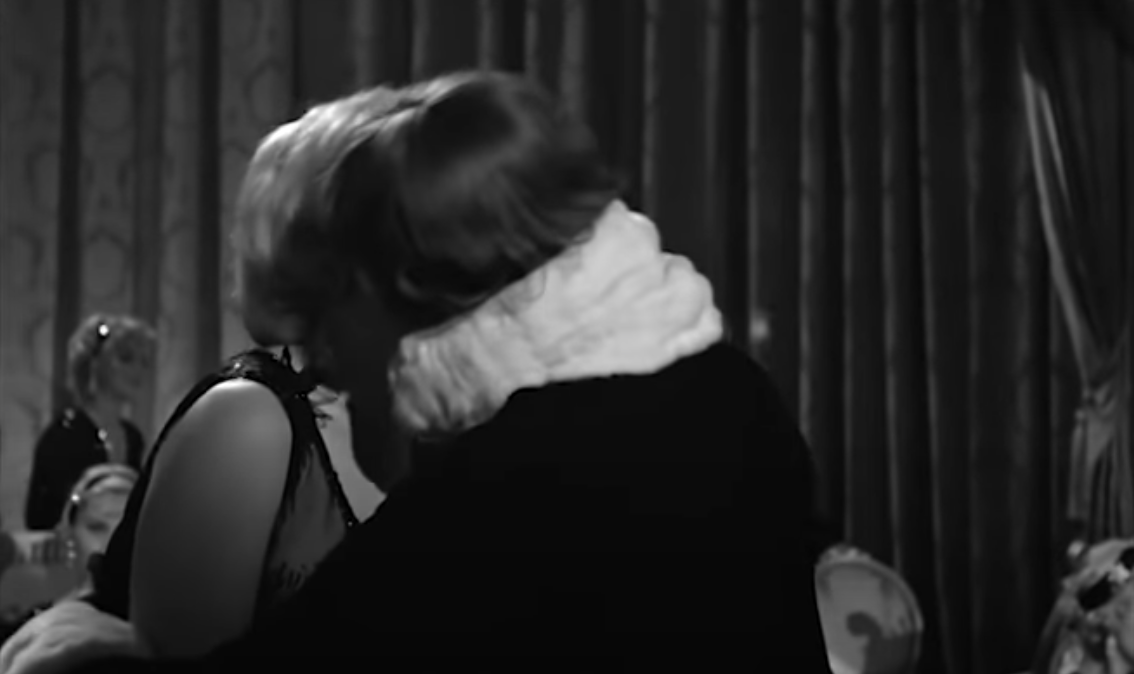
In the wake of Junior’s sudden departure, heartbroken Sugar sings ‘I’m Thru With Love’, her unhappiness unnoticed by everyone but Josephine, hidden behind a drape, realisation gradually dawning.

Marilyn Monroe’s tremulous performance musters stock gestures of feminine anguish, melting them into other, more authentic-seeming moments of emotion. The depth of her sadness and the euphoria and poignancy of the kiss she and Jo(e)sephine then share are totally conditional upon the layers of comedic artifice the film painstakingly constructs.

“None of that, Sugar. No guy is worth it!” ‘I’m Thru With Nonsense That Is An Obstacle To My Own Flourishing’,* we might then say, as love is discovered to be its own reward.

*Adaptation after Lauren Berlant.

16: So Rare (1937)

This song is quite something.


The transportative harmonies of Ahmad Jamal’s beautiful recording on Ballades (2019) suggest ‘So Rare’ to be a standard as beloved as Sammy Cahn, Axel Stordahl and Paul Weston’s ‘I Should Care’ (1944), also covered on that album. Not so: although it has topped the charts more than once, it’s actually sort of overlooked. Finding out more about it has been akin to an archaeological dig. Put together, its various pieces produce a totally unexpected picture, but one that (surprise surprise) nonetheless traces out contours of gender, ancient and modern. It is a trip.

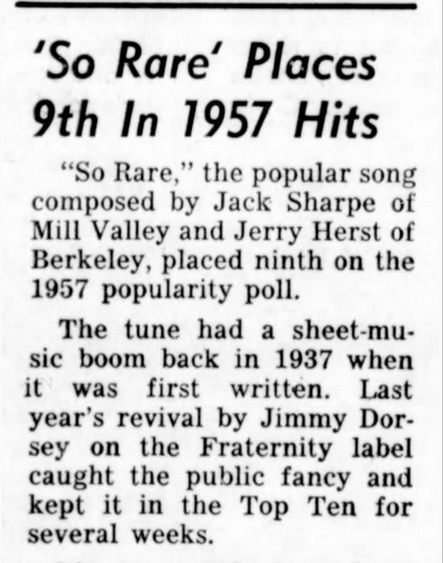
Written by Jerry Herst and Jack Sharpe, ‘So Rare’ is a rhapsody of love. It is jam-packed with images of heavenly hosts, exotic flowers, ethereal classical compositions and, most weirdly, the American flag. It was first recorded in 1937, no fewer than seven times that year, in various big band interpretations for dancing the foxtrot. Guy Lombardo and his Royal Canadians made it number one on popular radio show Your Hit Parade in the week of 11 September 1937. Then it was barely touched until 1957 – another bonanza year for the song, which saw the release of Jimmy Dorsey’s brash big band recording.

So Rare--clipping

Daily Independent Journal, San Rafael, California, 1 February 1958. https://www.newspapers.com/clip/3844368/jack-sharpe-1958/

Dorsey’s smash hit trailed several similar to near-identical arrangements in its wake – from Jimmy Carroll (1957), Billy Vaughn (1958), Les Brown’s Band of Renown (1960), Bill Black’s Combo (1964), and Willie Mitchell (1967).

Dorsey deletes most of the song’s lyrics. A raunchy saxophone solo takes the melodic lead in the A sections, while a chorus performs its first B section – the only words to appear.

You are perfection
You’re my ideal
You’re angels singing the Ave Maria
For you’re an angel
I breathe and live you
With every beat of the heart that I give you

Horns en masse deliver the second B section, while the chorus ‘do-do-doos’ along. The evil genius of this arrangement is in its juxtaposition of lyrics about putting virgins on pedestals, seductive sax, rasping horns, and a savage drum beat and tempo identical to that used in David Rose and his Orchestra’s ‘The Stripper’ (1962) (written in 1958) – both enactment and refusal of the nightmare Madonna-whore dichotomy that continues to be the bane of women’s lives.

In vocal recordings including more of the song’s lyrics, things take a series of different turns.

In full, ‘So Rare’ has a verse, and AABA twice over, with different lyrics each time around – one set normatively for a male voice (“You’re like the fragrance of blossoms fair / Sweet as a breath of air”), and the other for a female voice (“You have the warmth of a Schubert air / Charming and debonaire”), as if for a duet. The small number of vocalists who have tackled it (no duets) have picked and chosen between them. Ella Fitzgerald and Betty Johnson‘s gentle versions subversively go for the ‘male’ set, while Mavis Rivers rocks the ‘female’ set. So too does Vera Lynn‘s sentimental rendition, but – presumably on the basis of nationality – she rewrites the triumphalist second B section lines “You have that something, that certain manner / You thrill me more than the Star Spangled Banner”. Bing Crosby and Don Cherry weave those in, to all-American patriotic effect, while Andy Williams does not.

The two films that have used ‘So Rare’ in their soundtracks bring twenty year time lags, masculinity, femininity, and visions of America together in the most unlikely way.

Return to Macon County (1975) sees teenagers Bo (Nick Nolte, at least 33) and Harley (Don Johnson, 25) attempt to drive from Georgia to California in a ’57 Chevy to participate in a drag race. It is 1958. En route, they pick up manic pixie dream girl Junell (Robin Mattson), who, having been subject to harassment flirted with by the two in the roadside diner where she works, abandons her job to join them on the road. The film is like a less edgy Two-Lane Blacktop (1971), with couply scenes between Bo and Junell set in derelict and abandoned buildings that echo Rebel Without a Cause (1955).


Dorsey’s ‘So Rare’ is background to a motel room encounter between Harley and a random girl – full frontal, so we know she’s expendable – which only works for Harley when they head out to have sex in the car.

For Roger Ebert, this film was textbook nostalgia for the 1950s.

Ike and the rest of the adults were riled up about dragracing and juvenile delinquents, but 1958 was really a fairly innocent time, youth wise, and the characters in this movie would be chewed up in the first 10 minutes of a late 1960’s motorcycle picture, not to mention a contemporary ghetto violence exploiter.

Hustle (1975) is also preoccupied with the 1950s, but as the rotten foundation of the corruptions of the 1970s.


Lieutenant Phil Gaines (Burt Reynolds) is a Los Angeles cop, whose live-in lover Nicole Britton (Catherine Deneuve) is a high-end sex worker. He becomes embroiled in a case involving the death of young stripper Gloria Hollinger (Colleen Brennan), which her father Marty (Ben Johnson) refuses to accept as suicide. The film reveals the past as the seedbed of the present’s problems, all incubated in LA’s amorality. War trauma induced sexual apathy in Marty, thus infidelity in his wife Paula (Eileen Brennan), and thus a daughter who turned to sex work to cater to her insatiable desire for consumer goods – dysfunction as enmeshed as LA’s freeways, where ‘So Rare’ is introduced.

Hustle 3

Dorsey’s recording blasts from Gaines’ car, inaccurately trailed by an announcer: “For those of us who were alive in 1955, ‘So Rare’.”


Gaines repeats: “‘For those of us who were alive in 1955’. Christ.” His partner Sergeant Louis Belgrave (Paul Winfield) replies: “1955! That’s the year this little girl was born.” Gaines: “Yeah. Twenty years later, tissue specimens in a jar.” This dialogue about a twenty year old woman is the thin end of the wedge of the film’s misogyny, which is not inconsiderable. Idealised purity pitched against degradation: a vicious and enduring contrast.

15: What’s New? (1939)

This song is within and without.

Bob Haggart and Johnny Burke’s ‘What’s New?’ dramatises one side of an at-first casual conversation between two ex-lovers, set in some social gathering or other. Time has elapsed (“You haven’t changed a bit”). As the song unfolds, the protagonist’s studiously dispassionate small talk (“How is the world treating you?”, “How did that romance come through? / We haven’t met since then”) is revealed as a cover for their still-interested broken heart. The final choruses subtly speak of the pain of being pitied, with an ending that could be delivered either as a lonely retreat into the self or a moment of confessional exposure.

What’s new
Probably I’m boring you
But seeing you is grand
And you were sweet to offer your hand

I understand, adieu
Pardon my asking, what’s new
Of course you couldn’t know
I haven’t changed, I still love you so

(I didn’t realise the line was “I understand, adieu” until I saw it written down, having consistently misheard it as “I understand, I do”. “Goodbye forever” is definitely in keeping with the song’s tragedy, but I think I prefer the mistake.)

‘What’s New?’ offers plenty of scope for lovelorn wretchedness – for example, the orchestral melancholy of the recordings by Frank Sinatra and Linda Ronstadt – but others take it in unexpected directions.

One of the earliest, by Jess Stacy & His All Stars with singer Carlotta Dale, is supremely self-assured: this woman knows her worth and has no issue admitting how she feels. Maxine Sullivan’s is not remotely tortured. Carmen McRae and Betty Carter exude joy in female friendship and mutual admiration. Then the acres of instrumental interpretations that exist, way outnumbering vocal performances, conjure a million different, sometimes optimistic, situations – from the undulating sea of Ahmad Jamal’s recent solo version, to Hal McKusick’s deserted after-hours bar, or George Benson’s hot dance floor reunion. And the exquisite ambiguity achieved in Helen Merrill’s 1954 recording, stunningly arranged by Quincy Jones, bears no trace of nostalgic melodrama. The arctic sadness of her engrossing performance fuses public words and private thoughts. At any moment in the song she could be talking to someone directly, or imagining to herself how their conversation would go, gazing across a crowded room. Its beauty verges on the uncanny.

What goes said and unsaid is at the centre of two of the films that feature ‘What’s New’ – Michael Curtiz’s WWII aviation medicine story Dive Bomber (1941), and Harvey Fierstein’s four-hour Broadway comedy drama Torch Song Trilogy (1988), radically cut for the screen. Both tell stories of intimacy between men, though only Fierstein’s is explicit on the matter. In Dive Bomber, as in so much literature, rituals of smoking stand in for physical connection, and unusually, caring relationships. Female romantic interests fall a distant second to the initially abrasive relationship between Lieutenant Doug Lee (Errol Flynn) and Lieutenant Commander Joe Blake (Fred MacMurray).

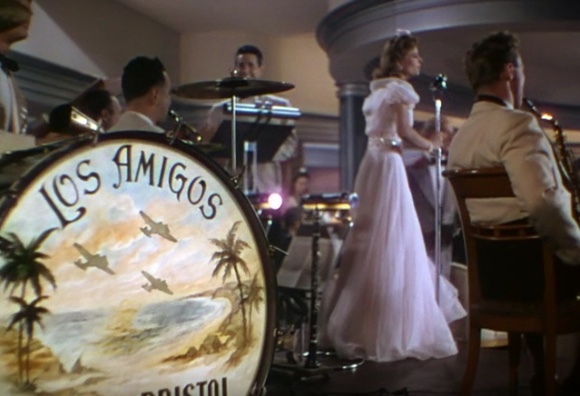
The song’s line “Probably I’m boring you” cues in a dinner dance to which Doug and Joe have taken dates Linda (Alexis Smith) and Helen (Ann Doran). The men distractedly ignore both women, preoccupied by their shared task: the design of a pressure suit to combat pilots’ altitude sickness.

The scene is rich with subtle and not-so-subtle clues regarding the dynamics of the pilots’ friendship, from the visual emblazoned on the band’s bass drum –

Dive Bomber 20--band

– to a sequence in which, as they sketch suit designs on a tablecloth, Linda’s lipstick furnishes the inspiration for “a slide valve with a fine screw on the stem. Each turn opens it just a hair. This is it!”

The phallic emergence of the red lipstick from its tube, seen in close-up, is eye-popping. Bored and annoyed, the women go, despatching a young waiter to recite a short poem to Doug and Joe: “We don’t like quarrels, we don’t like scenes / The Navy’s too busy, we’ll try the Marines”.

After Joe sacrifices his life in testing the pressure suit prototype, Doug commemorates him at a naval ceremony as “my friend and co-worker, Lieutenant Commander Blake, a very gallant gentleman”. In a solitary moment at this event, he kisses his hand and plants it on Joe’s plane, before taking to the skies with other pilots, and ritually throwing Joe’s special cigarette case into the clouds (an act that would surely kill anyone unfortunate enough to be standing where it landed). It is a story of love, but the film can claim it’s just about men working together for the war effort.

The three acts of Torch Song Trilogy give us years in the life of New York drag performer Arnold (Harvey Fierstein). At the end of the second act, a gang of men murder Alan (Matthew Broderick), his first real love, in a homophobic attack. Billie Holiday’s recording of ‘What’s New’ accompanies a scene early in the third (here, at 1:24.56), starting mid-way through the penultimate chorus. Arnold returns home to find his on-again, off-again lover Ed (Brian Kerwin) asleep on the couch, where he removes Ed’s glasses tenderly. At this point the song seems to signify Arnold’s affection, and the extent of what Ed, a man who isn’t open about his sexuality, can offer in their relationship. But then Benny Carter’s saxophone solo begins, and we see Arnold get into bed, now in his pyjamas. He takes Alan’s portrait, which sits on his bedside table, in his arms, then rolls his eyes, saying “how Alice Faye can I get?!” The shot cuts to the morning kitchen radio, where Carter’s solo continues. Time jumps but the song flows on unbroken: love is unending and loss ever-present.

Torch Song Trilogy ultimately refuses a tragic ending. Put together, I see both films mapping and subverting the sexual limits heteropatriarchy laid down in the twentieth-century. What they share with ‘What’s New?’ goes beyond the specific lines they use concerning conversational distraction and lost love: all speak of how social convention and desire interact.

10: Everything Happens To Me (1941)

This song is a primer in magical thinking.

Matt Dennis and Tom Adair wrote ‘Everything Happens To Me’ in 1941. Frank Sinatra’s winsome recording with Tommy Dorsey that same year made it a hit.

Surprisingly, despite the vividness of its story of chronic misfortune, there are far more instrumental than vocal versions. And no movie seems to have incorporated the song into its action.** Three films share its title – a 1938 comedy caper about a by-election in a seaside town starring vaudevillean Max Miller, a 2001 Spanish romantic comedy entitled Todo me pasa a mí adapted from a play, and a 2018 single-shot short about an actor’s terrible audition. Then there is Chissà perché… capitano tutte a me (1980), a supremely How Did This Get Madeable buddy cop drama which teams a preternaturally strong sheriff (Bud Spencer) with a gizmo-toting alien boy (Cary Guffey, of Close Encounters of the Third Kind fame). Its Anglicised title, Why Did You Pick On Me?, is the repeated refrain of the sheriff as the two of them get into scrapes. For exposure to its full range of battiness, including Mary Poppins-esque magical home improvements, Kraftwerk alien villains, and at least one hundred slapstick brawls, it can be seen in full here.

Lucky for my purposes then that the album cover of Chet Baker Sings: It Could Happen To You (1958), on which ‘Everything Happens To Me’ appears, is acutely cinematic. In his review piece about this album and Chet Baker as a cultural icon, John Bergstrom doesn’t love it:

Baker was cool, all right. But he exhibited none of the aggressive, chest-puffing, downright intimidating cool that went with most of the other big names of the day. His coolness was passive rather than active, accidental rather than inevitable, devoid of sexuality. Just look at the flat-out hokey cover art for It Could Happen To You. This guy isn’t dangerous. At least not yet.

Rollneck notwithstanding, Baker’s lupine gaze in that image feels pretty intense to me. It Could Happen To You as 1950s werewolf romcom: seemingly anodyne heartthrob lures unsuspecting dates and turns them; under the light of the waxing crescent moon, he meets his match in this laughing girl, who also happens to be a werewolf. I’d watch it.

Johnny Burke’s lyrics for ‘It Could Happen To You’ (1944) and Tom Adair’s for ‘Everything Happens To Me’ are two sides of the same narrative coin: the one, a story of the exhilarating terror of Cupid’s arrow, and the other, a melancholic account of perpetual adversity in life and love.

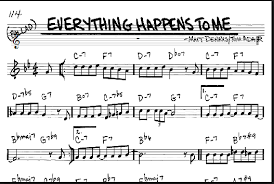
Everything Happens To Me

The verse – which Chet Baker’s performance excludes, and which is absent from the chart above – begins with superstitious high drama: “Black cats creep across my path until I’m almost mad / I must have roused the devil’s wrath, ’cause all my luck is bad”. (Ella Fitzgerald retains it; following a misleadingly jaunty introduction, so does Billie Holiday.) Dennis’s composition then modulates from minor to major, and Adair’s resigned tale of woe unfolds. Magic is replaced by a thoroughly modern kind of predestination: golf dates made will guarantee rain, card games played will engender inevitable defeat. The wordplay of the phrases “I guess I’ll go through life just catching colds and missing trains” and “I never miss a thing, I’ve had the measles and the mumps” suggest interminable negativity. And it’s always the protagonist’s own fault: “I guess I’m just a fool who never looks before he jumps / Everything happens to me”.

A love affair with the person to whom the song is addressed seemed briefly to present a solution to the “jinx”, but alas: “I’ve mortgaged all my castles in the air”. (I find this artful line really hard to get my head around. Dreams have crashed down to earth as crippling debts? To whom?) For the lost object of desire has cut ties with the hapless character altogether. Dealing with this unhappy turn, the penultimate couplet is legitimately funny: “I’ve telegraphed and phoned, sent an Air Mail Special, too / Your answer was ‘Goodbye’, and there was even postage due”.

The song concludes on a note of fatalism. “I fell in love just once and then it had to be with you / Everything happens to me”.

To be described as someone’s one and only true love, never to be replaced, is classic ‘romance’. But as the narrative plays itself out in Chet Baker’s delicate performance, the protagonist’s misery and self-reproach are all-encompassing and of long duration. The brilliance of the song is in its presentation of the failed love affair as the icing on the cake of this person’s beleaguered life: the mantra ‘everything happens to me’ hints at another, untold story of loss and disappointment.

**Update: actually there are four, a similar miscellany: romantic comedy Playing By Heart (1998) (“if romance is a mystery, there’s only one way to figure it out”), The Guard (2011) (“the FBI are about to discover that things work a little differently around here”), Dolphin Tale (2011) (“inspired by the amazing true story of Winter”), and Woody Allen’s A Rainy Day in New York (2019) (no tagline, but much controversy).

7: What’ll I Do (1923)

This song is saudade itself.

What'll I Do 2

Its story of love on the rocks was penned by Irving Berlin, with the champagne-fuelled assistance of Dorothy Parker on its last two lines. Addressing their (soon-to-be) estranged lover, its protagonist contemplates a lonely future absent of their company. In this future, the other person is a long way away, in the arms of another. All that is left is a photograph and castles in the air. It is the definition of ‘”a vague and constant desire for something that does not and probably cannot exist, for something other than the present”‘.

In a fascinating piece for The Atlantic, David Schiff talks of how Irving Berlin’s tunes ‘have a verbal tag and tell a story’, instilling in ‘common American phrases the nervous musical impulse of the modern city’.

Like many other Irving Berlin compositions, this song is deceptive in its simplicity. ‘What’ll I do?’ is its lyrical foundation. The boxy end rhymes of its two verses give a sense of stability – ‘divine’/’mine’, ‘mended’/’ended’, ‘bliss’/’kiss’, ‘descending’/’ending’ – which the choruses proceed to entirely undo. Internal rhymes surge through the choruses like gentle waves, softly eroding what formerly seemed secure. ‘What’ll I do when you are far away / And I am blue, what’ll I do?’ The only lines that lack these repeated internal rhymes are those reflecting on the protagonist’s memento – ‘What’ll I do with just a photograph / To tell my troubles to?’ The ebb and flow of the song’s emotion comes to a temporary moment of stillness with this melancholy image.

It’s been recorded numerous times in vocal and instrumental versions, very often with sentimental strings, as in Frank Sinatra’s 1947 performance. The major key and waltz time sit in a sad tension with the song’s sorrowful lyrics. But desolation and abandonment are not all there is to it. For example, Sarah Vaughan’s 1964 recording, arranged by Benny Carter, is razor-sharp.

What’ll I do? Immediately go on holiday, pound a bunch of drinks, and plot exuberant revenge. Vaughan’s sleek arpeggios are not really about pining. In this devastating live performance on her television show, Judy Garland makes an inspired lyrical adjustment following what seems like a pronunciation misstep: ‘What’ll I do when I am wondering how / You feel just now, what’ll I do?’ Chet Baker’s psychedelic interpretation, recorded in 1974, conjures a parallel universe. It’s beautiful, but I find it deeply antagonising: to me, this protagonist seems to be gaming his interlocutor.

I can’t remember how I first came to know ‘What’ll I Do’, but it’s highly likely that it was via the opening credits of the BBC sitcom Birds of a Feather, in which it is performed by co-stars Pauline Quirke and Linda Robson.

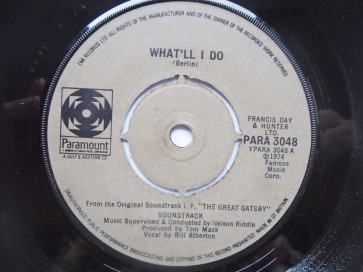
The series had originally used for its own credit sequences Bill Atherton’s recording for the opening credits of The Great Gatsby (1974), directed by Jack Clayton. The choice of ‘What’ll I Do’ for The Great Gatsby is itself a reference to the song’s own genesis: as a member of the Algonquin Round Table, Irving Berlin ran with a set that ‘often partied at the Long Island Gold Coast estate of Herbert Bayard Swope (a figure whom many believed to be the model for Fitzgerald’s Gatsby)’.

Atherton’s tender vocals accompany a gradual close-up on a newspaper clipping – Mia Farrow as Daisy – and a tracking shot of the dissolute, photograph-bedecked luxury of Gatsby’s mansion. The revised Birds of a Feather credits are likewise accompanied by the sweetness of strings, and a selection of photographs. But these are of the series’ two sisters, now cohabiting following the imprisonment of their husbands for armed robbery. And they are photographs of the two actors, taken at various stages of life, that appear to be genuine: Quirke and Robson had grown up together.

For both opening and closing credits of Birds of a Feather, only the first and last choruses are used, stripping the song of romantic association. It is possible to hear reference to the incarcerated husbands. But in juxtaposition to the photographs, it becomes much more prominently about the sisters’ relationship, and the sadness of their former separation through the process of adult life. The cinefilm that graces the closing credits is excruciatingly poignant – from one child’s impossible attempt to feed ice-cream to her bear, to their final wave to the camera, running up the grass into the future. It’s an extraordinary visual gesture to the final lines of F. Scott Fitzgerald’s novel: ‘So we beat on, boats against the current, borne back ceaselessly into the past’.

5: Where Or When (1937)

This song is unforgettable.

Nora Ephron’s enduringly excellent romantic comedy When Harry Met Sally (1989), directed by Rob Reiner, hooks various elements of its narrative on a selection of jazz standards, including ‘Where Or When’.

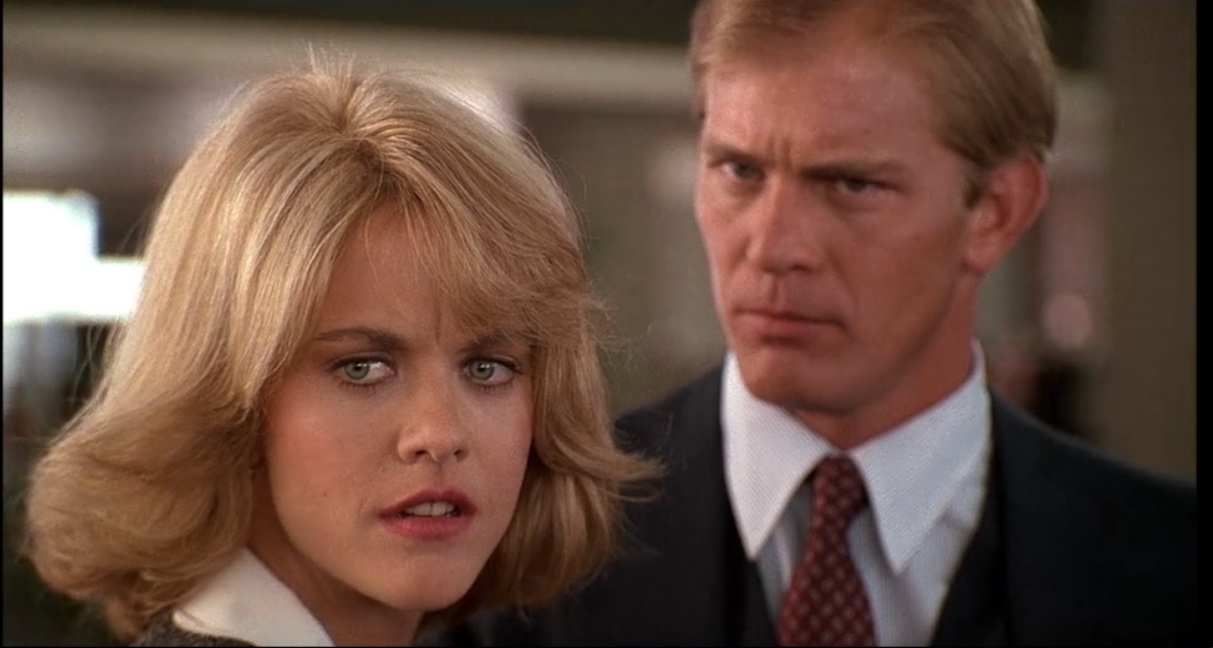
The opening chorus of Ella Fitzgerald’s bright version cues the film’s early airport scene, in which Sally (Meg Ryan) is saying goodbye to her new boyfriend Joe (Steven Ford). There, she re-encounters Harry (Billy Crystal), who, passing by, sees former fellow building occupant Joe and stops for small talk. ‘Thank god he couldn’t place me’, she says grimly, glaring after Harry down the airport concourse. ‘I drove from college to New York with him five years ago and it was the longest night of my life.’

When Harry Met Sally

Richard Rodgers and Lorenz Hart wrote ‘Where Or When’ for their musical Babes in Arms (1937). In that context, the song is talking about deja-vu. Its verse makes this theme clear: ‘Sometimes you think you’ve lived before / All that you live today.’ The chorus, where most jazz interpretations of the song start, ponders memory: ‘It seems we stood and talked like this before / We looked at each other in the same way then / But I can’t remember where or when.’ Amazingly, the performance history of the musical has active forgetting written into it, having been reimagined twice with various degrees of change to plot, racial politics and line-up of songs: as a 1939 film starring Judy Garland and Mickey Rooney, and as a stage version created by George Oppenheimer in 1959. ‘Where Or When’ features in all three versions.

The song can speak of casual flirtations.

On Etta Jones’ recording, easygoing puzzlement develops into joy, like a chance morningtime encounter that becomes a day-into-night date. Frank Sinatra’s live take with Count Basie on the other hand suggests cocktail-fuelled and quickly forgotten nights of carnal enjoyment. But the song is more than open to less celebratory, more emotionally searching interpretations.

For example, Harry Connick Jr’s rendition for the When Harry Met Sally soundtrack – a set of companion arrangements for which he won a Grammy – is intense and melancholy. It proposes forgiveness, a deliberate reckoning with a relationship’s beautiful past, whose patterns are re-emerging in the present. As the teen owner of this recording on cassette I fell completely in love with its piano solo (here, from 1.57-2.34), rewinding it repeatedly. Bryan Ferry’s folkish version, featured on his album of standards As Time Goes By (1999), performs an act of tremulous alchemy, making of the song a dreadfully sad story of memory loss and partial recognition. There, the line ‘But who knows where or when’ possesses terrible tragic irony: in the scenario that the song conjures, the experience of forgetting does not seem to be shared.

Donald Shirley’s solo piano version, released in 2001, is something else altogether. In the wake of the release of the controversial Academy Award-winner Green Book (2018), various features have reflected on his body of work: a concert pianist confronted with institutionalised racism, Shirley created beautiful interpretations of jazz compositions inflected with classical allusions. A New York Times piece refers to Kris Bowers, composer of Green Book‘s score:

“‘Lullaby of Birdland’ was one of the first ones that I knew I wanted to include, because he starts off quoting a couple of classical pieces, and then when he goes into the song, it’s almost like a false start, because he uses the melody as the beginning of a fugue,” Bowers said in an interview. “He’s doing a proper fugue, exposing the subject, et cetera, within a jazz context. I listened to that and said, ‘Wow, I’ve never heard anybody do that before.’”

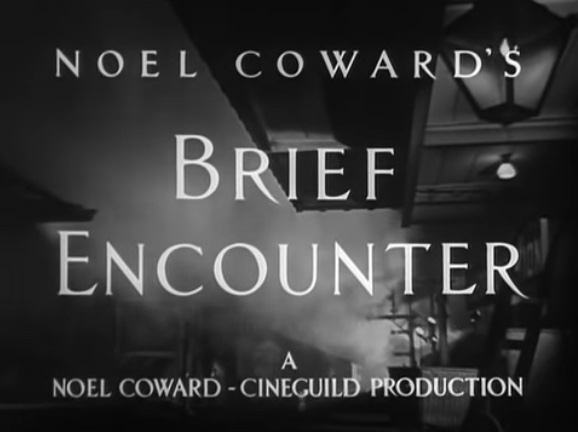
Shirley’s rendition of ‘Where Or When’ alludes poignantly to phrases and chord progressions from Rachmaninoff’s Piano Concerto No. 2 in C minor and Chopin’s Prelude in D flat (Raindrop Prelude). (These are the two I recognised; for sure there will be more that I can’t yet hear.) It evokes Noel Coward’s Brief Encounter (1945), directed by David Lean, a film indelibly associated with the Rachmaninoff work.

Brief Encounter

Shirley’s piece chimes painfully with the desperate longing dramatized by the film: a story of doomed interwar love ignited between Laura (Celia Johnson) and Alec (Trevor Howard), both of whom are married. Clouds gather at its outset. Snatches of melody promise to become more substantially themselves, but never do.

‘Some things that happen for the first time / Seem to be happening again.’ In Shirley’s exquisite performance, the ghosts of an earlier composition haunt ‘Where Or When’. Meanwhile, on-screen, a last tryst in a railway station cafe is tragically, irretrievably interrupted; love begins in a bookshop thanks to a re-meeting in ‘personal growth’.